
What Happens Beneath the Surface of a Koi Pond
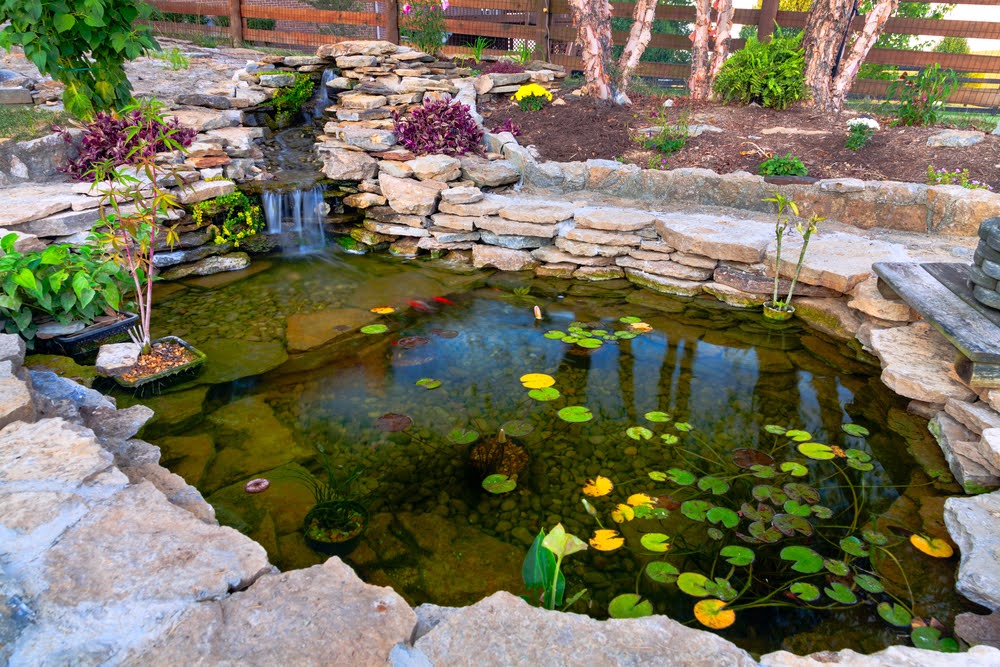
A koi pond is more than a beautiful water feature. Beneath its calm surface lies a dynamic ecosystem where fish, plants, and microorganisms interact in ways that keep the pond healthy and balanced. Understanding these hidden processes helps owners appreciate the pond’s complexity and maintain it with confidence.
This article will discuss what happens beneath the surface of a koi pond so you can maintain your water feature properly.
Beneficial Bacteria and Their Role
Every koi pond relies on beneficial bacteria to break down waste. Fish produce ammonia, which can be harmful at high levels. Bacteria convert ammonia into nitrites and then into nitrates, which are less toxic and can be absorbed by plants. This natural filtration process is called the nitrogen cycle, and it is essential for keeping koi healthy. Without these microscopic helpers, water quality would quickly decline, leading to stress and illness in fish.
Beneficial bacteria live on surfaces such as pond liners, rocks, and filter media. They thrive in oxygen-rich environments, which is why aeration and proper water circulation are so important. When pond owners clean filters too aggressively or use harsh chemicals, they risk disrupting this bacterial colony. A balanced approach to cleaning ensures that these unseen allies continue to work effectively.
Oxygen Exchange and Water Movement
Oxygen is vital for koi, plants, and bacteria. Beneath the surface, oxygen levels fluctuate depending on temperature, sunlight, and water movement. During the day, aquatic plants release oxygen through photosynthesis. At night, however, plants consume oxygen, which can reduce levels in the pond. This is why aeration systems, waterfalls, or fountains are more than decorative—they help maintain consistent oxygen levels.
Water movement also prevents stagnation. Stagnant water encourages algae blooms and mosquito breeding, while moving water supports a healthier ecosystem. Koi themselves benefit from swimming against currents, which strengthens their muscles and improves overall vitality.
Plant Life and Natural Filtration
Plants do more than add beauty to a koi pond. Beneath the surface, their roots absorb nutrients such as nitrates, helping to control algae growth. Floating plants like water lilies provide shade, reducing sunlight penetration and limiting algae blooms. Submerged plants, meanwhile, release oxygen directly into the water, supporting fish and bacteria.
The balance of plant life is crucial. Too few plants allow algae to dominate, while too many can deplete oxygen at night. Experienced pond keepers often adjust plant coverage seasonally to maintain harmony within the ecosystem.
Microorganisms and Recycling Role
Beyond bacteria, countless microorganisms inhabit a koi pond. Protozoa, fungi, and microscopic algae all play roles in breaking down organic matter. These organisms form the base of the pond’s food web, supporting insects and small aquatic creatures that koi may feed on. While invisible to the eye, they are essential for recycling nutrients and keeping the pond clear.
A healthy microorganism population also helps prevent disease. By competing with harmful pathogens for resources, they reduce the chances of infections spreading among koi. This natural defence system is one of the reasons why balanced ponds remain resilient over time.
Sediment and Nutrient Cycling
At the bottom of every koi pond lies sediment made up of fish waste, decaying plants, and other organic matter. While some sediment is natural, excessive buildup can create problems. Anaerobic zones—areas with little or no oxygen—may form, producing harmful gases like hydrogen sulfide. Regular maintenance, such as removing debris and checking filtration systems, prevents these issues.
Sediment also plays a role in nutrient cycling. As organic matter breaks down, nutrients are released back into the water, feeding plants and microorganisms. Managing this process ensures that nutrients support healthy growth rather than uncontrolled algae blooms.
Seasonal Changes Beneath the Surface
Koi ponds change with the seasons. In summer, warm water holds less oxygen, making aeration more important. In winter, koi slow their metabolism and spend more time near the bottom, where water temperatures are stable. Beneficial bacteria also slow down in colder months, which can affect water quality. Understanding these seasonal shifts helps pond owners adjust care routines throughout the year.
Spring is often a time of renewal, but it can also bring challenges. As temperatures rise, bacteria populations rebuild, and algae may surge. Careful monitoring during seasonal transitions ensures that the pond remains balanced and koi stay healthy.
Human Care and Hidden Impacts
Every action taken above the surface affects what happens below. Feeding koi too much increases waste, which strains the nitrogen cycle. Over-cleaning filters can disrupt bacterial colonies. Adding new plants or fish changes the balance of nutrients and oxygen. Even small decisions have ripple effects throughout the pond’s ecosystem.
Professional services, such as a water feature inspection, help identify hidden issues before they become serious. By checking filtration systems, water chemistry, and structural integrity, experts ensure that the pond continues to thrive beneath the surface.
Final Thoughts
A koi pond is a living system where countless interactions take place beneath the surface. By understanding these hidden processes, pond owners can create a healthier environment for their fish and enjoy the beauty of their water feature for years to come.
If you’re ready to keep your pond thriving, contact our experts today for personalised water feature services.
Frequently Asked Questions
How often should I clean my koi pond?
Cleaning depends on the size of the pond and the number of fish. Light debris removal should be done weekly, while deeper cleaning may be needed seasonally. Avoid over-cleaning filters, as this can disrupt beneficial bacteria.
Why does my pond water turn green?
Green water is usually caused by algae blooms. Excess nutrients, sunlight, and stagnant water contribute to this problem. Adding plants, improving circulation, and monitoring feeding can help restore balance.
Do koi need aeration in winter?
Yes, but in a different way. While koi slow down in cold water, they still need oxygen. A pond heater or aerator prevents ice from sealing the surface, allowing gas exchange and keeping oxygen levels stable.
Can I add new fish to my pond anytime?
It is best to add new koi during mild weather, such as spring or early autumn. Sudden changes in temperature or water chemistry can stress fish. Always acclimate new koi slowly to avoid shock.
What is the best way to prevent disease in koi?
Maintaining clean water, balanced bacteria, and proper oxygen levels reduces disease risk. Quarantining new fish before adding them to the pond also helps protect the existing population.


Геморрой — это частая проблема, требующая незамедлительного терапии.
Игнорирование признаков или затягивание визита к специалисту способно привести опасными осложнениями, такими как выпадение узлов.
Текущая медицина предлагает многочисленные методы лечения: от малоинвазивных процедур до медикаментозной поддержки.
опущение прямой кишки
Своевременная помощь позволяет эффективно купировать дискомфортные проявления и нормализовать качество жизни.
При возникновении первых признаков (зуд, жжение, следы крови) важно немедленно обратиться к проктологу для диагностики.
Правильное воздействие не только избавляет от телесного дискомфорта, но и препятствует развитию заболевания и потребности в оперативном вмешательстве.
Glad to have another data point on a question I am still thinking through, and a look at thisdomainisabdu added two more, content that acknowledges its place in a wider conversation rather than pretending to settle the question alone is intellectually honest in a way that I wish was more common across the open web.
Skipped the related links section thinking I had read enough and then came back to it later when curiosity got the better of me, and a stop at tasseltract confirmed I should have just read it first, every section of this site appears to deserve careful attention rather than skipping past lazily.
Skipped breakfast still reading this and finished hungry but satisfied, and a stop at stridertorch kept me past breakfast time, content that displaces basic biological needs is content with serious attentional pull and the writers here are clearly capable of producing that level of engagement which is genuinely impressive these days.
Once you start reading carefully here it is hard to go back to lower quality alternatives, and a stop at siskatrance reinforced that ratchet effect, the way good content raises standards is real over time and this site has clearly contributed to raising my expectations for what is possible in writing on the topic generally.
Speaking from the perspective of a fairly demanding reader the writing here clears the bar consistently, and a look at tweedvolume continued clearing that bar, the calibration of demanding reader is something I apply to all sources and this site has been one of the few that handles the demanding reading well across pieces sampled.
Found this through a search that was generic enough I did not expect quality results, and a look at vesseltame continued the surprisingly good experience, search engines occasionally still surface excellent independent content if you scroll past the obvious paid and high authority results which is reassuring to remember sometimes.
Worth recognising that the post handled a familiar topic without reaching for any of the obvious hot takes, and a stop at singersorbet continued that fresh treatment, sites that find new angles on subjects others have exhausted are sites worth following carefully and this one has clearly developed that exploratory instinct through patient practice.
Liked the post enough to read it twice and the second read found new things, and a stop at swansignal similarly rewarded the second look, content with hidden depths that only reveal themselves on careful rereading is the rare kind that earns lasting respect rather than fleeting first impressions only briefly held.
Just enjoyed the experience without needing to think about why, and a look at waferturtle kept that effortless feeling going, sometimes the best content is invisible in the sense that you forget you are reading until you reach the end and realise time has passed without you noticing it pass naturally.
Adding to the bookmarks now before I forget, that is how good this is, and a look at starlitvixen confirmed the rest of the site is worth saving too, this is one of those rare finds that justifies the time spent searching the web for once which is a relief in the current environment.
Genuinely useful read, the points are practical and easy to apply right away, and a quick look at trenchtwist confirmed that this site is consistent in that approach, looking forward to digging through the rest of it when I get the chance to sit down properly later in the week or this weekend.
Genuinely good work, the kind that holds up over multiple readings without losing its appeal, and a stop at slackvista kept that going, definitely a site I will be returning to and probably mentioning to others who work in or care about this particular area of interest today and in coming weeks.
Honestly impressed by how much useful content sits in such a small post, and a stop at tapetoken confirmed the rest of the site packs a similar punch, density without confusion is a hard balance to strike and this site has clearly cracked the code on it across many different topic areas covered.
Definitely returning here, that is decided, and a look at straitsurge only made the case stronger, this is one of those rare websites that rewards regular visits rather than feeling stale after the first read which is something I cannot say about most of the places I bookmark today across all my topics.
Well crafted post, the structure flows naturally from one point to the next without forcing transitions, and a stop at tritonstyle kept the same flow going, you can tell when a writer has thought about how their content reads rather than just what it contains and this is one of those examples.
Bookmark added with a small mental note that this is a site to keep, and a look at sampleshadow reinforced the keep status, the verb keep rather than visit captures something about how I think about this kind of site and it is a higher tier of relationship than I have with most places online today.
High quality writing, no marketing speak and no buzzwords that mean nothing, and a stop at syruptarot kept that going, simple direct content that actually communicates something is harder to find than it should be and this is one of the rare places that gets it right consistently across many different posts.
Thanks for sharing this with the open internet rather than locking it behind a paywall like so many sites do now, and a stop at uptonshade kept the same vibe going, generous helpful and clearly written by someone who actually wants people to learn from it rather than just charge them.
Genuinely good work, the kind that holds up over multiple readings without losing its appeal, and a stop at vincasinger kept that going, definitely a site I will be returning to and probably mentioning to others who work in or care about this particular area of interest today and in coming weeks.
Coming back tomorrow when I can give this a proper read, the post deserves better attention than I can give right now, and a look at singlevision suggests there is plenty more here that deserves the same treatment, definitely a site I will be exploring properly over the next few days when I can.
A piece that did not lecture even when it had clear positions, and a look at cameranexus maintained the same teaching without preaching tone, finding the line between informing and lecturing is hard and most sites land on the wrong side of it but this one has clearly figured out how to inform without becoming preachy.
Started forming counter examples to test the claims and the post handled most of them implicitly, and a look at writerharbor continued that anticipatory style, writers who think two steps ahead of the critical reader save themselves from a lot of follow up work and this writer has clearly internalised that habit consistently.
Great work on keeping things readable, the post never drags or repeats itself which I really appreciate, and a stop at streamnexushub added a bit more context that fit naturally with what was already said here, no need to read everything twice to get the point being made today.
Started reading without much expectation and ended on a high note, and a look at deliverynexus continued that arc, content that builds rather than peaks early is a sign of a writer who knows how to structure a piece for sustained reader engagement rather than relying on a strong hook to do all the work.
Honestly enjoyed every minute spent here, that is not something I say lightly, and a look at slippersixth confirmed I will be back, the bar for spending time online is high for me these days but this site clears it without effort which is high praise indeed from this reader who is usually rather demanding.
Bookmark earned, share earned, return visit earned, all from one reading session, and a look at brightwinner did the same, the trifecta of bookmark and share and return is rare in a single visit and represents the highest level of engagement I tend to offer any piece of online content these days here.
Now noticing that the post never raised its voice even when making a strong point, and a look at brightamigo continued that calm volume, content that can make important points without resorting to typographic emphasis or emotional appeal is content that trusts its substance to do the work and this site has that confidence consistently.
Cuts through the usual marketing fluff that dominates this topic online, and a stop at orientnexus kept the same clean approach going, this is the kind of writing that respects the reader’s time rather than wasting it on repetitive setups before finally getting to the point at hand which is what most sites do.
Thanks for a post that does not try to be funny when it is not the moment for it, and a stop at unifiednexus maintained the same appropriate seriousness, knowing when humour helps and when it just signals desperation for engagement is a sign of editorial maturity that many blogs have not developed yet.
The structure of the post made it easy to follow without losing track of where I was, and a look at cameranexus kept the same logical flow going, this site clearly understands that organisation is half the battle in keeping readers engaged from the first line to the last across any kind of post.
Generally I am cautious about recommending sites on first encounter but this one warrants the exception, and a look at singlevision reinforced the exception making, the rare site that justifies breaking my normal cautious approach is the rare site worth flagging early and this one has prompted exactly that early flagging response from me.
If you scroll past this site without looking carefully you will miss something, and a stop at writerharbor extended that mild warning, the surface of the site does not advertise its quality loudly which means careful attention is required to recognise what is being offered here which is itself a kind of editorial signal.
Looking through the archives suggests this site has been doing this for a while at this level, and a look at gardenvertex confirmed the long term consistency, sites that have maintained quality across years rather than just a recent stretch are sites with serious editorial discipline and this one has clearly been at it for a while.
During a quiet evening reading session this provided just the right depth without being heavy, and a stop at streamnexushub maintained the same evening appropriate weight, content with depth that does not exhaust the reader is content with editorial calibration and this site has clearly figured out how to be substantial without being demanding all the time.
A clean read with no irritations, and a look at vectortimber continued that frictionless quality, the absence of small irritations is something I notice only when present elsewhere and this site is one of the rare places where everything just works and lets me focus on the substance rather than fighting the format.
Took a few notes from this post, the points are easy to remember without needing to come back and check, and a look at brightwinner added a couple more, the kind of place that sticks in the memory long after the browser tab has been closed for the day which says a lot really.
A piece that did not try to be timeless and ended up reading as durable anyway, and a look at unifiednexus extended that durable feel, content that stays useful past its publication date without straining for permanence is content that ages well and this site has the kind of evergreen quality that I value highly today.
Now wondering how the writers calibrated the level of detail so well, and a stop at brightamigo continued the same calibration, the right level of detail is one of the harder editorial calls in any piece and this site has clearly developed an instinct for it through what I assume is years of careful practice publicly.
Reading this slowly to absorb the structure, and the structure is doing real work alongside the words, and a look at orientnexus maintained the same architectural quality, when sentence shapes and paragraph rhythms reinforce the meaning rather than just transporting words you know you are reading skilled work today.
Reading this in pieces over a coffee break and finding it consistently rewarding, and a stop at primevertexhub extended that into related material I will return to later, the kind of site that fits naturally into small reading windows without requiring a long uninterrupted block is genuinely useful for how I actually browse.
Liked the careful selection of which details to include and which to skip, and a stop at urbanfamilia reflected the same editorial judgement, knowing what to leave out is just as important as knowing what to include and this site has clearly figured out where that line sits for the topics it covers regularly.
Clean writing, easy to read, and never tries too hard to impress, that combination is harder to find than people think, and after my time on rapidnexus I am sure this site treats its readers well, no flashy tricks just useful content done right which is honestly all I want online.
Honest assessment after reading this twice is that it holds up under careful attention, and a look at wisdomvertex extended that durability across more pages, content that survives a second read without revealing weak spots is rarer than the average reader probably realises and this site clearly cleared that bar.
Thanks for a post that does not try to be funny when it is not the moment for it, and a stop at masteryvertex maintained the same appropriate seriousness, knowing when humour helps and when it just signals desperation for engagement is a sign of editorial maturity that many blogs have not developed yet.
Generally I find the content on similar topics frustrating in specific ways and this post avoided all of them, and a look at trumpetsixth continued that frustration free experience, content that sidesteps the standard failure modes of its genre is content with editorial awareness and this site has clearly studied what fails elsewhere consistently.
Honestly slowed down to read this carefully which is not my default, and a look at growthvertexhub kept me in that careful reading mode, the kind of writing that demands attention by being worth attention is rare in a media environment full of content engineered to be skimmed not read with any real focus today.
Thanks again for the post, I learned a couple of things I can actually use later this week, and after I went over moderncomfort the rest of the site looked equally promising, definitely going to spend more time here when I get a free moment over the weekend to read more carefully.
Really like that the writer trusts the reader to follow simple logic without restating every previous point, and a stop at craftbreweryhub kept that respect going, treating an audience as capable adults rather than as people who need constant hand holding makes a noticeable difference in the reading experience for me.
Reading this confirmed that my time researching the topic in other places had not been wasted, and a stop at growthcareer extended the confirmation, when independent sources agree that is a useful signal and this site is one of the more reliable sources I have found for cross checking what I read elsewhere on similar subjects.
Felt no urge to argue with the conclusions even though I started the post slightly skeptical, and a look at brightzenithhub maintained that pattern, writing that earns agreement through clarity of argument rather than rhetorical pressure is the kind I find most persuasive and the kind I want to read more of these days.
Thanks for the breakdown, it gave me a clearer picture of something I had been confused about for a while now, and a stop at oceanriders closed the remaining gaps in my understanding nicely, no need to hunt around twenty other articles to put the pieces together which is a real time saver.
Just enjoyed the experience without needing to think about why, and a look at discountnexus kept that effortless feeling going, sometimes the best content is invisible in the sense that you forget you are reading until you reach the end and realise time has passed without you noticing it pass naturally.
The examples really helped me grasp the points faster than abstract descriptions would have, and a stop at royalmariner added a few more practical illustrations that drove the message home, the kind of writing that knows its readers learn better through concrete situations rather than vague generalities is rare and worth recognising clearly.
Now recognising that the post handled the topic with appropriate technical precision without becoming dry, and a stop at sweatertorso continued that balance, technical precision and readability are often in tension and this site has clearly figured out how to maintain both at once which is one of the harder editorial achievements in the form.
Felt the writer respected me as a reader without making a show of doing so, and a look at purposehaven continued that quiet respect, this is the kind of small but meaningful detail that separates the sites I bookmark from the ones I close after a single skim and never return to again no matter how interesting the headline.
A piece that prompted a small mental rearrangement of how I order related ideas, and a look at merrynights extended that rearranging effect, content that affects the structure of my thinking rather than just adding to it is content with the deepest kind of impact and this site is reaching that depth for me today.
A piece that reads as if the writer trusted readers to fill in obvious gaps, and a look at topicnexus continued that respectful approach, content that does not over explain what the reader can infer is content that respects intelligence and this site has clearly chosen to write to capable readers rather than to the lowest common denominator.
Reading this on a phone at a coffee shop and finding it perfectly suited to that context, and a stop at cozyhomestead continued the comfortable mobile experience, content that works across reading conditions without compromising on substance is increasingly important and this site has clearly thought about the whole reader experience here.
Picked up something useful for a side project, and a look at radianttouch added another piece I will incorporate, content that connects to specific projects I am working on is content with practical utility and the practical utility of this site is showing up across multiple posts I have read in the last hour or so.
Liked the careful selection of which details to include and which to skip, and a stop at trendoutlet reflected the same editorial judgement, knowing what to leave out is just as important as knowing what to include and this site has clearly figured out where that line sits for the topics it covers regularly.
Got pulled in by the headline and stayed because the content actually delivered on the promise, and a stop at modernvertex kept that trust intact, when a site lives up to its own framing it earns the right to keep showing up in my browser tabs going forward indefinitely from here on out really.
A piece that exhibited the kind of patience that good writing requires, and a look at trillsaddle continued that patient quality, hurried writing is easy to spot and this site reads as having been written without time pressure which produces a different feel than the rushed content that dominates much of the modern blog space.
Now recognising that this site has earned a place in the small group of resources I treat as authoritative, and a stop at guidancehubpro confirmed that placement, the difference between resources I trust and resources I just consume is real and this site has clearly moved into the trusted category through consistent quality over time.
Learned something from this without having to dig through layers of fluff, and a stop at digitalgrove added a bit more context that helped tie things together for me, definitely a useful corner of the internet for anyone who wants real information without the usual marketing nonsense around it that often ruins similar pages.
Generally I find the content on similar topics frustrating in specific ways and this post avoided all of them, and a look at artistnexus continued that frustration free experience, content that sidesteps the standard failure modes of its genre is content with editorial awareness and this site has clearly studied what fails elsewhere consistently.
Well done, the writing is professional without being stiff, and the topic is treated with care, and a look at quietvoyage reflected that approach, the kind of site I would point a colleague to if they asked for a reliable starting point on this topic in the future without any hesitation at all.
Genuinely well crafted writing, the kind that makes the topic look easier than it actually is, and a look at socialflare added even more depth, you can feel the experience behind every line which is something only writers who have been at this for a while can pull off with this level of grace.
Came in skeptical and left mostly convinced, that is the highest praise I can offer, and a look at unityharbor pushed me further in the same direction, content that survives a critical first read is rare and worth recognising because most blog posts crumble under any real scrutiny these days when you actually pay attention closely.
Honest reaction is that this is the kind of writing I would defend in a conversation about good blog content, and a look at businessnova reinforced that, the rare site whose work I would actively recommend rather than just tolerate is the kind I want to support through return visits regularly.
Reading this back to back with a similar piece elsewhere made the quality difference obvious, and a stop at supportnexus only widened the gap, comparing content side by side is a useful exercise and the gap between this site and average competitors in the space is large enough to be noticeable from the first paragraph.
A clear cut above the usual noise on the subject, and a look at humorvertex only made that gap wider in my view, the kind of place that earns its visitors through quality rather than through aggressive marketing or sponsored placements which is increasingly the only way most sites stay afloat across the modern web.
Now planning to share the link with a small group of readers I trust, and a look at cocktailnexus suggested more material to share with the same group, recommending content into a curated circle requires confidence in the recommendation and this site is making me confident in those personal recommendations on multiple separate occasions now.
Liked the balance between depth and brevity, never too shallow and never too long, and a stop at silverpathhub kept the same balance going across the rest of the site, this is one of the harder skills in writing and the team here clearly has it figured out very well indeed across every page.
Reading this with a fresh mind in the morning brought out details I might have missed in the afternoon, and a stop at modernlivinghub earned the same fresh attention, content that rewards being read at full attention rather than at energy lows is content with real density and this site has that density consistently.
Skipped the related products section because there was none, and a stop at brightportal also lacked any aggressive monetisation, content that is not constantly trying to convert me into a customer or subscriber is content that has confidence in its own value and that confidence shows up as a different reading experience.
Now wishing I had found this site sooner, and a look at modernupdate extended that mild regret, the calculation of how many years of good content I missed by not finding the right sources earlier is one I try not to make too often but it does come up sometimes when I find sites this good.
Better signal to noise ratio than most places I check on this kind of topic, and a look at tattooharbor kept that going, every paragraph here carries something worth reading rather than padding out the page to hit some arbitrary length target that search engines reward but readers ignore as soon as they notice it.
Reading this slowly and letting each paragraph land before moving on, and a stop at connectnexus earned the same patient approach, content that rewards slow reading rather than speed is content with real density and the writers here are clearly producing work that benefits from the careful eye rather than the rushed scan.
A slim post with substantial content per word, and a look at uniquevoyager maintained the same density, the content per word ratio is something I track informally and this site scores high on that ratio compared to most sources I read regularly which is a quiet indicator of careful editorial work behind the scenes.
The headings made navigating the post simple even when I needed to find a specific section quickly, and a look at parcelvoyager continued the same thoughtful structure, small details like clear headings show that someone is actually thinking about how the reader uses the page rather than just filling it for length alone.
Decided this was the kind of site I would defend in a discussion about good blog content, and a stop at pixelharborhub reinforced that, very few sites earn active defence rather than passive consumption and this one has clearly crossed that threshold for me without needing any explicit pitch from the writers themselves either.
Reading this prompted a small redirection in something I was working on, and a stop at urbanwellness extended that redirecting influence, content that affects my actual work rather than just my thinking has the highest practical impact and this site is providing that level of influence for me at a sustainable rate apparently.
Will be back, that is the simplest way to say it, and a quick visit to masterynexus reinforced the decision, this site has earned a spot in my regular rotation alongside a few other reliable places I check when I want something genuinely informative without all the usual modern web noise getting in the way.
Anyone curious about this topic would do well to start here, the foundation laid is solid, and a stop at cosmicvertex would round out their understanding nicely, this is the kind of resource I would point a friend toward without hesitation if they asked me where to begin learning about anything in this area.
Skipped the related products section because there was none, and a stop at glamourbrush also lacked any aggressive monetisation, content that is not constantly trying to convert me into a customer or subscriber is content that has confidence in its own value and that confidence shows up as a different reading experience.
Honestly enjoyed not being sold anything for the entire duration of the post, and a look at joyfulnexus kept that pleasant absence going across more pages, content that exists for its own sake rather than as a funnel to a paid product is increasingly rare and worth supporting where I can find it.
Nice to see a post that does not try to overcomplicate the basics for the sake of looking smart, and once I looked at deliverynexus the same direct tone was there too, which honestly makes a difference when you are short on time and want answers without long pointless intros.
A piece that did exactly what it promised in the headline without overshooting or underdelivering, and a look at clarityleadsaction continued that calibration, alignment between promise and delivery is a basic editorial virtue that many sites fail at and this site has clearly mastered the matching of expectation and substance throughout pieces.
Picked up a couple of new ideas here that I can actually try out, and after my visit to focusconstructor I have even more notes saved, this is the kind of resource that pays you back for the time you spend on it which is rare to come across in this corner of the web.
Reading more of the archives is now on my plan for the weekend, and a stop at trendrocket confirmed the archive worth the time, the rare archive worth a dedicated reading session rather than just casual sampling is the rare archive of serious work and this site has clearly produced enough of that work to warrant the deeper exploration.
Approaching this site through a casual link click and being surprised by what I found, and a look at stellarpath extended the surprise, the rare experience of stumbling into excellent independent content rather than predictable mediocrity is one of the actual remaining pleasures of casual web browsing and this site provided it cleanly.
Reading this prompted a brief but useful conversation with a colleague who happened to walk by, and a stop at buildgrowthsystems extended that conversational seed, content that becomes a starting point for in person discussion rather than ending in solitary reading is content with social generative energy and this site has plenty of it apparently.
A piece that did not try to be timeless and ended up reading as durable anyway, and a look at nexusharbor extended that durable feel, content that stays useful past its publication date without straining for permanence is content that ages well and this site has the kind of evergreen quality that I value highly today.
Good quality through and through, no rough edges and no signs of being rushed, and a quick look at digitalnexushub kept the same polish going, the kind of site that respects its own brand by maintaining consistency across pages which is something I always appreciate as a reader looking for trustworthy information online today.
Worth saying that the post fit naturally into a rhythm of careful reading, and a stop at progressmapping extended the same rhythm, content that pairs well with how I actually read rather than demanding a different mode is content well calibrated to its likely audience and this site has clearly thought about that consistently.
Recommend this to anyone who values clear thinking over flashy presentation, and a stop at vibrantjourney continued in the same understated way, this site has its priorities in the right place which makes it worth supporting through repeat visits and recommendations rather than just one passing read today before moving on quickly elsewhere.
Took the time to read every paragraph rather than skimming for the punchline, and a quick visit to progressmapping earned the same careful attention from me, that is the highest signal I can give about content quality because my default mode is rapid scanning rather than deliberate reading on most pages.
Recommended without reservation for anyone interested in the topic at any level of expertise, and a look at nexushorizon only strengthens that recommendation, this site clearly knows how to serve readers across a range of backgrounds without watering down the content or talking past anyone in the audience which is genuinely impressive to see.
Thanks for the practical examples scattered through the post rather than abstract theory only, and a look at progresswithpurpose continued that grounded style, abstract points are easier to remember when paired with concrete situations and the writers here clearly understand how readers actually retain information from blog content reading sessions.
Now appreciating that I did not feel exhausted after reading, and a stop at forwardthinkingcore extended that energising quality, content that leaves me with more attention than it consumed is rare and the gap between draining and energising content is real over the course of a typical day spent reading widely online.
Probably one of the more reliable sources I have found for this kind of careful coverage, and a look at timekeeperhub reinforced the reliability, the small group of sources I would describe as reliable for a given topic is curated carefully and this site has earned a place in that small group through consistent performance.
Did not expect much when I clicked through but ended up reading the whole thing carefully, and a stop at ideaswithoutnoise kept that engagement going, sometimes the unassuming sites turn out to deliver more than the flashy ones which is something I have learned to look out for over time online lately and across topics.
Reading this confirmed a small detail I had been uncertain about, and a stop at progresswithdiscipline provided the source for further checking, content that supports verification through citations or links rather than just asserting facts is more trustworthy and this site has clearly built its credibility through that kind of verifiable approach consistently.
The use of plain language without dumbing down the topic was really well done, and a look at forwardthinkingnow continued in that same accessible style, this is something many technical writers fail at because they either confuse their readers or condescend to them but here neither problem appears at all which is impressive really.
Pass this along to anyone you know dealing with similar questions, the answers here are clear, and a stop at gardenvertex adds even more useful material, this is the kind of resource that deserves to circulate widely rather than getting lost in the constant churn of new content online that buries good work daily.
Will recommend this to a couple of friends who have been asking about this exact topic, and after ideapathfinder I have even more reason to do so, the kind of site that earns word of mouth rather than chasing it through aggressive marketing or paid placements is always a treat to find online.
Reading this on a difficult day was a small bright spot, and a stop at brightcanvas extended that brightness, content that improves a hard day is content that has earned a particular kind of place in my reading habits and this site is occupying that uplifting role for me today which I appreciate clearly.
Excellent execution from start to finish, the post never loses its rhythm and the points stay sharp, and a quick stop at legendseeker kept the same level going, consistency like this across a site is the marker of a serious operation rather than a casual side project running on autopilot somewhere else.
Liked that the post left some questions open rather than pretending to settle everything, and a stop at luxuryseconds continued that intellectual honesty, content that respects the limits of its own claims is more trustworthy than content that overreaches and this site has clearly figured out which positions it can defend confidently.
Appreciate the thoughtful approach, the writer clearly took time to make this readable for someone who is not already an expert, and a look at executeprogress kept that going nicely, easy on the eyes and easy on the brain which is always a winning combination when reading on a busy day.
During my morning reading slot this fit perfectly into the routine, and a look at runnervertex extended that perfect fit into the rest of the routine, content that matches the rhythm of how I actually read rather than demanding accommodation from my schedule is content well calibrated to its likely audience and this site has it.
Refreshing to read something where the words actually mean something instead of filling space, and a stop at herojourneyhub kept that going, the writing here trusts the reader to follow along without endless repetition or constant reminders of what was already said earlier in the post which I appreciate.
Closed it feeling slightly more competent in the topic than I started, and a stop at moveforwardintentionally reinforced that competence boost, real learning is rare in casual online reading but it does happen sometimes and this site managed to make it happen for me today which is genuinely worth pausing to acknowledge.
Comfortable reading experience throughout, no jarring tone shifts and no awkward formatting, and a look at nightlifehub kept that smooth feel going, the kind of editorial polish that goes unnoticed when present but glaring when absent is something this site has clearly invested in across the broader content as well which deserves recognition.
A clear case of writing that does not try to do too much in one post, and a look at progresswithpurpose maintained the same scoped discipline, posts that try to cover too much end up covering nothing well and this site has clearly chosen scope discipline as a core editorial principle which shows up clearly in what I read.
Reading this prompted me to dig into a related topic later, and a stop at buildforwardlogic provided some of the starting points for that follow up reading, content that triggers further exploration rather than satisfying curiosity completely is content with real generative energy and this site has plenty of that energy throughout it.
Approaching this with the usual skepticism I bring to new sites and being slowly persuaded, and a stop at strategylaunchpad continued that gradual persuasion, the careful path from skeptical reader to genuine fan is the only one I trust and this site has walked me along that path through patient consistent quality across pieces.
Just nice to read something that does not feel like it was assembled from a content brief, and a stop at wavevoyager kept that handcrafted feel going, you can tell when a real human with real understanding is behind the words versus a templated piece churned out for an algorithm to find.
Now adjusting my mental model of how the topic fits into the broader landscape, and a look at ideasneedvelocity extended that adjustment, content that affects my structural understanding rather than just my factual knowledge is content with deeper impact and this site is providing those structural updates at a meaningful rate consistently across topics.
Quietly impressive in a way that does not announce itself, and a stop at strategyinplay extended that quiet impressiveness, the kind of quality that emerges through sustained attention rather than first impressions is the kind I trust more deeply and this site has been earning that deeper trust across multiple sessions over time consistently.
Came here from a search and stayed for the side links because they were that interesting, and a stop at wisdomvertex took me even further into the site, the kind of organic exploration that good content invites is something most sites kill through aggressive interlinking and pushy navigation choices rather than relying on quality.
Good quality through and through, no rough edges and no signs of being rushed, and a quick look at claritylaunch kept the same polish going, the kind of site that respects its own brand by maintaining consistency across pages which is something I always appreciate as a reader looking for trustworthy information online today.
Honestly impressed, did not expect to find this level of care on the topic, and a stop at motorzenith cemented the impression, you can tell within the first few paragraphs whether a site is going to be worth the time and this one delivered on that early promise nicely throughout the rest of what I read.
Felt like the writer was speaking directly to someone with my level of curiosity, neither talking down nor showing off, and a stop at profitnexus kept that comfortable matching going, finding writing that meets you where you are rather than asking you to climb up or stoop down feels great every time it happens.
Liked the way the post balanced confidence and humility, and a stop at marineharbor maintained the same balance, knowing when to assert and when to acknowledge uncertainty is a sign of mature thinking and the writers here have clearly developed that calibration through what I assume is years of careful work on their craft.
A piece that read as the work of someone who reads carefully themselves, and a look at laughingnova continued that informed feel, writers who are also serious readers produce work with a different quality and this site reads as the product of someone steeped in good writing rather than just generating content for an audience.
Felt no urge to argue with the conclusions even though I started the post slightly skeptical, and a look at modernhorizon maintained that pattern, writing that earns agreement through clarity of argument rather than rhetorical pressure is the kind I find most persuasive and the kind I want to read more of these days.
A clean piece that knew exactly what it wanted to say and said it, and a look at glamourvista maintained the same clarity of intention, knowing the goal of a piece before writing is something most blog content lacks and the clarity of purpose here shows up in every paragraph for any careful reader to notice.
Decided to read more before commenting and the more I read the more I wanted to say something, and a stop at actionmapsuccess pushed that impulse further, when content provokes the urge to participate rather than just consume it is doing something quite specific and worth recognising clearly when it happens during reading.
Worth observing that the post landed without needing a flashy headline to hook attention, and a stop at clarityfirstgrowth did the same, content that earns engagement through substance rather than packaging is the kind I trust more deeply and this site has clearly chosen substance as the primary lever for reader engagement throughout.
A clear cut above the usual noise on the subject, and a look at progressmapping only made that gap wider in my view, the kind of place that earns its visitors through quality rather than through aggressive marketing or sponsored placements which is increasingly the only way most sites stay afloat across the modern web.
Now thinking about how this post will age over the coming years, and a stop at actionoverhesitation suggested the same durability, content built to age well rather than to capture the attention of the moment is content with a different kind of value and this site has clearly chosen the long horizon over the short one.
Reading this gave me material for a conversation I needed to have anyway, and a stop at buildwithmotion added even more talking points, content that connects to upcoming social or professional needs rather than just being interesting in the abstract is the kind that earns priority placement in my attention these days routinely.
Felt like the writer was speaking directly to someone with my level of curiosity, neither talking down nor showing off, and a stop at savingharbor kept that comfortable matching going, finding writing that meets you where you are rather than asking you to climb up or stoop down feels great every time it happens.
Saving this link for the next time someone asks me about this topic, and a look at actiondrivenoutcomes expanded what I will be sharing with them, this is the kind of resource that makes a real difference when you are trying to point a friend to something useful and reliable rather than generic marketing pages.
Cuts through the usual marketing fluff that dominates this topic online, and a stop at urbanbartender kept the same clean approach going, this is the kind of writing that respects the reader’s time rather than wasting it on repetitive setups before finally getting to the point at hand which is what most sites do.
Now appreciating that the post left me with enough to say in a follow up conversation, and a look at brightacademy added more material for those follow ups, content that prepares me for related conversations rather than just informing me alone is content with social utility and this site provides that social armament reliably for me.
Working through this site has been a small antidote to the shallow content that fills most of my reading time, and a stop at discountnexus extended that antidote function, sites that quietly improve the average quality of my reading by being themselves are sites worth supporting through return visits and recommendations consistently.
Really appreciate the lack of pop ups, modals, cookie banners stacking on top of each other, and a quick visit to clarityactivates confirmed the same clean approach across the rest of the site, technical decisions about user experience are part of what makes content actually pleasant to engage with for sure.
Yesterday I was complaining about the state of online writing and today this site has temporarily fixed that complaint, and a look at velvetorbit extended that mood reversal, the short term mood improvement that comes from finding good content is real and this site has produced that improvement for me at a useful moment.
Skipped the social share buttons but might come back to actually use one later, and a stop at urbanmarket extended that share urge, content that triggers genuine sharing impulses rather than performative ones is content that has actually moved me and not many posts in a typical week do that for me actually.
Honestly enjoyed every minute spent here, that is not something I say lightly, and a look at visiondirection confirmed I will be back, the bar for spending time online is high for me these days but this site clears it without effort which is high praise indeed from this reader who is usually rather demanding.
Worth saying that the prose reads naturally without straining for style, and a stop at buildforwardtraction maintained the same unforced quality, writing that achieves elegance without effort is the highest tier and this site has clearly worked out how to land that effortless quality consistently rather than only on the writers best days.
Felt no urge to argue with the conclusions even though I started the post slightly skeptical, and a look at fitnessnexus maintained that pattern, writing that earns agreement through clarity of argument rather than rhetorical pressure is the kind I find most persuasive and the kind I want to read more of these days.
Reading this site over the past week has changed how I evaluate content in this space, and a look at urbanlatino extended that recalibration, the standards I bring to reading on the topic have shifted upward as a direct result of regular exposure to this kind of work and that shift will outlast any single reading session.
If I had to defend the time I spend reading independent blogs this site would feature in the defence, and a look at growthwithintent reinforced that defensive utility, the ongoing case for non algorithmic reading is one I make to myself periodically and sites like this one provide the actual evidence that supports the case clearly.
A piece that reads as if the writer trusted readers to fill in obvious gaps, and a look at actionwithsignal continued that respectful approach, content that does not over explain what the reader can infer is content that respects intelligence and this site has clearly chosen to write to capable readers rather than to the lowest common denominator.
Now appreciating that the post did not require external context to follow, and a look at moveideaswithpurpose maintained the same self contained quality, content that respects new visitors by being readable without prerequisites is content with broader accessibility and this site has clearly invested in keeping each piece reader friendly for fresh arrivals.
My usual pattern is to skim and bounce but this site has reset that pattern temporarily, and a stop at pathwaytoaction maintained the slower reading mode, content that changes how I read is content with structural influence and this site has clearly nudged my reading behaviour toward something better at least for the duration of these visits.
Picked a friend mentally as the audience for this and decided to send the link, and a look at pixelgallery confirmed the send was the right choice, choosing whom to share content with is a small act of curation that I take more seriously than the public sharing most platforms encourage these days online.
Will share this on a forum I am part of where it will be appreciated by others working in the same area, and a look at modernvertex suggests there is more here worth passing along too, definitely a generous resource that deserves a wider audience than it probably has today across the open internet.
Just want to recognise that someone clearly cared about how this turned out, and a look at activehorizon confirmed that care extends across the broader site, you can feel the difference between content shipped to hit a deadline and content released because the writer was actually proud of the result for once.
Reading this in a moment of low energy still kept my attention, and a stop at socialcircle continued that engagement under suboptimal conditions, content that survives the reader being tired is content with extra reserves of pull and this site has the kind of writing that holds up even when I am not at my reading best.
Useful information presented in a way that does not feel like a sales pitch, that is what I appreciated most, and a stop at darkvoyager was the same, no upsell and no fake urgency just steady content laid out properly for someone trying to actually learn from it rather than just be sold to.
On reflection this is the kind of writing that improves my taste for what is possible in the format, and a look at claritycreatesadvantage continued raising that bar, content that elevates my expectations rather than lowering them is doing important work in calibrating my standards and this site is participating in that elevation reliably.
Came away with a small but real shift in perspective on the topic, and a stop at motionwithmeaning pushed that shift a bit further, the kind of subtle reframing that good writing does to a reader without making a big deal of it is something I always appreciate when it happens which is sadly not that often.
Appreciate the practical examples, they made the abstract points easier to grasp, and a stop at rapidcourier added more of the same, this site clearly understands that real examples beat empty theory every single time which is the mark of a writer who knows their audience well and respects their time.
Really thankful for posts that respect a reader’s time, this one does, and a quick look at goldenbarrel was the same, no need to scroll through endless intros just to get to the actual content, that approach alone is enough reason to come back here regularly for the kind of writing offered.
Now planning a longer reading session for the archives, and a stop at executionpathway confirmed the archives are worth that longer commitment, sites with archives I want to read deliberately rather than just sample are rare and this one has clearly earned that level of interest based on the consistency of what I have already read.
Came in confused about the topic and left with a much firmer grasp on it, and after digitaljournal I felt I could explain this to someone else without hesitation, that is the gold standard for any educational content and most sites simply fail to reach it ever which is unfortunate but true.
Now appreciating that the post left me with enough to say in a follow up conversation, and a look at inkedvoyager added more material for those follow ups, content that prepares me for related conversations rather than just informing me alone is content with social utility and this site provides that social armament reliably for me.
Thank you for not assuming the reader already knows everything, the explanations meet me where I am, and a look at growwithprecision did the same, that consideration is what makes a site feel welcoming rather than gatekeepy which is sadly the default mood across the modern web today for most subjects covered.
Now thinking about this site as a small example of what good independent writing looks like, and a stop at intentionalprogression continued that exemplary status, the few sites that serve as good examples are sites worth holding up in conversations about quality and this one has earned that exemplary placement through patient consistent effort over time.
Worth recognising that this site does not chase the daily news cycle, and a stop at clarityshift confirmed the longer publication arc, sites that resist the pressure to comment on every passing event are sites with genuine editorial discipline and this one has clearly chosen depth over volume which I respect deeply.
Walked away with a clearer head than I had before reading this, and a quick visit to focuscreatesleverage only sharpened that, the writing has a way of cutting through the noise that surrounds most topics online which is something I will definitely remember the next time I am searching for an answer to anything.
Worth pointing out that the writer made the topic feel more interesting than I had been expecting, and a look at strategylaunchpad continued that elevation effect, content that improves the apparent quality of its subject through skilled treatment is doing something real and this site has clearly developed that kind of editorial alchemy throughout.
Found this through a search that was generic enough I did not expect quality results, and a look at buildmomentumclean continued the surprisingly good experience, search engines occasionally still surface excellent independent content if you scroll past the obvious paid and high authority results which is reassuring to remember sometimes.
Good quality through and through, no rough edges and no signs of being rushed, and a quick look at mysticgiant kept the same polish going, the kind of site that respects its own brand by maintaining consistency across pages which is something I always appreciate as a reader looking for trustworthy information online today.
Vague feelings of recognition kept surfacing as I read because the writing names things I have been thinking, and a look at clarityturnskeys produced more of those recognition moments, content that gives shape to private intuitions is content that makes me feel less alone in my own thinking and this site has that effect.
I appreciate the clarity here, everything is explained in simple terms without unnecessary detail, and after a quick stop at clarityguidesmotion the points came together nicely for me, the writing keeps things straightforward and respects the reader from start to finish without ever talking down to anyone.
Liked the way the post balanced confidence and humility, and a stop at humorvertex maintained the same balance, knowing when to assert and when to acknowledge uncertainty is a sign of mature thinking and the writers here have clearly developed that calibration through what I assume is years of careful work on their craft.
Skipped a meeting reminder to finish the post, and a stop at visualharbor held me past another reminder, when content beats meetings the writer is doing something extraordinary because meetings have institutional support behind them and yet good writing can still occasionally win that competition for attention which I find heartening today.
Now realising the topic deserved better treatment than it has been getting elsewhere, and a look at strategyforwardpath extended that broader recognition, content that exposes the gap between actual quality and average quality elsewhere is doing the quiet work of raising standards and this site is contributing to that elevation in its own corner.
Liked the way the post got out of its own way, and a stop at forwardenergyactivated extended that invisible craft, the best writing you barely notice while reading because it is doing its work without drawing attention to itself and this site has clearly mastered that disappearing act across the pieces I have read.
Felt the writer was being honest with the reader which is rare enough that I want to acknowledge it, and a look at primevoyager continued that honest feel, content built on actual knowledge rather than aggregated summaries is something I value highly and rarely come across in regular searches on the open internet these days.
Definitely returning here, that is decided, and a look at claritycompass only made the case stronger, this is one of those rare websites that rewards regular visits rather than feeling stale after the first read which is something I cannot say about most of the places I bookmark today across all my topics.
If you scroll past this site without looking carefully you will miss something, and a stop at clickvoyager extended that mild warning, the surface of the site does not advertise its quality loudly which means careful attention is required to recognise what is being offered here which is itself a kind of editorial signal.
Bookmarked the page and the homepage too because clearly there is more to explore here, and a quick stop at knowledgebaypro only made that more obvious, this is the kind of place I want to dig through over a weekend rather than rushing through during a coffee break tomorrow morning before getting back to work.
Better than the average post on this subject by some distance, and a look at easternvista reinforced that, you can tell within the first paragraph that the writer here actually cares about the topic rather than just covering it for the sake of having something to publish that week or that day.
Really clear writing, the kind that makes you want to share the link with someone who has been asking about the topic, and a quick browse through learnvertex only made me more sure of that, the information here stays useful long after the first read is done which says a lot.
Thanks for the simple approach, too many sites bury the actual point under layers of unnecessary words, but here every line earns its place, and a look at ideasneedexecutionnow showed the same care for the reader which is something I will remember the next time I need answers on a topic.
Appreciated how the post felt complete without overstaying its welcome, and a stop at buildsmartmotion confirmed that economical approach runs across the site, knowing when to stop is a skill many writers never develop but here the discipline is obvious and welcome from the perspective of a busy reader trying to learn things efficiently.
Now saved this in a way that I will actually find again rather than the casual bookmark approach, and a stop at growthnavigationpath earned the same careful saving, organising my reading bookmarks so that high quality sources rise to the top is something I should do more of and this site triggered that organisation today.
Looking at this from the perspective of someone tired of generic content the contrast is striking, and a look at progresswithdirectionalforce maintained that distinctive feel, sites with strong editorial identity stand out against the bland background of algorithmic content and this one has clearly developed an identity worth recognising through careful attention.
Started forming counter examples to test the claims and the post handled most of them implicitly, and a look at clarityactivatorhub continued that anticipatory style, writers who think two steps ahead of the critical reader save themselves from a lot of follow up work and this writer has clearly internalised that habit consistently.
Bookmark earned and shared the link with one specific person who would care, and a look at uniquevoyager got the same targeted share, sharing carefully rather than broadcasting is a discipline I try to maintain and this site is generating shares from me at a sustainable rate rather than the spam rate of viral content.
Glad I gave this fifteen minutes rather than the usual three minute skim, and a look at directionenergizesaction earned the same investment, time spent on quality content is rarely wasted but the reverse is also true and learning which sites deserve which kind of attention is part of being a careful online reader.
Honest take is that this was better than I expected when I clicked through, and a look at beautycanvas reinforced that, the bar for online content has dropped so much that finding something thoughtful and well constructed feels almost noteworthy now which says more about the average than about this site itself.
A quiet kind of confidence runs through the writing, and a look at peacefulstay carried that same understated assurance, confidence without bragging is the most attractive register for online writing and the writers here have clearly developed it through practice rather than affecting it through stylistic tricks that would feel hollow eventually.
Time spent here today felt productive in the way that good reading sessions sometimes do, and a stop at focusforwardpath extended that productive feeling across the rest of the morning, the difference between productive reading and merely passing time is real and this site is consistently on the productive side for me lately.
Thanks for taking the time to write this, it is clear that some thought went into how each point would land, and after I went through hoppyharbor I had a better grip on the topic, real value without the usual marketing noise people have to put up with online when searching for answers.
Easy to recommend without reservations, the site delivers on every promise it implicitly makes, and a look at ideaprogression kept that same standard going, the kind of consistency that earns trust over time rather than chasing it through aggressive marketing is what I see here and it is appreciated greatly by this particular reader today.
Stayed longer than planned because each section earned the next, and a look at modernhaven kept that pulling effect going across more pages, the kind of subtle pull that good writing exerts on attention is something I find harder and harder to resist when I encounter it on the open web today.
Now placing this in the small category of sites whose updates I would actually want to know about, and a stop at activevoyage confirmed that placement, the difference between sites I want to follow and sites I just consume from is real and this one has crossed into the active follow category from the casual consumption side.
A piece that did exactly what it promised in the headline without overshooting or underdelivering, and a look at actionpathway continued that calibration, alignment between promise and delivery is a basic editorial virtue that many sites fail at and this site has clearly mastered the matching of expectation and substance throughout pieces.
The structure of the post made it easy to follow without losing track of where I was, and a look at buildprogressdeliberately kept the same logical flow going, this site clearly understands that organisation is half the battle in keeping readers engaged from the first line to the last across any kind of post.
Solid recommendation from me to anyone working in the area, the perspective here is grounded, and a look at clarityactivates adds even more useful angles, the kind of site that becomes a reference rather than just a one time read which is a higher bar than most blogs ever reach today on the modern web.
Comfortable reading experience throughout, no jarring tone shifts and no awkward formatting, and a look at focusunlockspath kept that smooth feel going, the kind of editorial polish that goes unnoticed when present but glaring when absent is something this site has clearly invested in across the broader content as well which deserves recognition.
Worth a quiet moment of recognition for the consistency I have noticed across multiple posts, and a stop at growthwithforwardmotion continued that consistent quality, sites that maintain quality across many pieces rather than peaking on one viral post are sites with real editorial discipline and this one has clearly developed that discipline carefully.
Now planning to recommend this site in a context where my recommendations are taken seriously, and a stop at claritydrivesvelocity confirmed I should make that recommendation soon, the small but real act of recommending content into spaces where my taste matters is something I take seriously and this site is worth the recommendation.
Closed three other tabs to focus on this one and never opened them again, and a stop at quantumleafhub similarly held attention exclusively, content that crowds out other reading from working memory is content with real density and this site has demonstrated that density across multiple pages I have visited so far this morning.
Different feel from the algorithmically optimised posts that dominate the topic, and a stop at brightlivinghub reinforced that human touch, you can tell when a site is being run by someone who reads what they publish versus someone just hitting submit and moving on quickly to the next assignment without checking the result.
Reading this confirmed that my time researching the topic in other places had not been wasted, and a stop at stellarpath extended the confirmation, when independent sources agree that is a useful signal and this site is one of the more reliable sources I have found for cross checking what I read elsewhere on similar subjects.
Felt the writer respected the topic without being precious about it, and a look at momentumworkflow continued that respectful but unfussy treatment, finding the right register for serious topics is hard and this site has clearly figured out how to take the topic seriously while still being readable for casual visitors regularly.
Once I trust a site this much I tend to read everything they publish and that is the trajectory I am on with this one, and a stop at calmretreats confirmed the trajectory, the rare progression from interested reader to comprehensive reader is something only certain sites earn and this one is earning that progression rapidly.
Really grateful for content like this, it does not waste my time and it does not insult my intelligence either, and a quick look at facthorizon was the same, balanced respectful writing that makes a person feel welcome rather than rushed through pages of forced engagement just to keep clicking around.
Glad the writer did not feel the need to argue with imaginary critics in the post itself, and a stop at forwardplanninglab kept the same focused approach going, defensive writing wastes the reader time and confidence on positions that did not need defending and this post has clearly avoided that common failure.
Now appreciating that the post did not try to imitate any other style I might recognise, and a stop at viralnexus continued that distinct voice, content with its own register rather than borrowed from elsewhere is content with real authorial presence and this site has clearly developed that presence through what feels like patient editorial work.
Closed several other tabs to focus on this one as I read, and a stop at growthfindsdirection held my undivided attention the same way, content that earns full focus in an attention environment full of competing pulls is content doing something genuinely well and the team behind it deserves recognition for that achievement consistently.
Really appreciate that the writer did not overstate the importance of the topic to make the post feel weightier, and a quick visit to buildtractionnow maintained the same modest framing, content that is honest about its own scope rather than inflating itself is the kind I trust and return to repeatedly over time.
Speaking carefully because I do not want to overstate things this site is genuinely above average across multiple measurements, and a stop at focusfirstapproach continued the above average performance, the calibration of judgement against potential overstatement is something I take seriously and this site clears the higher bar even after that calibration applies.
Honest assessment after reading this twice is that it holds up under careful attention, and a look at ideasintosystems extended that durability across more pages, content that survives a second read without revealing weak spots is rarer than the average reader probably realises and this site clearly cleared that bar.
The pacing of the post was just right, never rushed and never dragged out unnecessarily, and a look at actioncreatestraction maintained the same rhythm, you can tell the writer has experience because the difficult skill of pacing is something only practiced writers manage to handle well in long form content over time and across formats.
Now noticing that the post never raised its voice even when making a strong point, and a look at signaldrivenaction continued that calm volume, content that can make important points without resorting to typographic emphasis or emotional appeal is content that trusts its substance to do the work and this site has that confidence consistently.
Top quality material, deserves more attention than it probably gets, and a look at vibrantdaily reflected the same effort across the site, a hidden gem in the modern web where most attention goes to whoever shouts loudest rather than whoever actually delivers the best content for their readers without much marketing fanfare.
Came away with some new perspectives I had not considered before, and after gentleparent those ideas felt more complete, the kind of content that stays with you a little while after reading rather than slipping out the moment you switch tabs and move on with your day to whatever comes next.
Skipped lunch to finish reading, which says something, and a stop at velvetglowhub kept me at my desk longer than planned, when content beats the lunch impulse the writer has done something genuinely impressive in an attention environment full of immediately satisfying alternatives competing for the same finite block of reader time.
Started a draft response in my head and ended without publishing it because the post said it well enough, and a look at growthpipeline produced the same effect, content that satisfies my urge to add to it by being complete enough on its own is rare and represents a particular kind of editorial completeness here.
Now feeling confident that this site will continue producing work I will want to read, and a look at brightcanvas extended that confidence into the future, projecting forward from current quality to expected future quality is something I do for sites I genuinely follow and this one has earned that forward looking trust clearly today.
A particular kind of restraint shows up in the writing, and a look at growwithprecision maintained the same restraint across pages, knowing what not to say is just as important as knowing what to say and this site has clearly developed strong instincts on both sides of that editorial line throughout pieces I have read.
If the topic interests you at all this is a place to spend time, and a look at trendgallery reinforced that recommendation, the broader question of where to invest topical reading time is one this site answers convincingly through the consistent quality across multiple pieces I have sampled during the current reading session today.
Worth marking the moment when reading this clicked into something useful for my own work, and a look at quantumharbor extended that practical click, content that connects to my actual life rather than just being interesting is content with the highest kind of value and this site is generating that connection at a high rate.
Really appreciate the lack of pop ups, modals, cookie banners stacking on top of each other, and a quick visit to actionshapessuccess confirmed the same clean approach across the rest of the site, technical decisions about user experience are part of what makes content actually pleasant to engage with for sure.
Strong recommendation from me, anyone curious about the topic should make time for this, and a look at progresswithsignal only sharpens that recommendation further, the kind of resource that holds up against careful scrutiny rather than crumbling at the first critical question is rare and worth pointing other people toward when the topic comes up.
Now planning to share the link with a small group of readers I trust, and a look at digitalhaven suggested more material to share with the same group, recommending content into a curated circle requires confidence in the recommendation and this site is making me confident in those personal recommendations on multiple separate occasions now.
Probably worth setting aside a longer block to read more carefully than I can right now, and a stop at ideasneedalignment confirmed the longer block plan, the impulse to schedule dedicated time for a sites archive is itself a measure of trust and this site has earned that scheduling impulse from me clearly today actually.
Reading this gave me a small jolt of recognition for an experience I thought was just mine, and a stop at intentionalforwardenergy produced more such jolts, content that universalises private experiences without flattening them is doing genuinely useful work and this site is providing that recognition function for me reliably across topics I read.
Better than most of the writing I have come across on this topic recently, simpler and more direct, and a look at growththroughdesign continued in that same way, a real outlier in a crowded space full of repetitive content that says little while taking up a lot of reader time today which is unfortunate.
Reading this in a relaxed evening setting was a small pleasure, and a stop at directionturnsideas extended the pleasant evening reading, content that fits the tone of relaxed time without becoming forgettable is what I look for in evening reading and this site has the right tone for that particular slot in my daily reading routine.
Now noticing that the post never raised its voice even when making a strong point, and a look at buildclearoutcomes continued that calm volume, content that can make important points without resorting to typographic emphasis or emotional appeal is content that trusts its substance to do the work and this site has that confidence consistently.
After several visits I am now confident this site is one to follow seriously, and a stop at comicnexus reinforced that confidence, the gradual building of trust through repeated quality exposures is the only sustainable way to develop reader loyalty and this site is building that loyalty in me through patient consistent work consistently.
Reading carefully here has reminded me what reading carefully feels like, and a look at latinovista extended that reminder, the experience of careful reading versus skimming is different in ways I had partially forgotten and this site has clearly refreshed my memory of what attention feels like when content rewards it consistently.
A piece that read as the work of someone who reads carefully themselves, and a look at profitnexus continued that informed feel, writers who are also serious readers produce work with a different quality and this site reads as the product of someone steeped in good writing rather than just generating content for an audience.
Took something from this I did not expect to find, and a stop at greenharvest added another unexpected useful piece, content that exceeds expectations rather than just meeting them is the kind that builds enthusiasm and earns repeat visits without any explicit ask from the writer or platform behind the work being read.
Quiet confidence runs through the whole post, no need to shout to make the points stick, and a stop at growthfollowsfocus carried that same restrained voice forward, content that respects the reader by trusting its own substance rather than dressing it up in theatrical language is what I look for online and rarely actually find these days.
Quietly enthusiastic about this site after the past few hours of reading, and a stop at nexoravision extended that enthusiasm, the calibration of enthusiasm to evidence is something I try to maintain and this site has earned a calibrated quiet enthusiasm rather than the loud excitement that usually fades within a day or two of finding something.
Thank you for being clear and direct, that simple approach saves so much frustration on the reader’s end, and a stop at buildclearprogress only made me more sure of it, the rest of the content seems to follow the same pattern which is a great sign of consistent editorial care behind the scenes.
Decided to write a short note to the author if there is contact info anywhere, and a stop at brightvertex extended that intention, the urge to thank the writer directly is a strong signal of content quality and this site has triggered that urge in me today which is a fairly rare event for my reading.
Looking at this from the perspective of someone tired of generic content the contrast is striking, and a look at digitalclicks maintained that distinctive feel, sites with strong editorial identity stand out against the bland background of algorithmic content and this one has clearly developed an identity worth recognising through careful attention.
Just enjoyed the experience without needing to think about why, and a look at momentumdesign kept that effortless feeling going, sometimes the best content is invisible in the sense that you forget you are reading until you reach the end and realise time has passed without you noticing it pass naturally.
Honestly this kind of writing is why I still bother to read independent sites, and a look at growthpilothub extended that broader reflection, the few sites that justify continued attention to non algorithmic content are sites like this one and finding them periodically is enough to keep my reading habits oriented toward independent rather than aggregated content.
After reading several posts back to back the consistent voice across them is impressive, and a stop at growthnavigationpath continued that voice consistency, sites that maintain a single coherent voice across many pieces by potentially many writers represent serious editorial discipline and this one has clearly developed the institutional consistency needed for that.
Liked how the post handled an objection I was forming as I read, and a stop at progressengine similarly anticipated where my thinking was going next, the rare writer who can predict reader concerns and address them in advance is doing something most online content fails to do despite that being basic editorial work.
Useful information presented in a way that does not feel like a sales pitch, that is what I appreciated most, and a stop at velvettress was the same, no upsell and no fake urgency just steady content laid out properly for someone trying to actually learn from it rather than just be sold to.
Polished and informative without feeling overproduced, that is the sweet spot, and a look at growthwithoutfriction hit it again, you can tell when a site has been built with care versus thrown together for the sake of having something to put online and this is clearly the former approach taken by the team.
Reading this between meetings turned out to be the most useful thing I did all afternoon, and a stop at vibrantstage kept that productivity feeling going, content can sometimes outperform actual work in terms of what gets accomplished mentally and this site managed that today which is genuinely a high bar to clear consistently.
A slim post with substantial content per word, and a look at urbanmarket maintained the same density, the content per word ratio is something I track informally and this site scores high on that ratio compared to most sources I read regularly which is a quiet indicator of careful editorial work behind the scenes.
Adding this site to my regular reading list, the post earned that on its own, and a quick stop at actionclaritylab sealed the decision, the kind of place worth checking back with from time to time because it consistently produces material that holds up against a critical reading too which I really value.
The tone stayed consistent across the whole post which is harder than it looks for longer pieces, and a look at claritybeforevelocity continued the same voice, this kind of editorial consistency is a sign of either a single careful writer or a tightly run team and either is impressive today across the broader media environment.
Now wishing I had found this site sooner, and a look at intentionalvelocity extended that mild regret, the calculation of how many years of good content I missed by not finding the right sources earlier is one I try not to make too often but it does come up sometimes when I find sites this good.
Pass this along to colleagues if the topic comes up, the framing here is sensible, and a stop at urbanriders adds more useful angles to share, the kind of content that improves conversations rather than just feeding them is what makes a resource genuinely valuable in professional contexts going forward over time and across project boundaries too.
Reading this slowly to give it the attention it deserved, and a stop at forwardthinkingcore earned the same slow read, choosing to read slowly is a small act of respect for content quality and very few sites earn that respect from me but this one did so without any explicit ask which is the cleanest way.
Now feeling mildly impressed in a way I do not quite remember feeling about a blog in a while, and a stop at actionfeedsprogress extended that mild impression, content that produces specific positive emotional responses rather than just neutral information transfer is content with extra dimensions and this site has those extra dimensions clearly.
Felt like the writer was speaking directly to someone with my level of curiosity, neither talking down nor showing off, and a stop at glowharbor kept that comfortable matching going, finding writing that meets you where you are rather than asking you to climb up or stoop down feels great every time it happens.
Skipped the comments section but might come back to read it, and a stop at winterhaven hinted at a quality reader community, sites where the comments are worth reading separately from the post are increasingly rare and signal a particular kind of audience that has grown around the editorial vision over time gradually.
Skipped the TLDR thinking I would read everything anyway, and ended up enjoying the path through the full post, and a stop at expertvoyager similarly rewarded the patient read, summaries are useful but the journey through good writing is part of what makes the destination feel earned rather than just delivered cleanly.
Bookmark earned, calendar reminder set, share queued, all from one good post, and a look at progresswithclarity did the same, when a single reading session triggers multiple downstream actions you know the content has actually moved me beyond the page and this site is moving me at that higher level reliably.
Solid information that lines up with what I have been hearing from other reliable sources, and after my visit to growththroughmotion I was even more certain of that, this site checks out which is something I value highly when so many places online play loose with the facts to chase a quick click.
A piece that handled multiple complications without becoming confused, and a look at ideasneedmotion continued that organisational clarity, holding multiple threads in a single piece without losing any of them is a sign of skilled writing and this site has clearly developed the editorial discipline to manage complexity without sacrificing readability throughout.
Reading this post made me realise I had been settling for lower quality elsewhere, and a look at rapidcourier extended that recalibration, content that exposes how much I had been accepting in adjacent sources is content with calibrating effect on my standards and this site is performing that calibration function across topics for me reliably.
Thanks for the moderate length, neither so short it skips substance nor so long it bloats, and a stop at actioncreatestraction hit the same balance, the right length is one of the hardest things to calibrate in blog writing and I appreciate when a team has clearly thought about it rather than defaulting.
Reading this gave me a small refresher on something I had partially forgotten, and a stop at clarityshift extended the refresher, content that strengthens existing knowledge rather than just adding new is content with a particular kind of consolidating value and this site is providing that consolidating function across multiple visits.
Skipped breakfast still reading this and finished hungry but satisfied, and a stop at focusacceleration kept me past breakfast time, content that displaces basic biological needs is content with serious attentional pull and the writers here are clearly capable of producing that level of engagement which is genuinely impressive these days.
Better than the average post on this subject by some distance, and a look at progressengineon reinforced that, you can tell within the first paragraph that the writer here actually cares about the topic rather than just covering it for the sake of having something to publish that week or that day.
Skimmed first and then went back to read carefully, and the careful read paid off in places I had missed, and a stop at intentionalvelocity got the same treatment, the rare site whose content rewards a second pass is content I want more of in my regular rotation rather than disposable single read articles.
Liked the careful word choice throughout, every term seemed picked for a reason rather than thrown in casually, and a stop at momentumworkflow continued that precise style, this kind of attention to small details is what separates careful writing from the usual rushed content that dominates blog spaces today across pretty much every topic I follow.
Once you start reading carefully here it is hard to go back to lower quality alternatives, and a stop at artistneedle reinforced that ratchet effect, the way good content raises standards is real over time and this site has clearly contributed to raising my expectations for what is possible in writing on the topic generally.
Bookmark earned, share earned, return visit earned, all from one reading session, and a look at signalcreatesmovement did the same, the trifecta of bookmark and share and return is rare in a single visit and represents the highest level of engagement I tend to offer any piece of online content these days here.
Reading this on a long flight and finding it the best thing I read across hours of trying, and a stop at stellarchoice kept the streak going, when content beats long flight reading you know it has substance because flight reading is a hard test of a piece given the alternatives available everywhere.
A piece that prompted a small mental rearrangement of how I order related ideas, and a look at festiveglow extended that rearranging effect, content that affects the structure of my thinking rather than just adding to it is content with the deepest kind of impact and this site is reaching that depth for me today.
Worth observing that the post landed without needing a flashy headline to hook attention, and a stop at radiantderma did the same, content that earns engagement through substance rather than packaging is the kind I trust more deeply and this site has clearly chosen substance as the primary lever for reader engagement throughout.
Bookmark earned, share earned, return visit earned, all from one reading session, and a look at clarityturnsideas did the same, the trifecta of bookmark and share and return is rare in a single visit and represents the highest level of engagement I tend to offer any piece of online content these days here.
Now setting up a small reminder to revisit the site on a slow day, and a stop at mysticvoyage confirmed the reminder was a good idea, planning return visits is a small organisational act that signals trust in ongoing quality and this site has earned that planned return through consistent performance across the pieces I have read so far.
Felt like I was reading something written by someone who actually thinks about the topic rather than reciting it, and a look at facthorizon reinforced that impression, the difference between recited content and considered content is huge and this site clearly belongs to the latter category which I appreciate as a careful reader looking for substance.
Well done, the kind of post that makes you slow down and actually read instead of skimming for keywords, and a look at growthfindsclarity kept me reading carefully too, that is a sign of writing that has been crafted rather than churned out for an algorithm to see today and tomorrow.
Glad the writer kept this short rather than padding it out, the points stand on their own without needing extra context, and a look at progresswithcontrol kept the same approach going, brevity is a sign of confidence in the substance and the team here clearly trusts their content to land without filler.
Now feeling slightly more optimistic about the state of independent writing online, and a stop at ideaprogression extended that quiet optimism, sites like this one are the reason I have not given up on the open web entirely and finding them occasionally renews the case for paying attention to non algorithmic content sources today.
Appreciate the thoughtful approach, the writer clearly took time to make this readable for someone who is not already an expert, and a look at signalthefuture kept that going nicely, easy on the eyes and easy on the brain which is always a winning combination when reading on a busy day.
Bookmark added with a small mental note that this is a site to keep, and a look at strategyfocus reinforced the keep status, the verb keep rather than visit captures something about how I think about this kind of site and it is a higher tier of relationship than I have with most places online today.
Decided not to skim despite my usual habit and was rewarded for the discipline, and a stop at ideasgainmotion earned the same patient approach, training myself to recognise sites that warrant slower reading is part of being a careful online reader and this site is the kind that helps me practice that skill regularly.
Generally my comment to other readers about new sites is to wait and see but for this one I would jump to recommend now, and a look at actionplanner reinforced that early recommendation, the speed at which a site earns my recommendation is itself a quality signal and this one has earned mine quickly clearly.
A thoughtful read in a week that has been mostly noisy, and a look at shadowbeast carried that thoughtful quality across more pages, finding pockets of considered writing in a week of distractions is one of the small wins of careful curation and this site is providing those pockets at a sustainable rate.
Closed it feeling slightly more competent in the topic than I started, and a stop at forwardthinkingcore reinforced that competence boost, real learning is rare in casual online reading but it does happen sometimes and this site managed to make it happen for me today which is genuinely worth pausing to acknowledge.
Felt the writer respected the topic without being precious about it, and a look at executeideasfast continued that respectful but unfussy treatment, finding the right register for serious topics is hard and this site has clearly figured out how to take the topic seriously while still being readable for casual visitors regularly.
Worth recognising that this site does not chase the daily news cycle, and a stop at clarityfuel confirmed the longer publication arc, sites that resist the pressure to comment on every passing event are sites with genuine editorial discipline and this one has clearly chosen depth over volume which I respect deeply.
Good clean post, no errors and no awkward phrasing that breaks the reading flow, and a stop at actionremovesfriction kept the same standard, definitely the kind of editorial care that earns a return visit because it tells me the writer is paying attention to details that matter to readers rather than just rushing publication.
Liked that the post resisted a sales pitch ending, and a stop at littlebloomhub maintained the no pitch approach, content that ends without trying to convert me into a customer or subscriber is content that has confidence in its own value and this site is clearly playing the long game on reader trust.
Just dropping by to say thanks for the effort, it does not go unnoticed when a writer cares this much about the reader, and after I went through actionshapessuccess I was certain this is one of the better corners of the internet for this particular kind of content which is genuinely refreshing.
Even just sampling a few posts the consistency is what stands out, and a look at buildmomentumintelligently confirmed the broader pattern, sites where every piece I sample lives up to the standard set by the others are sites with serious quality control and this one has clearly invested in whatever editorial process produces that consistency reliably.
Reading this slowly to give it the attention it deserved, and a stop at forwardtractionhub earned the same slow read, choosing to read slowly is a small act of respect for content quality and very few sites earn that respect from me but this one did so without any explicit ask which is the cleanest way.
Started forming counter examples to test the claims and the post handled most of them implicitly, and a look at urbanfashion continued that anticipatory style, writers who think two steps ahead of the critical reader save themselves from a lot of follow up work and this writer has clearly internalised that habit consistently.
Started reading expecting to disagree and ended mostly nodding along, and a look at oceanvoyagerhub continued the pattern, content that wins agreement through evidence and reasoning rather than rhetorical force is the kind that actually shifts minds and this site clearly knows how to do that across what I have read so far.
Adding this to my list of go to references for the topic, and a stop at quantumharbor confirmed the rest of the site deserves the same, definitely the kind of resource that earns its place rather than getting forgotten the moment the next interesting article shows up in my feed somewhere else on the web.
Now feeling slightly more committed to my own careful reading practices having read this, and a stop at growthpipeline reinforced that commitment, content that models the kind of attention it deserves is content that calibrates the reader and this site has clearly raised my own bar for what to bring to good writing today.
Skipped the social share buttons but might come back to actually use one later, and a stop at buildmomentumwisely extended that share urge, content that triggers genuine sharing impulses rather than performative ones is content that has actually moved me and not many posts in a typical week do that for me actually.
Bookmark added with a small mental note that this is a site to keep, and a look at focusforwardpath reinforced the keep status, the verb keep rather than visit captures something about how I think about this kind of site and it is a higher tier of relationship than I have with most places online today.
Great work on keeping things readable, the post never drags or repeats itself which I really appreciate, and a stop at nexustower added a bit more context that fit naturally with what was already said here, no need to read everything twice to get the point being made today.
A piece that suggested careful editing without showing the marks of the editing, and a look at forwardthinkingcore continued that invisible polish, the best editing disappears into the prose and this site reads as having been edited with skill that does not announce itself which is the highest compliment I can offer any blog content.
Now realising the post has been quietly doing important work in my mind for the past hour, and a stop at focusunlockspotential extended that quiet processing, content that continues to do work after I close the tab is content with afterlife in the mind and this site is producing those long lived effects at a meaningful rate.
Thanks for sharing this with the open internet rather than locking it behind a paywall like so many sites do now, and a stop at focusandexecute kept the same vibe going, generous helpful and clearly written by someone who actually wants people to learn from it rather than just charge them.
Now planning to come back when I have the right kind of attention to read carefully, and a stop at claritysimplifiesprogress reinforced that plan, choosing the right moment to read certain content is a quiet form of respect for the work and this site is generating those careful planning behaviours from me consistently as a reader.
Came in skeptical and left mostly convinced, that is the highest praise I can offer, and a look at clarityoveractivity pushed me further in the same direction, content that survives a critical first read is rare and worth recognising because most blog posts crumble under any real scrutiny these days when you actually pay attention closely.
Found the use of subheadings really helpful for scanning back through the post later, and a stop at silkstrandly kept that reader friendly approach going, navigation is something many blog writers ignore but small structural choices make a noticeable difference for someone returning to find a specific point again days or weeks later.
During a quiet evening reading session this provided just the right depth without being heavy, and a stop at claritydrivesmotion maintained the same evening appropriate weight, content with depth that does not exhaust the reader is content with editorial calibration and this site has clearly figured out how to be substantial without being demanding all the time.
Picked this for my morning read because the topic seemed worth the time, and a look at actiondrive confirmed the choice was right, my morning reading slot is precious and giving it to this site felt like a good investment rather than a waste which is a higher endorsement than I usually offer for content.
Grateful for posts like this one, they remind me there are still places online run by people who care about quality, and a look at momentumdesign reflected the same standards, you can tell the difference between content made for readers and content made just for search engines today and this is the former.
Honest reaction is that I want to send this to a friend who would benefit from it, and a look at forwardenergyflow added more material I will pass along too, the impulse to share is the strongest signal I have for content quality and this site is generating that impulse cleanly across multiple posts.
Reading this confirmed a small detail I had been uncertain about, and a stop at nexoravision provided the source for further checking, content that supports verification through citations or links rather than just asserting facts is more trustworthy and this site has clearly built its credibility through that kind of verifiable approach consistently.
Appreciated the way each section connected smoothly to the next without abrupt jumps, and a stop at claritypowersresults kept that flow going nicely, transitions are something most blog writers ignore but the difference is huge for the reader who is trying to follow a sustained line of thought today across many different topics.
Just enjoyed the experience without needing to think about why, and a look at intentionalmovement kept that effortless feeling going, sometimes the best content is invisible in the sense that you forget you are reading until you reach the end and realise time has passed without you noticing it pass naturally.
Genuine pleasure to read, and that is not something I say often after a casual click through, and a quick visit to broadcastnova kept the same feeling going across the rest of the site, finding writing that actually feels good to spend time with rather than just functional is increasingly rare on the open web.
Cuts through the usual marketing fluff that dominates this topic online, and a stop at focusfirstapproach kept the same clean approach going, this is the kind of writing that respects the reader’s time rather than wasting it on repetitive setups before finally getting to the point at hand which is what most sites do.
Now realising the topic deserved better treatment than it has been getting elsewhere, and a look at growthwithoutnoise extended that broader recognition, content that exposes the gap between actual quality and average quality elsewhere is doing the quiet work of raising standards and this site is contributing to that elevation in its own corner.
Generally my attention drifts on long posts but this one held it through the end, and a stop at progressengine earned the same sustained focus, content that defeats my drift tendency is content with substantive pulling power and this site has demonstrated that pulling power across multiple pieces in a session that has now run quite long actually.
Closed the laptop after this and let the ideas settle for a few hours, and a stop at signaldrivengrowth similarly rewarded reflective time, content that benefits from sitting with rather than racing past is the kind I want more of and the kind that this site appears to consistently produce week after week here.
Honestly thank you to whoever wrote this because it scratched an itch I had not quite been able to articulate, and a stop at modernhavens kept that satisfying feeling going, the kind of writing that meets unspoken needs is special and this site clearly has writers who understand their readers more than most do today.
Now feeling confident enough in this site to use it as a reference point for evaluating others on the same topic, and a look at infonexushub continued the comparison friendly quality, sites that serve as quality benchmarks for their topic are precious and this one has clearly become a benchmark for me on this particular subject area.
The overall feel of the post was professional without being stuffy, and a look at progressneedsstructure kept that approachable expertise going, finding the right register for technical content is hard but this site has clearly figured out how to sound knowledgeable without slipping into that distant lecturing tone that loses readers in droves every time.
Now realising the post solved a small problem I had been carrying for weeks, and a look at focuspowersmovement extended that problem solving function, content that connects to specific unresolved questions in my own life rather than just providing general interest is content with real practical impact and this site is providing that practical value.
Now placing this in the small category of sites whose updates I would actually want to know about, and a stop at directionbeforeforce confirmed that placement, the difference between sites I want to follow and sites I just consume from is real and this one has crossed into the active follow category from the casual consumption side.
Probably worth setting aside a longer block to read more carefully than I can right now, and a stop at brightcapture confirmed the longer block plan, the impulse to schedule dedicated time for a sites archive is itself a measure of trust and this site has earned that scheduling impulse from me clearly today actually.
Now noticing the post fit a particular gap in my reading without my having articulated the gap before, and a look at focusacceleration extended that gap filling effect, content that meets needs I had not consciously formulated is content with reader insight and this site has clearly developed that anticipatory editorial sense across many pieces.
Honestly impressed by the consistency of voice across what I have read so far, and a quick visit to directionsharpensfocus continued that consistent feel, when a site reads like one careful person rather than a committee the experience is more rewarding for the reader who notices these subtle editorial details over time.
Liked that there was nothing performative about the writing, and a stop at executeplansnow continued that genuine quality, performative writing tries to be witnessed rather than read and the difference between performance and substance is huge for the careful reader and this site has clearly chosen substance every time clearly.
Decided to read this site for a while before forming a verdict, and the verdict after several pages is positive, and a stop at urbanriders continued that pattern, judging a site requires more than one post and giving sites a fair sample is something I try to do for promising candidates rather than rushing to dismiss.
Genuinely useful read, the points are practical and easy to apply right away, and a quick look at growththroughdesign confirmed that this site is consistent in that approach, looking forward to digging through the rest of it when I get the chance to sit down properly later in the week or this weekend.
Glad the writer did not feel compelled to cover every possible angle of the topic, focus is a virtue, and a stop at moveideasforwardclean reflected the same disciplined scope, knowing what to leave out is half of what makes good writing good and this post has clearly been edited with that principle in mind.
Thanks for the practical examples scattered through the post rather than abstract theory only, and a look at focusoverforce continued that grounded style, abstract points are easier to remember when paired with concrete situations and the writers here clearly understand how readers actually retain information from blog content reading sessions.
Reading this brought back an idea I had set aside months ago, and a stop at growthneedsalignment added more substance to that idea, content that revives dormant projects in my own thinking is content with serious creative value and this site is contributing to my own work in ways I had not expected when first clicking through.
In the middle of an otherwise scattered day this post landed as a moment of focus, and a stop at claritymovesideas extended that focused feeling across more pages, content that anchors a fragmented day rather than contributing to the fragmentation is content with real centring effect and this site is providing that anchoring function for me.
Just want to flag that this was useful and not bury the appreciation in caveats, and a look at clarityroute earned the same direct praise, recognising good work without hedging it with criticism is something I try to practice because over qualified compliments tend to read as backhanded and miss the point sometimes.
During a quiet evening reading session this provided just the right depth without being heavy, and a stop at growthsignalhub maintained the same evening appropriate weight, content with depth that does not exhaust the reader is content with editorial calibration and this site has clearly figured out how to be substantial without being demanding all the time.
A piece that suggested careful editing without showing the marks of the editing, and a look at thinkingtomotion continued that invisible polish, the best editing disappears into the prose and this site reads as having been edited with skill that does not announce itself which is the highest compliment I can offer any blog content.
Now appreciating that the post did not require me to agree with the writer to find it valuable, and a look at actionplanner maintained the same useful regardless of agreement quality, content that informs even when it does not convince is content with broader utility and this site reads as useful even when I disagree.
Just one of those reads that left me feeling slightly more capable rather than overwhelmed, and a look at actioncreatestraction kept that empowering feel going, the difference between content that builds the reader up and content that intimidates them is huge and this site clearly knows which side of that line to stand.
Reading this in a quiet coffee shop matched the calm energy of the writing, and a stop at directionanchorsmotion extended that environmental match, content that has its own ambient quality which can match or clash with surroundings is content with a personality and this site has the kind of personality that suits calm reading.
Bookmark added with a small mental note that this is a site to keep, and a look at visiontoexecution reinforced the keep status, the verb keep rather than visit captures something about how I think about this kind of site and it is a higher tier of relationship than I have with most places online today.
Honestly enjoyed every minute spent here, that is not something I say lightly, and a look at festiveglow confirmed I will be back, the bar for spending time online is high for me these days but this site clears it without effort which is high praise indeed from this reader who is usually rather demanding.
Beyond the immediate post itself the editorial sensibility behind the site is what struck me, and a stop at glossylocks continued displaying that sensibility, content that reveals editorial choices through accumulated reading is content with structural quality and this site has clearly developed an underlying approach worth identifying through multiple sessions of reading.
Just enjoyed the experience without needing to think about why, and a look at directioncreatesadvantage kept that effortless feeling going, sometimes the best content is invisible in the sense that you forget you are reading until you reach the end and realise time has passed without you noticing it pass naturally.
Felt energised after reading rather than drained, which is unusual for online content these days, and a look at playfulorbit continued that good feeling, content that leaves you better than it found you is rare and worth bookmarking when you stumble across it for the first time today or any other day really.
Worth a quiet moment of recognition for the consistency I have noticed across multiple posts, and a stop at actioncreatespace continued that consistent quality, sites that maintain quality across many pieces rather than peaking on one viral post are sites with real editorial discipline and this one has clearly developed that discipline carefully.
Came across this through a roundabout path and now it is on my regular rotation, and a stop at focusbeatsfriction sealed that decision, the open web still produces serendipitous discoveries when you let the citations and references guide you rather than relying purely on algorithmic feeds for new content recommendations always.
Started reading expecting to disagree and ended mostly nodding along, and a look at dailyhorizonhub continued the pattern, content that wins agreement through evidence and reasoning rather than rhetorical force is the kind that actually shifts minds and this site clearly knows how to do that across what I have read so far.
Reading this in pieces over a coffee break and finding it consistently rewarding, and a stop at ideaswithimpact extended that into related material I will return to later, the kind of site that fits naturally into small reading windows without requiring a long uninterrupted block is genuinely useful for how I actually browse.
Now appreciating that the post did not require external context to follow, and a look at activateyourmomentum maintained the same self contained quality, content that respects new visitors by being readable without prerequisites is content with broader accessibility and this site has clearly invested in keeping each piece reader friendly for fresh arrivals.
Glad I gave this a chance instead of bouncing on the headline, and after strongharbor I was certain I had made the right call, snap judgements based on titles miss a lot of good content and this is a reminder to slow down and check things out before scrolling past in a hurry.
Solid stuff, the kind of post that I will probably refer back to later this month when the topic comes up again, and a look at clarityfirstaction only confirmed I should bookmark the site as a whole rather than just this single page for future reference and use across coming weeks.
Time spent here today felt productive in the way that good reading sessions sometimes do, and a stop at actiondrive extended that productive feeling across the rest of the morning, the difference between productive reading and merely passing time is real and this site is consistently on the productive side for me lately.
Now wishing I had found this site sooner, and a look at surfnexora extended that mild regret, the calculation of how many years of good content I missed by not finding the right sources earlier is one I try not to make too often but it does come up sometimes when I find sites this good.
Well done, the kind of post that makes you slow down and actually read instead of skimming for keywords, and a look at directioncreateslift kept me reading carefully too, that is a sign of writing that has been crafted rather than churned out for an algorithm to see today and tomorrow.
Reading this on a long flight and finding it the best thing I read across hours of trying, and a stop at motioncreatesresults kept the streak going, when content beats long flight reading you know it has substance because flight reading is a hard test of a piece given the alternatives available everywhere.
Well done, the kind of post that makes you slow down and actually read instead of skimming for keywords, and a look at actionledgrowth kept me reading carefully too, that is a sign of writing that has been crafted rather than churned out for an algorithm to see today and tomorrow.
Pleasant surprise, the post delivered more than the headline promised, and a stop at directionsetsspeed continued that pattern of under promising and over delivering, the rarest combination on the modern web where most content does the opposite by promising the world and delivering thin recycled summaries instead each time you click on something interesting.
Without overstating it this is a quietly excellent post, and a look at shadowbeast extended that quiet excellence, content that earns superlatives without demanding them through marketing language is content that has truly earned them through the substance and this site has clearly produced work in that earned excellence category today.
Beyond the topic at hand this site reads as a small ongoing project of taking writing seriously, and a look at forwardenergyhub reinforced that project quality, sites that treat publishing as an ongoing serious practice rather than as content production for traffic are sites worth supporting and this one has clearly chosen the serious approach.
Reading this in pieces over a coffee break and finding it consistently rewarding, and a stop at progressframework extended that into related material I will return to later, the kind of site that fits naturally into small reading windows without requiring a long uninterrupted block is genuinely useful for how I actually browse.
Reading this prompted me to subscribe to my first newsletter in months, and a stop at clarityturnsideas confirmed the subscribe was the right call, content that earns a newsletter signup is content that has cleared a higher trust bar than a casual visit and this site has clearly earned that level of commitment from me.
Just want to record that this site is entering my regular reading list, and a look at igniteforwardmotion confirmed it deserves the spot, my regular reading list is short and well curated and adding to it requires meeting a fairly high quality bar that this site has clearly cleared without much effort apparently.
Just want to acknowledge that the writing here is doing something right, and a quick visit to strategyfocus confirmed the same standards run across the broader site, recognising good work is something I try to do when I find it because the alternative is silence and silence rewards mediocrity.
Now sitting back and recognising that this was a small but real win in my reading day, and a stop at growtharchitected extended that quiet win, the cumulative effect of small reading wins versus the cumulative effect of small reading losses is real over time and this site is contributing to the wins side of that ledger.
Reading this in a quiet hour and finding it suited the quiet, and a stop at growthacceleratesforward extended the quiet reading mood, content that matches its own optimal reading conditions rather than fighting them is content that has been thoughtfully calibrated and this site reads as having a particular reading mood in mind throughout.
Generally I find the content on similar topics frustrating in specific ways and this post avoided all of them, and a look at ideasunlockmovement continued that frustration free experience, content that sidesteps the standard failure modes of its genre is content with editorial awareness and this site has clearly studied what fails elsewhere consistently.
A particular kind of restraint shows up in the writing, and a look at velvetcomplex maintained the same restraint across pages, knowing what not to say is just as important as knowing what to say and this site has clearly developed strong instincts on both sides of that editorial line throughout pieces I have read.
Reading this slowly and letting each paragraph land before moving on, and a stop at clarityroute earned the same patient approach, content that rewards slow reading rather than speed is content with real density and the writers here are clearly producing work that benefits from the careful eye rather than the rushed scan.
Decided to read more before commenting and the more I read the more I wanted to say something, and a stop at factvoyager pushed that impulse further, when content provokes the urge to participate rather than just consume it is doing something quite specific and worth recognising clearly when it happens during reading.
Just wanted to say this was useful and leave a small note of thanks, and a quick visit to ideasneedmomentum earned a similar nod from me, the small acknowledgements add up over time and represent the real economy of trust that good content runs on across the open and increasingly fragmented modern internet.
Excellent execution from start to finish, the post never loses its rhythm and the points stay sharp, and a quick stop at forwardmomentumcore kept the same level going, consistency like this across a site is the marker of a serious operation rather than a casual side project running on autopilot somewhere else.
Came across this looking for something else entirely and ended up reading it through twice, and a look at progressengineon pulled me deeper into the site than I planned, the writing has a way of holding attention without resorting to manipulative cliffhangers or vague promises that never get delivered later down the page.
Reading this confirmed something I had been suspecting about the topic, and a look at globalvoyager pushed that confirmation toward greater confidence, content that lines up with independently held intuitions earns a special kind of trust and I will return to writers who consistently land that way for me without overselling positions.
Just want to say thank you for putting this together, posts like these make searching online actually worth it sometimes, and a quick look at learningpath kept that going, useful and easy to read without any of the tricks that ruin most blog comment sections lately on the wider open web.
Skipped the comments section but might come back to read it, and a stop at directionpowersresults hinted at a quality reader community, sites where the comments are worth reading separately from the post are increasingly rare and signal a particular kind of audience that has grown around the editorial vision over time gradually.
Reading this confirmed that the topic deserves more careful attention than it usually gets, and a stop at momentumbychoice extended that elevated framing, content that raises the appropriate weight of a subject without being preachy about it is serving a quiet but important editorial function for the broader cultural conversation about it.
Big thanks to whoever wrote this, you saved me a lot of time hunting for the same info on other sites, and a stop at executeideasfast only added more useful detail without going off topic, that kind of focus is honestly hard to come across these days when most posts wander everywhere.
Got pulled in by the headline and stayed because the content actually delivered on the promise, and a stop at buildvelocitycleanly kept that trust intact, when a site lives up to its own framing it earns the right to keep showing up in my browser tabs going forward indefinitely from here on out really.
Closed my email tab so I could read this without interruption, and a stop at nexustower earned the same protected attention, when content is good enough to defend against the usual digital distractions you know it deserves better than the half attention most online reading gets in a typical busy day.
Reading this on a phone at a coffee shop and finding it perfectly suited to that context, and a stop at quantumvista continued the comfortable mobile experience, content that works across reading conditions without compromising on substance is increasingly important and this site has clearly thought about the whole reader experience here.
Reading this gave me confidence to make a decision I had been putting off, and a stop at ideasintoflow reinforced that confidence, content that translates into action in my own life rather than just informing it is content with the highest practical value and this site is generating that action level utility for me lately.
Came away with a slightly better mental model of the topic than I started with, and a stop at strategyactivator sharpened that further, content that improves the reader thinking apparatus rather than just dumping facts into it is the rare kind I genuinely value and seek out when I have time to read carefully.
Now wishing I had found this site sooner, and a look at clarityguidesexecution extended that mild regret, the calculation of how many years of good content I missed by not finding the right sources earlier is one I try not to make too often but it does come up sometimes when I find sites this good.
Thanks again for the post, I learned a couple of things I can actually use later this week, and after I went over velvetcloset the rest of the site looked equally promising, definitely going to spend more time here when I get a free moment over the weekend to read more carefully.
Speaking honestly this is among the better discoveries of my recent browsing, and a stop at directionsetsspeed reinforced that discovery quality, the ranking of recent discoveries is informal but meaningful and this site has placed near the top of that ranking based on the consistency of quality across what I have already read carefully.
Just wanted to drop a quick note saying this was a useful read on a topic I have been circling, no fluff, and a stop at victorysquad added a few extra points that fit the same simple style which makes the whole site feel coherent rather than thrown together by many different writers with different goals.
A clear case of writing that does not try to do too much in one post, and a look at ideasunlockmovement maintained the same scoped discipline, posts that try to cover too much end up covering nothing well and this site has clearly chosen scope discipline as a core editorial principle which shows up clearly in what I read.
Probably this is one of the better quiet successes on the open web at the moment, and a look at visionintoprocess reinforced that quiet success quality, sites that are doing well without making a noise about doing well are the sites I most respect and this one has clearly chosen the quiet success path consistently throughout.
A piece that read smoothly because the writer understood how readers actually move through prose, and a look at forwardlogiclab maintained the same reader awareness, writers who think about the reading experience as much as the writing experience produce better work and this site has clearly made that shift in editorial approach.
Started reading skeptically because the headline seemed overconfident, and the post earned the headline by the end, and a look at ideasneedmomentum continued that pattern of earning its claims, sites that can back up their headlines without overpromising are rare and this one has clearly developed editorial calibration on that front consistently.
Just enjoyed the experience without needing to think about why, and a look at focuscreatesflow kept that effortless feeling going, sometimes the best content is invisible in the sense that you forget you are reading until you reach the end and realise time has passed without you noticing it pass naturally.
Glad to find something on this topic that does not start with three paragraphs of throat clearing before getting to the point, and a stop at focusandexecute also dives right in, respect for the readers time shows up in small editorial choices like this and they add up to a real difference quickly.
Found the section structure particularly thoughtful, and a stop at progresswithcontrol suggested the same care across the broader site, structural choices guide the reader through the material in ways most people do not consciously notice but feel the absence of when those choices are made carelessly or not at all.
Thanks for a post that does not try to be funny when it is not the moment for it, and a stop at igniteforwardmotion maintained the same appropriate seriousness, knowing when humour helps and when it just signals desperation for engagement is a sign of editorial maturity that many blogs have not developed yet.
Came in skeptical and left mostly convinced, that is the highest praise I can offer, and a look at clarityleadsaction pushed me further in the same direction, content that survives a critical first read is rare and worth recognising because most blog posts crumble under any real scrutiny these days when you actually pay attention closely.
Came in skeptical of the angle and left mostly persuaded, and a stop at motionwithclarity pushed me a bit further in the same direction, content that can move a critical reader by argument rather than rhetoric is rare and worth pointing out because it indicates real substance underneath the surface presentation here.
A piece that left me thinking I had been undercaring about the topic, and a look at primequality reinforced that mild concern, content that raises the appropriate weight of a subject without being preachy about it is doing important work and this site is providing that gentle elevation of attention for me consistently.
High quality writing, no marketing speak and no buzzwords that mean nothing, and a stop at ideasrequiremovement kept that going, simple direct content that actually communicates something is harder to find than it should be and this is one of the rare places that gets it right consistently across many different posts.
Worth recognising the specific care that went into how this post ended, and a look at broadcastnova maintained the same careful conclusions, endings are where most blog content falls apart and this site has clearly invested in the closing stretches of its pieces rather than letting them simply trail off when energy fades.
Will be coming back to this for sure, too much good content to absorb in one sitting, and a stop at progresswithoutpressure only added more pages I want to dig through, this site is going onto my regular rotation list because it consistently delivers something worth the visit lately rather than empty filler.
The structure of the post made it easy to follow without losing track of where I was, and a look at wisdommentor kept the same logical flow going, this site clearly understands that organisation is half the battle in keeping readers engaged from the first line to the last across any kind of post.
Glad the writer did not feel the need to argue with imaginary critics in the post itself, and a stop at forwardlogiclab kept the same focused approach going, defensive writing wastes the reader time and confidence on positions that did not need defending and this post has clearly avoided that common failure.
Worth recognising the specific care that went into how this post ended, and a look at expertvertex maintained the same careful conclusions, endings are where most blog content falls apart and this site has clearly invested in the closing stretches of its pieces rather than letting them simply trail off when energy fades.
Looking for similar voices elsewhere has come up empty in my recent searches, and a stop at progressrequiresfocus extended the search frustration, the rare site that does what no other does in quite the same way is precious and this one has clearly developed a particular approach that I have not been able to find duplicates of.
Decided to read this site for a while before forming a verdict, and the verdict after several pages is positive, and a stop at momentumdesignlab continued that pattern, judging a site requires more than one post and giving sites a fair sample is something I try to do for promising candidates rather than rushing to dismiss.
A piece that did not try to be timeless and ended up reading as durable anyway, and a look at buildclearprogress extended that durable feel, content that stays useful past its publication date without straining for permanence is content that ages well and this site has the kind of evergreen quality that I value highly today.
Genuine reaction is that this site clicked with how I like to read, and a look at forwardthinkingnow kept that comfortable fit going, sometimes you find a place online whose editorial decisions just align with your preferences and when that happens it is worth recognising and supporting through repeat engagement consistently going forward.
Now feeling the small relief of finding writing that does not condescend, and a stop at growthmovesforward extended that respect for readers, content that treats its audience as capable adults rather than as people to be managed produces a different reading experience and this site has clearly chosen the respectful approach across all pieces.
Honestly the simplicity is what makes this work, the topic is not buried under filler words or overly complex examples, and a quick look at focusunlockspotential showed the same sensible style, I left with what I came for and no headache from over reading which is a real win these days.
Really appreciate the lack of pop ups, modals, cookie banners stacking on top of each other, and a quick visit to forwardtractionhub confirmed the same clean approach across the rest of the site, technical decisions about user experience are part of what makes content actually pleasant to engage with for sure.
Bookmark folder created specifically for this site, and a look at urbanhomestead confirmed the dedicated folder was the right call, dedicated folders for individual sites are a level of organisation I rarely deploy and this site has earned that level of dedicated tracking based on the consistency I have seen so far across sessions.
Honestly the simplicity is what makes this work, the topic is not buried under filler words or overly complex examples, and a quick look at focuscreatespace showed the same sensible style, I left with what I came for and no headache from over reading which is a real win these days.
The use of plain language without dumbing down the topic was really well done, and a look at directionbuildsvelocity continued in that same accessible style, this is something many technical writers fail at because they either confuse their readers or condescend to them but here neither problem appears at all which is impressive really.
Now noticing that the post avoided the temptation to be funny in places where humour would have undermined the substance, and a stop at actiondrivenshift maintained the same restraint, knowing when to be serious is a rare editorial virtue and this site has clearly developed it through what I assume is careful editorial practice over years.
Clean writing, easy to read, and never tries too hard to impress, that combination is harder to find than people think, and after my time on actiondrivenshift I am sure this site treats its readers well, no flashy tricks just useful content done right which is honestly all I want online.
Reading this brought back the satisfaction I used to get from blogs ten years ago, and a stop at brightlifestyle kept that nostalgic quality alive, sites that capture what was good about an earlier era of internet writing are increasingly precious and this one is doing that without feeling like a deliberate throwback at all.
Взрослый видеоматериал нередко служит источником сексуального просвещения.
Такие ролики способны помочь изучить собственные желания и пределы комфорта.
В отношениях просмотр иногда выступать инструментом для обсуждения интимных тем.
https://mosttwinkporn.cc/gay-uniform/
Этот опыт помогает уменьшению психологических барьеров и неловкости.
Кроме того он даёт шанс для безопасного экспериментирования воображения.
При этом крайне важно не забывать о отличии между реальной жизнью и вымыслом.
Took a screenshot of one section to come back to later, and a stop at directionbeforeforce prompted another saved tab, the urge to capture and revisit specific pieces of content is something I rarely feel but when I do it tells me the work is worth more than the average passing read for sure.
Bookmarking this for later, the kind of resource I want to keep nearby, and a quick look at happycradle confirmed the rest of the site is worth the same treatment, definitely going into my reference folder for the next time the topic comes up at work or in conversation with someone who asks.
A small thank you note from me to the team behind this work, the post earned it, and a stop at ideasintomomentum suggested more thanks would be in order over time, recognising the people who do good writing online is something I try to remember to do because the alternative is silence and silence rewards mediocrity unfortunately.
Thanks again for the post, I learned a couple of things I can actually use later this week, and after I went over ideasguidedforward the rest of the site looked equally promising, definitely going to spend more time here when I get a free moment over the weekend to read more carefully.
Bookmark earned and the bookmark feels like a permanent addition rather than a maybe, and a look at actionfeedsmomentum confirmed that permanent status, the difference between durable bookmarks and ephemeral ones is something I have learned to feel quickly and this site triggered the durable feeling almost immediately during my first read here.
Saving this link for the next time someone asks me about this topic, and a look at clarityfuelsmotion expanded what I will be sharing with them, this is the kind of resource that makes a real difference when you are trying to point a friend to something useful and reliable rather than generic marketing pages.
Reading this prompted a small redirection in something I was working on, and a stop at strategyinplay extended that redirecting influence, content that affects my actual work rather than just my thinking has the highest practical impact and this site is providing that level of influence for me at a sustainable rate apparently.
Genuinely well crafted writing, the kind that makes the topic look easier than it actually is, and a look at planetnexus added even more depth, you can feel the experience behind every line which is something only writers who have been at this for a while can pull off with this level of grace.
Reading this in a moment of low energy still kept my attention, and a stop at actionfeedsprogress continued that engagement under suboptimal conditions, content that survives the reader being tired is content with extra reserves of pull and this site has the kind of writing that holds up even when I am not at my reading best.
Reading this as part of my evening winding down routine fit perfectly, and a stop at claritydrivesmotion extended the wind down nicely, content that calms rather than agitates is what I want at the end of the day and this site provides that calming reading experience reliably which is increasingly rare across the modern web.
A welcome contrast to the loud takes that have dominated my feed lately, and a look at progresswithintelligence extended that calm voice, content that arrives without yelling has become unusual in the modern attention economy and this site is one of the few places I have found that consistently delivers without raising its voice.
Liked the careful selection of which details to include and which to skip, and a stop at moveideascleanly reflected the same editorial judgement, knowing what to leave out is just as important as knowing what to include and this site has clearly figured out where that line sits for the topics it covers regularly.
Now noticing the post fit a particular gap in my reading without my having articulated the gap before, and a look at growthpathwaynow extended that gap filling effect, content that meets needs I had not consciously formulated is content with reader insight and this site has clearly developed that anticipatory editorial sense across many pieces.
Came in tired from a long day and the writing held my attention anyway, and a stop at actionwithstructure kept that going, content that can engage a fatigued reader is doing something right because most online reading happens in suboptimal conditions like that one and quality content adapts to it without complaint.
Worth recognising that this site does not chase the daily news cycle, and a stop at buildcleartraction confirmed the longer publication arc, sites that resist the pressure to comment on every passing event are sites with genuine editorial discipline and this one has clearly chosen depth over volume which I respect deeply.
Liked the careful selection of which details to include and which to skip, and a stop at brightcurrent reflected the same editorial judgement, knowing what to leave out is just as important as knowing what to include and this site has clearly figured out where that line sits for the topics it covers regularly.
Thanks for not padding this with the usual filler intros and outros that every other blog seems to require, and a quick visit to intentionalmovement continued that lean approach across more posts, content stripped of waste is content that respects you and I will always come back to that kind of approach.
Reading this in three sittings because the day was fragmented, and the piece survived the fragmentation, and a stop at actiondrivenoutcomes held up under similar reading conditions, content engineered for continuous attention is fragile in modern conditions and this site reads as durable across the realistic ways people consume content today.
Honestly the simplicity of the explanation made the topic click for me in a way other writeups had not, and a look at momentumbeforeforce continued that clarity into related areas, when a writer gets the level of explanation right the reader does the heavy lifting themselves and the post just enables it.
Reading this in three sittings because the day was fragmented, and the piece survived the fragmentation, and a stop at brightdwelling held up under similar reading conditions, content engineered for continuous attention is fragile in modern conditions and this site reads as durable across the realistic ways people consume content today.
Taking the time to read carefully here has been worthwhile for the past hour, and a look at oceanprestige extended the worthwhile reading, the calculation of return on reading time spent is something I do informally and this site has been producing positive returns across multiple sessions during the last week of regular visits and reads.
Even across multiple posts the writers voice has remained consistent in a way I appreciate, and a stop at progressneedsstructure continued that voice, sites that maintain editorial consistency across many pieces have something most sites lack and this one has clearly worked out how to keep its voice steady across what reads as a growing archive.
Worth pointing out that the writer made the topic feel more interesting than I had been expecting, and a look at ideasneedpath continued that elevation effect, content that improves the apparent quality of its subject through skilled treatment is doing something real and this site has clearly developed that kind of editorial alchemy throughout.
Closed the tab and immediately reopened it ten minutes later because I wanted to reread a part, and a stop at visiontoexecution drew the same return, content that pulls you back after closing it is doing something well beyond the average and worth marking as exceptional in my mental catalogue of reliable sites.
Started reading and ended an hour later without realising the time had passed, and a look at visualvoyage produced the same time dilation effect, when content makes time feel different the writer has achieved something well beyond the average and this site is producing that experience for me reliably across multiple readings.
Probably this is one of the better quiet successes on the open web at the moment, and a look at focusconstructor reinforced that quiet success quality, sites that are doing well without making a noise about doing well are the sites I most respect and this one has clearly chosen the quiet success path consistently throughout.
Worth recognising that this site does not chase the daily news cycle, and a stop at builddirectionnow confirmed the longer publication arc, sites that resist the pressure to comment on every passing event are sites with genuine editorial discipline and this one has clearly chosen depth over volume which I respect deeply.
Appreciated how the writer anticipated the questions a reader might have along the way, and a stop at directiondrivengrowth continued that thoughtful approach, you can tell when content has been edited with the reader in mind versus just published as a first draft and this is clearly the former approach across what I read.
Now adding this to a list of sites I want to see flourish, and a stop at focusleadsaction reinforced that wish, the few sites I actively root for are sites that produce the kind of work I want more of in the world and this one has joined that small list based on what I have read so far.
Decided to write a short note to the author if there is contact info anywhere, and a stop at futurevertex extended that intention, the urge to thank the writer directly is a strong signal of content quality and this site has triggered that urge in me today which is a fairly rare event for my reading.
Now thinking about this site as a small example of what good independent writing looks like, and a stop at growthneedssignal continued that exemplary status, the few sites that serve as good examples are sites worth holding up in conversations about quality and this one has earned that exemplary placement through patient consistent effort over time.
Bookmark added with a small note about why, and a look at pathwaytoaction prompted another bookmark with another note, the bookmarks I annotate are the ones I expect to return to deliberately rather than stumble into and this site is generating annotated bookmarks at a higher rate than my usual content sources by some margin.
Reading this between meetings turned out to be the most useful thing I did all afternoon, and a stop at growthfollowsmovement kept that productivity feeling going, content can sometimes outperform actual work in terms of what gets accomplished mentally and this site managed that today which is genuinely a high bar to clear consistently.
Quietly enjoying that I have found a new site to follow for the topic, and a look at forwardthinkingactivated reinforced the small pleasure of the find, the discovery of new high quality sources is one of the more durable pleasures of careful internet reading and this site has been generating that discovery pleasure at multiple points already today.
Bookmark folder reorganised slightly to make this site easier to find, and a look at directionovereffort earned the same accessibility upgrade, the small organisational moves I make for sites I expect to return to often are themselves a signal of how much I trust them and this site triggered those moves naturally.
Reading this in a relaxed evening setting was a small pleasure, and a stop at executeplansnow extended the pleasant evening reading, content that fits the tone of relaxed time without becoming forgettable is what I look for in evening reading and this site has the right tone for that particular slot in my daily reading routine.
Now considering writing a longer note about the post somewhere, and a look at inkedcanvas added more material for that note, content that prompts me to write rather than just consume is content with generative energy and this site is producing that generative effect for me at a higher rate than most sources.
Skipped the related products section because there was none, and a stop at claritymovesideas also lacked any aggressive monetisation, content that is not constantly trying to convert me into a customer or subscriber is content that has confidence in its own value and that confidence shows up as a different reading experience.
A small thing but the line spacing and font choices made reading this physically pleasant, and a look at ideapathfinder maintained the same careful design, technical choices about typography are part of what makes online reading actually comfortable and this site has clearly invested in the design layer alongside the content layer carefully.
Now considering whether the post would translate well into a different form, and a look at intentionalprogresspath suggested similar versatility, content that could move into other media without losing its substance is content that has been built around ideas rather than around format and this site reads as idea first throughout posts.
Now recognising the post as a rare example of careful writing on a topic that mostly receives careless treatment, and a stop at nexoraquest extended that contrast with the average elsewhere, content that highlights how much the average is settling for low quality is content that has both internal merit and external value as a benchmark.
Worth saying that the post fit naturally into a rhythm of careful reading, and a stop at modernchrono extended the same rhythm, content that pairs well with how I actually read rather than demanding a different mode is content well calibrated to its likely audience and this site has clearly thought about that consistently.
Loved the writing voice here, friendly without being fake and confident without being arrogant, and a stop at momentumunlocked carried the same tone forward, the kind of personality that makes a reader feel welcome rather than lectured at which is a balance plenty of writers struggle to find no matter how long they have been at it.
Once you start reading carefully here it is hard to go back to lower quality alternatives, and a stop at claritybeforecomplexity reinforced that ratchet effect, the way good content raises standards is real over time and this site has clearly contributed to raising my expectations for what is possible in writing on the topic generally.
A piece that suggested careful editing without showing the marks of the editing, and a look at igniteforwardmotion continued that invisible polish, the best editing disappears into the prose and this site reads as having been edited with skill that does not announce itself which is the highest compliment I can offer any blog content.
Reading the writers other posts after this one suggests the quality is consistent rather than peak, and a stop at luxuryvoyage confirmed the consistent quality reading, sites that hold the same level across many pieces rather than peaking on a few are sites with sustainable editorial discipline and this one has clearly developed that.
Reading this confirmed a small detail I had been uncertain about, and a stop at actioncreatesmomentum provided the source for further checking, content that supports verification through citations or links rather than just asserting facts is more trustworthy and this site has clearly built its credibility through that kind of verifiable approach consistently.
Really like the way the post resists reaching for cliches that would have made it feel generic, and a quick visit to thinkingtomotion kept that fresh feel going, original phrasing and unexpected metaphors are signs that the writer is actually thinking rather than just stitching together familiar phrases into the appearance of content.
Honest opinion is that this is the kind of post that builds long term trust with readers, and a look at clarityfuelsaction reinforced that perception, the slow accumulation of trust through consistent quality is the only sustainable way to build a real audience and this site is clearly playing that long game.
Better than the average post on this subject by some distance, and a look at actionledgrowth reinforced that, you can tell within the first paragraph that the writer here actually cares about the topic rather than just covering it for the sake of having something to publish that week or that day.
Thanks for the honest framing without exaggerated claims that the topic will change my life, and a stop at activateyourmomentum kept the same modest tone, restraint in marketing language signals trustworthiness and the writers here are clearly playing the long game by building credibility rather than chasing immediate clicks through hyperbole.
Felt like the writer was speaking directly to someone with my level of curiosity, neither talking down nor showing off, and a stop at rapidvoyager kept that comfortable matching going, finding writing that meets you where you are rather than asking you to climb up or stoop down feels great every time it happens.
Now adding a small note in my reading log that this site is one to watch, and a look at progressmovesintentionally reinforced the watch status, the few sites I track deliberately rather than encounter accidentally are sites I expect ongoing returns from and this one has cleared the bar for that elevated tracking based on what I read.
Started forming counter examples to test the claims and the post handled most of them implicitly, and a look at momentumfactory continued that anticipatory style, writers who think two steps ahead of the critical reader save themselves from a lot of follow up work and this writer has clearly internalised that habit consistently.
Without overstating it this is a quietly excellent post, and a look at directionenablesmomentum extended that quiet excellence, content that earns superlatives without demanding them through marketing language is content that has truly earned them through the substance and this site has clearly produced work in that earned excellence category today.
Solid quality, the kind of work that holds up to a careful read rather than a quick skim, and a quick look at directionguidesgrowth kept that standard going strong, content that rewards attention rather than punishing it is something I appreciate more and more these days online across nearly every topic I follow.
Bookmarked the page and the homepage too because clearly there is more to explore here, and a quick stop at actioncreatesalignment only made that more obvious, this is the kind of place I want to dig through over a weekend rather than rushing through during a coffee break tomorrow morning before getting back to work.
Now recognising the post as a rare example of careful writing on a topic that mostly receives careless treatment, and a stop at motionbeatsmotionless extended that contrast with the average elsewhere, content that highlights how much the average is settling for low quality is content that has both internal merit and external value as a benchmark.
Found something quietly useful here that I expect to return to, and a stop at signaloverdistraction added more of the same, content with quiet utility ages well in a way that flashy hot takes do not and I have learned to weight quiet utility much higher when deciding what to bookmark for later use.
A quiet kind of confidence runs through the writing, and a look at studyharbor carried that same understated assurance, confidence without bragging is the most attractive register for online writing and the writers here have clearly developed it through practice rather than affecting it through stylistic tricks that would feel hollow eventually.
Will share this on a forum I am part of where it will be appreciated by others working in the same area, and a look at clarityfuelsmotion suggests there is more here worth passing along too, definitely a generous resource that deserves a wider audience than it probably has today across the open internet.
Closed it feeling slightly more competent in the topic than I started, and a stop at ideaswithimpact reinforced that competence boost, real learning is rare in casual online reading but it does happen sometimes and this site managed to make it happen for me today which is genuinely worth pausing to acknowledge.
A nicely understated post that does not shout for attention, and a look at claritylaunch maintained the same quiet quality, understatement is a stylistic choice that distinguishes serious writing from attention seeking writing and this site has clearly committed to the understated approach as a core editorial value rather than just a phase.
Honestly this was the highlight of my reading queue today, and a look at ideasintoflow extended that across more pages I will return to, ranking what I read against what else I read each day is something I do informally and this site keeps moving up in those rankings the more I explore it.
Took a few notes from this post, the points are easy to remember without needing to come back and check, and a look at progresswithintent added a couple more, the kind of place that sticks in the memory long after the browser tab has been closed for the day which says a lot really.
Liked that there was nothing performative about the writing, and a stop at focusdrivenresults continued that genuine quality, performative writing tries to be witnessed rather than read and the difference between performance and substance is huge for the careful reader and this site has clearly chosen substance every time clearly.
Picked this post to share in a Slack channel where I knew it would be appreciated, and a look at signalbasedgrowth suggested I will share more from here later, content worth sharing into a professional context is content that has earned a higher kind of trust than mere personal interest and this site has it.
Now I want to find more sites like this but I suspect they are rare, and a look at progressstarter extended that thought, the few sites that meet this quality bar are precious specifically because they are rare and finding others like them is one of the ongoing projects of careful internet curation across the years.
I learned more from this short post than from longer articles I read earlier today, and a stop at actionwithclarityfirst added even more useful detail without going off topic, this site clearly knows how to keep things focused without sacrificing depth which is a hard balance to strike for any writer.
Liked the way the post handled the final paragraph, no neat bow but no abrupt cutoff either, and a stop at strategyactivator continued that thoughtful ending pattern, endings are hard and most blog writers either over engineer them or skip them entirely and this site has clearly figured out a sustainable middle approach.
A piece that took its time without dragging, and a look at actioncreatesflowstate kept the same patient pace, the difference between unhurried and slow is a fine editorial distinction and this site has clearly found the unhurried side without slipping into the slow side which would have lost me as a reader quickly otherwise.
In the middle of an otherwise scattered day this post landed as a moment of focus, and a stop at progresswithdiscipline extended that focused feeling across more pages, content that anchors a fragmented day rather than contributing to the fragmentation is content with real centring effect and this site is providing that anchoring function for me.
Liked the way the post got out of its own way, and a stop at growthneedssignal extended that invisible craft, the best writing you barely notice while reading because it is doing its work without drawing attention to itself and this site has clearly mastered that disappearing act across the pieces I have read.
Looking at the surface design and the substance together this site has both right, and a look at executevisionnow reinforced that integrated quality, sites where presentation and content reinforce each other rather than fighting are sites with full editorial coherence and this one has clearly invested in both layers in a balanced way.
Now noticing the careful balance the post struck between confidence and humility, and a stop at contentnexus maintained the same balance, finding the line between asserting and admitting is hard and this site has clearly developed the calibration to walk that line consistently which produces a more persuasive reading experience for me.
Found something new in here that I had not seen explained this way before, and a quick stop at growtharchitected expanded the idea even further, the kind of writing that nudges your thinking forward a bit without forcing the issue is exactly what I look for online today and rarely actually find anywhere.
A clean read with no irritations, and a look at visiondirection continued that frictionless quality, the absence of small irritations is something I notice only when present elsewhere and this site is one of the rare places where everything just works and lets me focus on the substance rather than fighting the format.
Thanks for the moderate length, neither so short it skips substance nor so long it bloats, and a stop at directionbuildsvelocity hit the same balance, the right length is one of the hardest things to calibrate in blog writing and I appreciate when a team has clearly thought about it rather than defaulting.
A piece that built up gradually rather than front loading its main points, and a look at thinklessmovebetter maintained the same gradual structure, content that trusts the reader to reach conclusions through accumulating reasoning is more persuasive than content that announces conclusions and then defends them and this site uses the persuasive approach.
Reading this prompted a small note in my reference file, and a stop at orbitnexora prompted another, the rare site that contributes useful nuggets to my own working knowledge rather than just consuming my attention is worth the time investment many times over compared to the usual pile of forgettable scroll content.
Approaching this site through a casual link click and being surprised by what I found, and a look at focusgeneratespower extended the surprise, the rare experience of stumbling into excellent independent content rather than predictable mediocrity is one of the actual remaining pleasures of casual web browsing and this site provided it cleanly.
Worth recognising the absence of the usual blog tropes here, and a look at focuscreatesvelocity continued that fresh quality, sites that avoid the standard moves of the medium read as more original even when the content is on familiar topics and this one has clearly chosen its own path through the conventional terrain skilfully.
Now planning to come back when I have the right kind of attention to read carefully, and a stop at intentionalmovementlab reinforced that plan, choosing the right moment to read certain content is a quiet form of respect for the work and this site is generating those careful planning behaviours from me consistently as a reader.
Refreshing tone compared to the dry corporate posts on similar topics, and a stop at strategyandclarity carried that personality through nicely, you can tell when a real person is behind the writing versus a content team chasing metrics and this site definitely falls into the former category clearly across what I have seen.
Decided this was the kind of site I would defend in a discussion about good blog content, and a stop at actioncreatesalignment reinforced that, very few sites earn active defence rather than passive consumption and this one has clearly crossed that threshold for me without needing any explicit pitch from the writers themselves either.
Quality work here, the post reads cleanly and the points stay focused throughout, and a stop at builddirectionnow kept the standard high, you can tell the writer cares about the final result rather than just hitting publish for the sake of having something new on the page to feed the search engines.
A piece that did exactly what it promised in the headline without overshooting or underdelivering, and a look at executionpathway continued that calibration, alignment between promise and delivery is a basic editorial virtue that many sites fail at and this site has clearly mastered the matching of expectation and substance throughout pieces.
Found the use of subheadings really helpful for scanning back through the post later, and a stop at clarityfuelsaction kept that reader friendly approach going, navigation is something many blog writers ignore but small structural choices make a noticeable difference for someone returning to find a specific point again days or weeks later.
Now thinking I want more sites built on this kind of editorial foundation, and a stop at directionpowersresults extended that wish into a broader hope, sites built on substance and care rather than on metrics and growth are the kind of sites I want to see more of and this one is a small example worth supporting.
A particular pleasure to read this with a fresh coffee, and a look at visionguidesmotion extended the pleasure across more pages, content that pairs well with quiet morning rituals is something I have come to value highly and this site has the kind of energy that fits naturally into a calm reading routine.
If I had encountered this site five years ago I would have been telling everyone about it, and a look at momentumdesignlab extended that retrospective enthusiasm, the version of me who used to recommend favourite blogs frequently would have made sure friends knew about this one and that earlier enthusiasm is partially returning to me here.
If I am being honest this is the kind of site I quietly hope my own work will someday resemble, and a stop at personalvista extended that aspirational feeling, finding work that models what I want to produce is part of why I read carefully and this site has been performing that modelling function for me lately consistently.
A piece that handled a controversial angle without becoming heated, and a look at progressbuilder continued that calm engagement, content that can address contested topics without inflaming them is doing rare diplomatic work and this site has clearly developed the editorial maturity to handle sensitive material with the appropriate temperature of writing throughout.
Took a chance on the headline and was rewarded, and a stop at buildmotiondaily kept the rewards coming as I clicked through, the kind of place where every link leads somewhere worth the click is a small luxury on the modern web where so many sites are mostly empty calories disguised as content.
Appreciated how the post felt complete without overstaying its welcome, and a stop at creativeinkwell confirmed that economical approach runs across the site, knowing when to stop is a skill many writers never develop but here the discipline is obvious and welcome from the perspective of a busy reader trying to learn things efficiently.
Now recognising the post as a rare example of careful writing on a topic that mostly receives careless treatment, and a stop at growthmoveswithfocus extended that contrast with the average elsewhere, content that highlights how much the average is settling for low quality is content that has both internal merit and external value as a benchmark.
Now setting this aside as a model of how to write thoughtfully on the topic, and a stop at strategyintoenergy extended that model status, content that becomes a reference for how a kind of writing should be done is content with influence beyond its own readership and this site is reaching that level for me clearly today.
A piece that built up gradually rather than front loading its main points, and a look at directionenablesmomentum maintained the same gradual structure, content that trusts the reader to reach conclusions through accumulating reasoning is more persuasive than content that announces conclusions and then defends them and this site uses the persuasive approach.
Glad to find a site whose links lead somewhere worth going rather than back to itself for SEO juice, and a stop at signalguidesmotion kept that generous outbound feel, citing other peoples work with real respect rather than just for ranking signals is a sign of an honest operation worth supporting going forward.
Honestly this was the highlight of my reading queue today, and a look at claritycompass extended that across more pages I will return to, ranking what I read against what else I read each day is something I do informally and this site keeps moving up in those rankings the more I explore it.
Skipped past the first paragraph thinking it was setup and had to come back when the rest referenced it, and a stop at signalbasedgrowth similarly rewarded careful reading from the start, content where every paragraph carries weight is content I now know to read from the beginning rather than skipping ahead.
Adding to the bookmarks now before I forget, that is how good this is, and a look at progressoveractivity confirmed the rest of the site is worth saving too, this is one of those rare finds that justifies the time spent searching the web for once which is a relief in the current environment.
Started believing the writer knew the topic deeply by about the second paragraph, and a look at clarityactivatesmotion reinforced that confidence, the speed at which a writer establishes credibility through their writing is a useful quality signal and this writer establishes it quickly and quietly without resorting to credential dropping or self promotion.
Coming back to this one, definitely, and a quick visit to movementwithmeaning only made me more sure of that, the kind of writing that makes you want to set aside time later rather than rushing through it now while distracted by everything else competing for attention on the screen today across so many tabs.
Came in skeptical of the angle and left mostly persuaded, and a stop at modernpixels pushed me a bit further in the same direction, content that can move a critical reader by argument rather than rhetoric is rare and worth pointing out because it indicates real substance underneath the surface presentation here.
Decent post that improved my afternoon a small amount, and a look at growthpathwaynow added a bit more to that, sometimes the small wins online add up over time and a useful site like this one is the kind of place that contributes consistently to those small wins for me lately across many different topics I follow.
Bookmark folder created specifically for this site, and a look at focuspowersgrowth confirmed the dedicated folder was the right call, dedicated folders for individual sites are a level of organisation I rarely deploy and this site has earned that level of dedicated tracking based on the consistency I have seen so far across sessions.
Now planning a longer reading session for the archives, and a stop at actionpathway confirmed the archives are worth that longer commitment, sites with archives I want to read deliberately rather than just sample are rare and this one has clearly earned that level of interest based on the consistency of what I have already read.
Big thanks to whoever wrote this, you saved me a lot of time hunting for the same info on other sites, and a stop at claritydrivenpath only added more useful detail without going off topic, that kind of focus is honestly hard to come across these days when most posts wander everywhere.
Really like the way the post resists reaching for cliches that would have made it feel generic, and a quick visit to ideasneedactivation kept that fresh feel going, original phrasing and unexpected metaphors are signs that the writer is actually thinking rather than just stitching together familiar phrases into the appearance of content.
Reading this between meetings turned out to be the most useful thing I did all afternoon, and a stop at forwardmovementengine kept that productivity feeling going, content can sometimes outperform actual work in terms of what gets accomplished mentally and this site managed that today which is genuinely a high bar to clear consistently.
Picked up a couple of new ideas here that I can actually try out, and after my visit to brightfusion I have even more notes saved, this is the kind of resource that pays you back for the time you spend on it which is rare to come across in this corner of the web.
I came here looking for a quick answer and ended up reading the whole post because it was actually interesting, and after directionanchorsgrowth I had a much fuller picture, no stress and no confusion just a clear walk through the topic that made everything fall into place without much effort.
A piece that read smoothly because the writer understood how readers actually move through prose, and a look at actionclarifiesdirection maintained the same reader awareness, writers who think about the reading experience as much as the writing experience produce better work and this site has clearly made that shift in editorial approach.
A slim post with substantial content per word, and a look at directionstartsclarity maintained the same density, the content per word ratio is something I track informally and this site scores high on that ratio compared to most sources I read regularly which is a quiet indicator of careful editorial work behind the scenes.
Decided to subscribe to the RSS feed if there is one, and a stop at visionguidesmotion confirmed that decision, content that I want delivered to me proactively rather than just remembered when I have time is content that has earned a higher level of commitment from me as a reader looking for reliable sources.
Reading this gave me a small refresher on something I had partially forgotten, and a stop at actionclaritylab extended the refresher, content that strengthens existing knowledge rather than just adding new is content with a particular kind of consolidating value and this site is providing that consolidating function across multiple visits.
Approaching this site through a casual link click and being surprised by what I found, and a look at asianvoyager extended the surprise, the rare experience of stumbling into excellent independent content rather than predictable mediocrity is one of the actual remaining pleasures of casual web browsing and this site provided it cleanly.
Glad I gave this a chance instead of bouncing on the headline, and after progressoriented I was certain I had made the right call, snap judgements based on titles miss a lot of good content and this is a reminder to slow down and check things out before scrolling past in a hurry.
Liked the natural conversational tone throughout, never stiff and never overly casual either, and a stop at focusenablesvelocity kept that comfortable middle ground going, finding a tone that respects the reader without becoming distant or overly familiar is harder than it sounds and this site nails that balance consistently across many different pieces.
Stands apart from similar pages by actually being useful, that is high praise these days, and a look at buildforwardenergy kept that standard going, you can tell when a site is built around the reader versus around metrics and this one clearly belongs to the first category for sure based on what I read.
Felt a small spark of recognition when the post named something I had been struggling to articulate, and a look at signalcreatesmovement produced more such moments, the rare service of giving readers language for fuzzy intuitions is one of the higher values that good writing can provide and this site offered several today instances.
A relief to read something where I did not have to fact check every claim mentally, and a look at actiondrivenvelocity continued that reliable feeling, sites where I can lower my guard and trust the content are rare and this one is earning that trust paragraph by paragraph through consistent careful work behind the scenes.
Took a chance on the headline and was rewarded, and a stop at progresswithsignalpath kept the rewards coming as I clicked through, the kind of place where every link leads somewhere worth the click is a small luxury on the modern web where so many sites are mostly empty calories disguised as content.
One of the more honest takes on the topic I have seen lately, no spin and no oversell, and a stop at actionclarifiespath kept that going, the kind of voice the open web could use a lot more of rather than the endless echo chamber of recycled opinions floating around every social platform these days.
This actually answered the question I had been searching for, and after I checked clarityshift I had a few more pieces I had not realised I needed, that is the sign of a site that knows what its readers want before they even know how to ask it which is impressive.
Skipped the related links section thinking I had read enough and then came back to it later when curiosity got the better of me, and a stop at progresswithpurpose confirmed I should have just read it first, every section of this site appears to deserve careful attention rather than skipping past lazily.
Pass this along to colleagues if the topic comes up, the framing here is sensible, and a stop at happyfamilia adds more useful angles to share, the kind of content that improves conversations rather than just feeding them is what makes a resource genuinely valuable in professional contexts going forward over time and across project boundaries too.
Found this via a link from another piece I was reading and the click was worth it, and a stop at focuspowersgrowth extended the value across more material, the open web still rewards clicking through citations when the underlying writers care about each other work and this site clearly belongs to that network.
Reading this in segments because the day was busy, and the post survived the fragmented attention well, and a stop at intentionalvelocity held up similarly under interrupted reading, content that can withstand modern distracted reading patterns rather than requiring a perfect block of focused time is increasingly the kind I prefer.
I appreciate the clarity here, everything is explained in simple terms without unnecessary detail, and after a quick stop at ideasgainmotion the points came together nicely for me, the writing keeps things straightforward and respects the reader from start to finish without ever talking down to anyone.
Honestly the simplicity is what makes this work, the topic is not buried under filler words or overly complex examples, and a quick look at progresswithoutdistraction showed the same sensible style, I left with what I came for and no headache from over reading which is a real win these days.
Reading this on a long flight and finding it the best thing I read across hours of trying, and a stop at ideasintoalignment kept the streak going, when content beats long flight reading you know it has substance because flight reading is a hard test of a piece given the alternatives available everywhere.
Bookmark earned and folder updated to track this site separately, and a look at momentumunlocked confirmed the folder upgrade was the right call, organising my reading list so that good sites do not get lost in a sea of casual bookmarks is something I do more carefully now and this site warranted its own spot.
Bookmarking this for later, the kind of resource I want to keep nearby, and a quick look at ideaprogression confirmed the rest of the site is worth the same treatment, definitely going into my reference folder for the next time the topic comes up at work or in conversation with someone who asks.
Started reading skeptically because the headline seemed overconfident, and the post earned the headline by the end, and a look at progressstarter continued that pattern of earning its claims, sites that can back up their headlines without overpromising are rare and this one has clearly developed editorial calibration on that front consistently.
Now thinking about whether the writer might publish a longer form work I would buy, and a look at growththroughsimplicity suggested the same depth would translate, content that makes me want to pay for related work in other formats is content that has earned commercial trust as well as attention trust and this site has both clearly.
Bookmarked the page and the homepage too because clearly there is more to explore here, and a quick stop at brightdebate only made that more obvious, this is the kind of place I want to dig through over a weekend rather than rushing through during a coffee break tomorrow morning before getting back to work.
Just sat with this for a bit longer than I usually would because the points are worth thinking about, and after buildmomentumwithclarity I had even more to chew on, the kind of post that nudges your thinking forward without forcing the issue is something I have always appreciated in good writing online.
Ended up here on a wandering afternoon and was glad I stayed for the read, and a stop at directionisleverage extended the wandering into a proper exploration of the site, the kind of place that rewards aimless clicking with something genuinely interesting rather than the shallow content that mostly populates the modern open web.
Now recognising the post as a rare example of careful writing on a topic that mostly receives careless treatment, and a stop at moveideaswithclarity extended that contrast with the average elsewhere, content that highlights how much the average is settling for low quality is content that has both internal merit and external value as a benchmark.
Felt the post was written for someone like me without explicitly addressing me, and a look at thinklessmovebetter produced the same fit, when content lands on its target without pandering you know the writer has done careful audience thinking rather than relying on demographic targeting or interest signals to do the work of editorial decisions.
Liked the natural conversational tone throughout, never stiff and never overly casual either, and a stop at claritycreatestraction kept that comfortable middle ground going, finding a tone that respects the reader without becoming distant or overly familiar is harder than it sounds and this site nails that balance consistently across many different pieces.
Just dropping by to say thanks for the effort, it does not go unnoticed when a writer cares this much about the reader, and after I went through growthfindsclarity I was certain this is one of the better corners of the internet for this particular kind of content which is genuinely refreshing.
The structure of the post made it easy to follow without losing track of where I was, and a look at clarityfirstgrowth kept the same logical flow going, this site clearly understands that organisation is half the battle in keeping readers engaged from the first line to the last across any kind of post.
Now thinking about this site as a small example of what good independent writing looks like, and a stop at focustrajectory continued that exemplary status, the few sites that serve as good examples are sites worth holding up in conversations about quality and this one has earned that exemplary placement through patient consistent effort over time.
Now understanding why someone recommended this site to me a while back, and a stop at buildmomentumwisely explained the recommendation, sometimes recommendations make sense only after experience and this site has finally clicked into place as the kind of resource I now understand was being recommended for sound editorial reasons by my friend.
Appreciate the practical examples, they made the abstract points easier to grasp, and a stop at directionguidesgrowth added more of the same, this site clearly understands that real examples beat empty theory every single time which is the mark of a writer who knows their audience well and respects their time.
Reading this in three sittings because the day was fragmented, and the piece survived the fragmentation, and a stop at growthneedsmomentum held up under similar reading conditions, content engineered for continuous attention is fragile in modern conditions and this site reads as durable across the realistic ways people consume content today.
Liked the balance between depth and brevity, never too shallow and never too long, and a stop at growthpipeline kept the same balance going across the rest of the site, this is one of the harder skills in writing and the team here clearly has it figured out very well indeed across every page.
A piece that did not lecture even when it had clear positions, and a look at ideasrequiredirection maintained the same teaching without preaching tone, finding the line between informing and lecturing is hard and most sites land on the wrong side of it but this one has clearly figured out how to inform without becoming preachy.
Felt the writer was being honest with the reader which is rare enough that I want to acknowledge it, and a look at buildtractioncleanly continued that honest feel, content built on actual knowledge rather than aggregated summaries is something I value highly and rarely come across in regular searches on the open internet these days.
На этом ресурсе удастся найти обилие практичной материалов.
На страницах сайта представлены обзоры и советы под любой интерес.
Вы в состоянии изучить и общую информацию, так и детальные разработки.
Наш источник пригодится экспертам в их деятельности.
https://class-m.ru/article/1053-kak-vybrat-nadezhnoe-onlayn-kazino-litsenzii-reputatsiya-i-sredstva-zashchity.html
Более того на портале периодически добавляются интересные материалы.
Советуем подробно изучить представленную здесь информацию.
В итоге, данный ресурс представляет собой ценным кладезем знаний.
Reading this triggered a small change in how I think about the topic going forward, and a stop at moveforwardintentionally reinforced that subtle shift, the rare content that actually moves my thinking rather than just confirming or filling it is the kind I most value and this site is providing that kind of impact today.
Thanks for the readable length, I finished it without checking how much was left, and a stop at ideaswithoutnoise kept me reading the same way, when I stop noticing the length of a piece because the content is engaging enough to sustain attention without willpower the writer has done their job well today.
Glad I gave this a chance rather than scrolling past, and a stop at focusshapesresults confirmed I made the right call, sometimes the best content is hidden behind unassuming headlines that do not scream for attention and learning to slow down and check those out has paid off many times now across years of reading.
Honestly this hits the sweet spot between detail and brevity, no rambling and no shortcuts, and a quick visit to clarityfirstmove kept that going across the related pages, the kind of place that respects your attention without trying to grab it through cheap tactics or attention seeking design choices that get tired fast.
Appreciate the practical examples, they made the abstract points easier to grasp, and a stop at buildmomentumintelligently added more of the same, this site clearly understands that real examples beat empty theory every single time which is the mark of a writer who knows their audience well and respects their time.
Really appreciate the confidence to make a clear point rather than hedging everything, and a quick visit to strategyandclarity maintained the same direct stance, writing that takes positions rather than equivocating is more useful even when the positions are debatable because at least the reader has something to react to clearly.
Skipped past the first paragraph thinking it was setup and had to come back when the rest referenced it, and a stop at focusdrivenresults similarly rewarded careful reading from the start, content where every paragraph carries weight is content I now know to read from the beginning rather than skipping ahead.
Appreciate that you did not pad this with fluff to hit a word count, the post says what it needs to say and stops, and a look at focusdrivesexecution did the same, brevity here feels intentional not lazy which is a distinction many writers miss completely sometimes when they are working under deadlines.
Appreciate that you did not pad this with fluff to hit a word count, the post says what it needs to say and stops, and a look at forwardenergyflow did the same, brevity here feels intentional not lazy which is a distinction many writers miss completely sometimes when they are working under deadlines.
Refreshing tone compared to the dry corporate posts on similar topics, and a stop at momentumdesign carried that personality through nicely, you can tell when a real person is behind the writing versus a content team chasing metrics and this site definitely falls into the former category clearly across what I have seen.
Now noticing that the post benefited from being neither too short nor too long for its content, and a look at forwardtractioncreated continued that calibration of length, sites that match length to content rather than padding to hit some target are sites that respect both their material and their readers and this site does both.
Really appreciate the absence of stock photos that have nothing to do with the content, and a quick visit to ideasgaintraction maintained the same restraint, visual filler is a tell that the writing cannot stand on its own and the lack of it here suggests the team has confidence in their content quality alone.
Started thinking about my own writing differently after reading, and a look at claritybridge continued that reflective effect, content that influences how I work rather than just informing what I know is content with the highest kind of impact and this site has triggered some of that reflective influence today on me.
Now thinking about whether the writer might publish a longer form work I would buy, and a look at buildforwardtraction suggested the same depth would translate, content that makes me want to pay for related work in other formats is content that has earned commercial trust as well as attention trust and this site has both clearly.
Closed the tab with a small sense of finality rather than the usual rushed exit, and a stop at growthwithintent produced the same considered closing, when reading ends with deliberate satisfaction rather than impatient skip you know the time was well spent and this site is producing those satisfying endings consistently across what I read.
Considered alongside other sources I have been reading this one consistently rises to the top, and a stop at ideasneedvelocity maintained that top ranking, the informal ongoing comparison between sources is something I do whenever reading on a topic and this site keeps coming out near the top of those comparisons over many sessions.
Reading this triggered a small change in how I think about the topic going forward, and a stop at forwardthinkingcore reinforced that subtle shift, the rare content that actually moves my thinking rather than just confirming or filling it is the kind I most value and this site is providing that kind of impact today.
Speaking honestly this is among the better discoveries of my recent browsing, and a stop at clarityactivatorhub reinforced that discovery quality, the ranking of recent discoveries is informal but meaningful and this site has placed near the top of that ranking based on the consistency of quality across what I have already read carefully.
Closed three other tabs to focus on this one and never opened them again, and a stop at clarityoveractivity similarly held attention exclusively, content that crowds out other reading from working memory is content with real density and this site has demonstrated that density across multiple pages I have visited so far this morning.
A piece that respected the reader by not over explaining the obvious, and a look at progresswithforwardintent continued that calibrated approach, finding the right level of explanation is one of the harder editorial calls and this site has clearly thought carefully about what readers will already know versus what they need help with consistently.
Started reading and ended an hour later without realising the time had passed, and a look at focusacceleration produced the same time dilation effect, when content makes time feel different the writer has achieved something well beyond the average and this site is producing that experience for me reliably across multiple readings.
Felt the writer was being honest with the reader which is rare enough that I want to acknowledge it, and a look at actionpoweredgrowth continued that honest feel, content built on actual knowledge rather than aggregated summaries is something I value highly and rarely come across in regular searches on the open internet these days.
Quality writing that respects the reader’s intelligence without overloading them, and a quick look at directionsharpensfocus reflected that approach, a balanced thoughtful site that earns trust by being consistent rather than by shouting about how trustworthy it is which is the usual approach online sadly across most content categories.
Even across multiple posts the writers voice has remained consistent in a way I appreciate, and a stop at momentumovernoise continued that voice, sites that maintain editorial consistency across many pieces have something most sites lack and this one has clearly worked out how to keep its voice steady across what reads as a growing archive.
Reading this gave me a small mental break from the heavier reading I had been doing, and a stop at clarityguidesmotion extended that lighter feel, content that provides relief without becoming trivial is harder to produce than people realise and this site has clearly figured out how to be light without being shallow at all.
A clear case of writing that does not try to do too much in one post, and a look at actionintoprogress maintained the same scoped discipline, posts that try to cover too much end up covering nothing well and this site has clearly chosen scope discipline as a core editorial principle which shows up clearly in what I read.
Reading this with my morning coffee turned into reading the related posts with my morning coffee, and a stop at buildwithmotion stretched the morning further, content that pulls breakfast into a reading session rather than just accompanying it is content that has earned a higher claim on my attention than the average article does.
Felt energised after reading rather than drained, which is unusual for online content these days, and a look at growthwithoutnoise continued that good feeling, content that leaves you better than it found you is rare and worth bookmarking when you stumble across it for the first time today or any other day really.
Started believing the writer knew the topic deeply by about the second paragraph, and a look at focuspowersmovement reinforced that confidence, the speed at which a writer establishes credibility through their writing is a useful quality signal and this writer establishes it quickly and quietly without resorting to credential dropping or self promotion.
Looking at this objectively the editorial quality is hard to deny even setting aside personal taste, and a stop at idearoute maintained the same objective quality, the gap between what I personally enjoy and what is objectively well crafted exists and this site clears both bars simultaneously which is rarer than it sounds.
The pacing of the post was just right, never rushed and never dragged out unnecessarily, and a look at ideasintoresultsnow maintained the same rhythm, you can tell the writer has experience because the difficult skill of pacing is something only practiced writers manage to handle well in long form content over time and across formats.
A piece that reads like it was written for me without claiming to be written for me, and a look at ideasbecomemovement produced the same fit, when the writer audience match clicks naturally without being engineered through demographic targeting you know the writing is solid and this site has that natural fit consistently for me.
Reading this confirmed a small detail I had been uncertain about, and a stop at actionplanner provided the source for further checking, content that supports verification through citations or links rather than just asserting facts is more trustworthy and this site has clearly built its credibility through that kind of verifiable approach consistently.
Worth every minute of the time spent reading, and a stop at directionanchorsmotion extends that value across more pages, in a media environment where most content is engineered to waste attention this site stands out by treating reader time as something valuable rather than something to be exploited and stretched as far as possible.
Better than the average post on this subject by some distance, and a look at focuscreatesleverage reinforced that, you can tell within the first paragraph that the writer here actually cares about the topic rather than just covering it for the sake of having something to publish that week or that day.
Really appreciate the confidence to make a clear point rather than hedging everything, and a quick visit to focusbuildsvelocity maintained the same direct stance, writing that takes positions rather than equivocating is more useful even when the positions are debatable because at least the reader has something to react to clearly.
Started forming counter examples to test the claims and the post handled most of them implicitly, and a look at momentumwithmeaning continued that anticipatory style, writers who think two steps ahead of the critical reader save themselves from a lot of follow up work and this writer has clearly internalised that habit consistently.
Felt the writer did the homework before publishing, the references hold up, and a look at claritymeetsaction continued that documented care, content with traceable claims rather than vague assertions is the kind I trust and the lack of bald assertion in this post is one of its quietly impressive qualities for me.
Honestly impressed, did not expect to find this level of care on the topic, and a stop at focusunlockspath cemented the impression, you can tell within the first few paragraphs whether a site is going to be worth the time and this one delivered on that early promise nicely throughout the rest of what I read.
Honestly this was the highlight of my reading queue today, and a look at moveideasforwardclean extended that across more pages I will return to, ranking what I read against what else I read each day is something I do informally and this site keeps moving up in those rankings the more I explore it.
Now placing this in the small category of sites whose updates I would actually want to know about, and a stop at moveideaswithpurpose confirmed that placement, the difference between sites I want to follow and sites I just consume from is real and this one has crossed into the active follow category from the casual consumption side.
Stayed longer than planned because each section earned the next, and a look at growthneedsalignment kept that pulling effect going across more pages, the kind of subtle pull that good writing exerts on attention is something I find harder and harder to resist when I encounter it on the open web today.
Appreciate that you did not pad this with fluff to hit a word count, the post says what it needs to say and stops, and a look at buildforwardlogic did the same, brevity here feels intentional not lazy which is a distinction many writers miss completely sometimes when they are working under deadlines.
Glad the writer did not feel compelled to cover every possible angle of the topic, focus is a virtue, and a stop at actiondrive reflected the same disciplined scope, knowing what to leave out is half of what makes good writing good and this post has clearly been edited with that principle in mind.
Closed the tab and immediately reopened it ten minutes later because I wanted to reread a part, and a stop at growthtrajectory drew the same return, content that pulls you back after closing it is doing something well beyond the average and worth marking as exceptional in my mental catalogue of reliable sites.
Just want to record that this site is entering my regular reading list, and a look at clarityfirstaction confirmed it deserves the spot, my regular reading list is short and well curated and adding to it requires meeting a fairly high quality bar that this site has clearly cleared without much effort apparently.
Came back to this an hour later to reread a specific section, and a quick visit to growthinmotion also drew a second look, content that pulls you back rather than letting you move on permanently is the kind I want to fill my browser bookmarks with in 2026 and beyond as the open internet evolves.
Now planning to share the link with a small group of readers I trust, and a look at actioncreatesdirection suggested more material to share with the same group, recommending content into a curated circle requires confidence in the recommendation and this site is making me confident in those personal recommendations on multiple separate occasions now.
Just want to say thank you for putting this together, posts like these make searching online actually worth it sometimes, and a quick look at actionoverhesitation kept that going, useful and easy to read without any of the tricks that ruin most blog comment sections lately on the wider open web.
Picked up two new ideas that I expect will come up in conversations this week, and a look at actioncreatespace added another, content that arms me with talking points rather than just filling time is the kind that provides ongoing value beyond the moment of reading and this site is generating that kind of ongoing value.
Decided I would read the archives over the weekend, and a stop at clarityturnskeys confirmed that the archives would be worth the time, very few sites have archives I would actively read through but this one has earned that level of interest based on the consistent quality across what I have sampled so far.
My usual pattern is to skim and bounce but this site has reset that pattern temporarily, and a stop at buildtractionnow maintained the slower reading mode, content that changes how I read is content with structural influence and this site has clearly nudged my reading behaviour toward something better at least for the duration of these visits.
Even just sampling a few posts the consistency is what stands out, and a look at focusbeatsfriction confirmed the broader pattern, sites where every piece I sample lives up to the standard set by the others are sites with serious quality control and this one has clearly invested in whatever editorial process produces that consistency reliably.
Now adding this to a short list of sites I would defend in a conversation about the modern web, and a look at claritydrivenmoves reinforced that defence list, the few sites that serve as evidence the web can still produce good things are precious and this one has clearly joined that small list of exemplary sites.
A satisfying piece in the way that good meals are satisfying rather than just filling, and a look at signalshapessuccess extended that satisfaction, the metaphor between content and meals is one I find useful and this site reads as a satisfying meal rather than the empty calories that most content provides for casual readers.
Genuinely glad I clicked through to read this rather than skipping past, and a stop at ideasneedexecutionnow confirmed I should keep clicking through to more pages here, the kind of resource that justifies its place in my browser history rather than feeling like wasted time which is the highest compliment I offer any site online today.
Beyond the topic at hand this site reads as a small ongoing project of taking writing seriously, and a look at clarityroute reinforced that project quality, sites that treat publishing as an ongoing serious practice rather than as content production for traffic are sites worth supporting and this one has clearly chosen the serious approach.
Closed several other tabs to focus on this one as I read, and a stop at actionleadsforward held my undivided attention the same way, content that earns full focus in an attention environment full of competing pulls is content doing something genuinely well and the team behind it deserves recognition for that achievement consistently.
Coming to this with low expectations and being pleasantly surprised by the substance, and a stop at actionwithsignal continued exceeding expectations, the recalibration of expectations upward across multiple positive readings is one of the actual rewards of careful browsing and this site is providing that recalibration at a steady rate apparently.
Speaking carefully because I do not want to overstate things this site is genuinely above average across multiple measurements, and a stop at forwardenergyhub continued the above average performance, the calibration of judgement against potential overstatement is something I take seriously and this site clears the higher bar even after that calibration applies.
The headings made navigating the post simple even when I needed to find a specific section quickly, and a look at ideasunlockmovement continued the same thoughtful structure, small details like clear headings show that someone is actually thinking about how the reader uses the page rather than just filling it for length alone.
Now realising the post has been quietly doing important work in my mind for the past hour, and a stop at signalcreatesclarity extended that quiet processing, content that continues to do work after I close the tab is content with afterlife in the mind and this site is producing those long lived effects at a meaningful rate.
Granted my mood today might be elevating my reading experience but I still think this is genuinely good, and a stop at progresswithdirectionalforce reinforced that even discounted assessment, controlling for the mood adjustment that affects content perception this site still reads as substantively above average across multiple pieces I have read carefully today.
Honestly this was a good read, no jargon and no padding, and a short look at progresswithsignal kept that same feel going which I really appreciated, the writer clearly knows the topic well enough to explain it without hiding behind big words or filler that often gets used to seem clever.
Useful information presented in a way that does not feel like a sales pitch, that is what I appreciated most, and a stop at motioncreatesresults was the same, no upsell and no fake urgency just steady content laid out properly for someone trying to actually learn from it rather than just be sold to.
Now adjusting my mental model of how the topic fits into the broader landscape, and a look at actioncycle extended that adjustment, content that affects my structural understanding rather than just my factual knowledge is content with deeper impact and this site is providing those structural updates at a meaningful rate consistently across topics.
Coming to this with low expectations and being pleasantly surprised by the substance, and a stop at directionsetsspeed continued exceeding expectations, the recalibration of expectations upward across multiple positive readings is one of the actual rewards of careful browsing and this site is providing that recalibration at a steady rate apparently.
Honestly impressed, did not expect to find this level of care on the topic, and a stop at progressunlocked cemented the impression, you can tell within the first few paragraphs whether a site is going to be worth the time and this one delivered on that early promise nicely throughout the rest of what I read.
Reading this in the morning set a good tone for the day, and a quick visit to buildmomentumclean kept that good tone going, content can do that sometimes when it hits the right notes and finding sites that consistently strike that tone is something I have learned to recognise and reward with regular visits.
However measured this site clears the bar I set for sites I take seriously, and a stop at actionunlocksclarity continued clearing that bar, the metrics I use for site quality are admittedly informal but they are consistent and this site has cleared them on multiple measurements across multiple visits which is meaningful for my evaluation.
Bookmark earned and shared the link with one specific person who would care, and a look at actionignitesgrowth got the same targeted share, sharing carefully rather than broadcasting is a discipline I try to maintain and this site is generating shares from me at a sustainable rate rather than the spam rate of viral content.
Now leaving a small mental note to recommend this when the topic comes up in conversation, and a look at momentumbychoice extended that recommend ready feeling, content that arms me with shareable references for likely future conversations is content with social value and this site is providing that conversational ammunition consistently for me lately.
My usual pattern is to skim and bounce but this site has reset that pattern temporarily, and a stop at claritydrivesvelocity maintained the slower reading mode, content that changes how I read is content with structural influence and this site has clearly nudged my reading behaviour toward something better at least for the duration of these visits.
I came here looking for a quick answer and ended up reading the whole post because it was actually interesting, and after signaldrivenmomentum I had a much fuller picture, no stress and no confusion just a clear walk through the topic that made everything fall into place without much effort.
Really appreciate the lack of pop ups, modals, cookie banners stacking on top of each other, and a quick visit to directionisleverage confirmed the same clean approach across the rest of the site, technical decisions about user experience are part of what makes content actually pleasant to engage with for sure.
Bookmark folder reorganised slightly to make this site easier to find, and a look at growthwithforwardmotion earned the same accessibility upgrade, the small organisational moves I make for sites I expect to return to often are themselves a signal of how much I trust them and this site triggered those moves naturally.
Reading this felt easy in the best way, no friction and no confusion at any point, and a stop at clarityguidesexecution carried that same comfort across more pages, the kind of editorial flow that lets you absorb information without fighting the format which is increasingly hard to find on the open web today across topics.
Stayed longer than planned because each section earned the next, and a look at growthfollowsfocus kept that pulling effect going across more pages, the kind of subtle pull that good writing exerts on attention is something I find harder and harder to resist when I encounter it on the open web today.
Bookmark folder reorganised slightly to make this site easier to find, and a look at forwardlogiclab earned the same accessibility upgrade, the small organisational moves I make for sites I expect to return to often are themselves a signal of how much I trust them and this site triggered those moves naturally.
Really appreciate the absence of stock photos that have nothing to do with the content, and a quick visit to growthchannel maintained the same restraint, visual filler is a tell that the writing cannot stand on its own and the lack of it here suggests the team has confidence in their content quality alone.
Felt like the writer was speaking directly to someone with my level of curiosity, neither talking down nor showing off, and a stop at buildsmartmotion kept that comfortable matching going, finding writing that meets you where you are rather than asking you to climb up or stoop down feels great every time it happens.
Honestly slowed down to read this carefully which is not my default, and a look at motionwithclarity kept me in that careful reading mode, the kind of writing that demands attention by being worth attention is rare in a media environment full of content engineered to be skimmed not read with any real focus today.
A clean piece that knew exactly what it wanted to say and said it, and a look at signaldrivenaction maintained the same clarity of intention, knowing the goal of a piece before writing is something most blog content lacks and the clarity of purpose here shows up in every paragraph for any careful reader to notice.
Skipped the TLDR thinking I would read everything anyway, and ended up enjoying the path through the full post, and a stop at buildtractioncleanly similarly rewarded the patient read, summaries are useful but the journey through good writing is part of what makes the destination feel earned rather than just delivered cleanly.
Thanks for treating the topic with the seriousness it deserves without becoming pompous about it, and a stop at clarityshapesspeed continued that balanced treatment, the gap between earnest and self serious is huge and writers who can stay on the right side of it earn my respect when I find them online today.
Solid stuff, the kind of post that I will probably refer back to later this month when the topic comes up again, and a look at claritybeforevelocity only confirmed I should bookmark the site as a whole rather than just this single page for future reference and use across coming weeks.
A clear case of writing that does not try to do too much in one post, and a look at claritycreatesadvantage maintained the same scoped discipline, posts that try to cover too much end up covering nothing well and this site has clearly chosen scope discipline as a core editorial principle which shows up clearly in what I read.
Different in a good way from the cookie cutter content that fills most blogs covering this area, and a stop at actiondrivenshift kept showing me why, original thoughtful writing exists if you know where to look and this site has earned a place on my short list of those rare exceptions worth defending.
Picked this post to share in a Slack channel where I knew it would be appreciated, and a look at claritycreatestraction suggested I will share more from here later, content worth sharing into a professional context is content that has earned a higher kind of trust than mere personal interest and this site has it.
Without comparing too aggressively to other sources this one stands out for the right reasons, and a look at ideasbecomeaction continued that distinctive quality, content that distinguishes itself through substance rather than style tricks is content with lasting differentiation and this site has clearly chosen substance based differentiation as its core editorial strategy.
I usually skim posts like these but this one held my attention all the way through, and a stop at directionalpower did the same, that is a strong endorsement coming from me because I am usually quick to bounce when content gets repetitive or fails to deliver on its initial promise made in the headline.
Felt this in a way I cannot quite explain, the topic just hit different here, and a stop at ideasintosystems continued in that vein, sometimes you find a site whose perspective lines up with how you have been thinking and reading their work feels like a small relief which I appreciated more than I expected.
Closed my email tab so I could read this without interruption, and a stop at focuscreatespace earned the same protected attention, when content is good enough to defend against the usual digital distractions you know it deserves better than the half attention most online reading gets in a typical busy day.
Took a few notes from this post, the points are easy to remember without needing to come back and check, and a look at focusdrivesexecution added a couple more, the kind of place that sticks in the memory long after the browser tab has been closed for the day which says a lot really.
Polished and informative without feeling overproduced, that is the sweet spot, and a look at momentumguidance hit it again, you can tell when a site has been built with care versus thrown together for the sake of having something to put online and this is clearly the former approach taken by the team.
Really appreciate that the writer did not overstate the importance of the topic to make the post feel weightier, and a quick visit to forwardenergyactivated maintained the same modest framing, content that is honest about its own scope rather than inflating itself is the kind I trust and return to repeatedly over time.
Speaking from the perspective of having read widely on the topic this site offers something distinct, and a look at actionwithstructure reinforced that distinctness, the rare site that contributes something genuinely original to a saturated topic is the rare site worth following carefully and this one has demonstrated that original contribution capability today.
The lack of unnecessary jargon made the post accessible without sacrificing accuracy, and a look at clarityfirstmove continued in the same accessible style, technical topics often hide behind specialised vocabulary but here the writer trusts the reader to keep up with plain language and that trust pays off nicely throughout the entire post.
Now appreciating that the post left me with enough to say in a follow up conversation, and a look at actionmovesideas added more material for those follow ups, content that prepares me for related conversations rather than just informing me alone is content with social utility and this site provides that social armament reliably for me.
Solid value packed into a relatively short post, that takes skill, and a look at forwardmotionactivated continues the dense useful content across more pages, this site clearly understands that respecting reader time is itself a form of generosity which is something most blog operations seem to have forgotten lately across the wider open web.
Started reading expecting to disagree and ended mostly nodding along, and a look at buildcleartraction continued the pattern, content that wins agreement through evidence and reasoning rather than rhetorical force is the kind that actually shifts minds and this site clearly knows how to do that across what I have read so far.
Glad I stumbled across this post, the explanations actually make sense without needing background knowledge to follow along, and after a stop at progresswithforwardintent the same was true there, no assumptions about the reader just clear writing that anyone can understand from the first line right through to the end.
Took me back a step or two on an assumption I had been making, and a stop at focusdrivenspeed pushed that reconsideration further, writing that gently corrects the reader without being aggressive about it is a rare diplomatic skill and the team here clearly knows how to land critical points without turning readers off.
In the middle of an otherwise scattered day this post landed as a moment of focus, and a stop at strategycreatesflow extended that focused feeling across more pages, content that anchors a fragmented day rather than contributing to the fragmentation is content with real centring effect and this site is providing that anchoring function for me.
Closed three other tabs to focus on this one and never opened them again, and a stop at strategyprogression similarly held attention exclusively, content that crowds out other reading from working memory is content with real density and this site has demonstrated that density across multiple pages I have visited so far this morning.
Worth flagging this site to a few specific friends who would appreciate the editorial sensibility, and a look at ideasneedalignment added more pages I will mention to them, recommending sites to specific people requires understanding both the site and the person and this site is making those personalised recommendations easy and natural for me.
Reading this prompted me to dig out an old reference book related to the topic, and a stop at focusleadsaction extended that connection to other sources, content that connects me back to my own existing knowledge rather than asking me to forget it is content with continuity and this site has that continuous quality.
Bookmark added without hesitation after finishing, and a look at growthmovesintentionally confirmed I should bookmark the homepage too rather than just this page, the rare site that earns category level trust rather than just single article approval is the kind I want to rely on across many different topics over time.
Now considering whether the post would translate well into a different form, and a look at directionbuildsmomentum suggested similar versatility, content that could move into other media without losing its substance is content that has been built around ideas rather than around format and this site reads as idea first throughout posts.
Liked how the writer used real examples instead of theoretical ones to make the points stick, and a stop at claritybeforecomplexity added even more concrete examples, this is the kind of practical approach that respects readers who actually want to apply what they learn rather than just nodding along passively without doing anything useful.
Honest reaction is that I want to send this to a friend who would benefit from it, and a look at buildmomentummethodically added more material I will pass along too, the impulse to share is the strongest signal I have for content quality and this site is generating that impulse cleanly across multiple posts.
Now adding the writer to a small mental list of voices I want to follow, and a look at growthpathbuilder reinforced that follow intention, the few writers whose work I actively track are writers who have demonstrated sustained quality and this writer has clearly demonstrated that sustained quality across the pieces I have sampled here today.
Felt the post was written for someone like me without explicitly addressing me, and a look at buildprogresswithintent produced the same fit, when content lands on its target without pandering you know the writer has done careful audience thinking rather than relying on demographic targeting or interest signals to do the work of editorial decisions.
Worth a slow read rather than the fast scan I usually default to, and a look at signaloverdistraction earned the same slower pace from me, content that resets my reading speed downward is content with substance worth absorbing and this site has produced that effect on me multiple times now over the last week here.
Reading this slowly to absorb the structure, and the structure is doing real work alongside the words, and a look at forwardpathactivated maintained the same architectural quality, when sentence shapes and paragraph rhythms reinforce the meaning rather than just transporting words you know you are reading skilled work today.
Will share this on a forum I am part of where it will be appreciated by others working in the same area, and a look at directionunlocked suggests there is more here worth passing along too, definitely a generous resource that deserves a wider audience than it probably has today across the open internet.
Comfortable reading experience throughout, no jarring tone shifts and no awkward formatting, and a look at directionbeforemotion kept that smooth feel going, the kind of editorial polish that goes unnoticed when present but glaring when absent is something this site has clearly invested in across the broader content as well which deserves recognition.
Closed the tab feeling I had spent the time well, and a stop at ideasmoveforward extended that feeling across more pages, the test of whether time on a site was well spent is one I apply silently after closing tabs and very few sites pass it but this one passed it cleanly today afternoon clearly.
Worth recognising that the post did not pretend to be the final word on the topic, and a stop at clarityenablesaction continued that humility, content that admits its own scope and limits is more trustworthy than content that overreaches and this site has clearly developed the editorial maturity to know what it can and cannot claim well.
A small thank you note from me to the team behind this work, the post earned it, and a stop at forwardintentions suggested more thanks would be in order over time, recognising the people who do good writing online is something I try to remember to do because the alternative is silence and silence rewards mediocrity unfortunately.
Reading this confirmed something I had been suspecting about the topic, and a look at clarityactivatesprogress pushed that confirmation toward greater confidence, content that lines up with independently held intuitions earns a special kind of trust and I will return to writers who consistently land that way for me without overselling positions.
On reflection this is the kind of writing that improves my taste for what is possible in the format, and a look at forwardmomentumlogic continued raising that bar, content that elevates my expectations rather than lowering them is doing important work in calibrating my standards and this site is participating in that elevation reliably.
Well done, the writing is professional without being stiff, and the topic is treated with care, and a look at actionbuildsconfidence reflected that approach, the kind of site I would point a colleague to if they asked for a reliable starting point on this topic in the future without any hesitation at all.
Bookmark added without hesitation after finishing, and a look at actionturnsideas confirmed I should bookmark the homepage too rather than just this page, the rare site that earns category level trust rather than just single article approval is the kind I want to rely on across many different topics over time.
Felt like I was reading something written by someone who actually thinks about the topic rather than reciting it, and a look at growthflowswithintent reinforced that impression, the difference between recited content and considered content is huge and this site clearly belongs to the latter category which I appreciate as a careful reader looking for substance.
The tone stayed consistent across the whole post which is harder than it looks for longer pieces, and a look at ideasneedclarity continued the same voice, this kind of editorial consistency is a sign of either a single careful writer or a tightly run team and either is impressive today across the broader media environment.
Ответственная игра — это подход к казино, базирующийся на контроле и понимании рисков.
Она предполагает осознанное ограничение времени и расходов на игру.
Каждый участник обязан предварительно устанавливать лимиты потерь и строго их придерживаться.
https://like.podium24.ru/D7kAHsnZeD2V/
A piece that handled a controversial angle without becoming heated, and a look at growthmoveswithprecision continued that calm engagement, content that can address contested topics without inflaming them is doing rare diplomatic work and this site has clearly developed the editorial maturity to handle sensitive material with the appropriate temperature of writing throughout.
A quiet piece that did not try to compete on volume, and a look at focusdrivenprogression maintained that selective approach, sites that publish less but better are increasingly rare in an environment that rewards volume and this one has clearly chosen quality cadence over quantity which is a brave editorial decision in current conditions.
Now understanding why someone recommended this site to me a while back, and a stop at ideasbecomemovement explained the recommendation, sometimes recommendations make sense only after experience and this site has finally clicked into place as the kind of resource I now understand was being recommended for sound editorial reasons by my friend.
Now noticing that the post never raised its voice even when making a strong point, and a look at growthadvancescleanly continued that calm volume, content that can make important points without resorting to typographic emphasis or emotional appeal is content that trusts its substance to do the work and this site has that confidence consistently.
Solid information that lines up with what I have been hearing from other reliable sources, and after my visit to actionturnsvision I was even more certain of that, this site checks out which is something I value highly when so many places online play loose with the facts to chase a quick click.
Сайты для взрослых могут выступать каналом интимного образования, помогая людям понимать свою сексуальность.
Они дают возможность изучать разнообразие подходов в защищённом пространстве, уменьшая риск реальных последствий.
В парах совместный просмотр может усиливать доверие и служить основанием для честного разговора о фантазиях и границах.
фото кунилингус
Ответственная игра — это модель поведения, при которой гемблинг воспринимается лишь как развлечение, а не способ заработка.
Она включает установку лимитов по времени и финансам на старте, а также способность вовремя остановиться.
Ключевые правила — не пытаться отыграться, использовать тайм-ауты и обращаться за помощью при появлении признаков зависимости.
https://liveforsport.ru/full-text/1495-top-5-mifov-o-kazino-1win-i-krash-igrakh.html
A piece that respected the reader by not over explaining the obvious, and a look at buildtractionthoughtfully continued that calibrated approach, finding the right level of explanation is one of the harder editorial calls and this site has clearly thought carefully about what readers will already know versus what they need help with consistently.
Now adjusting my mental list of reliable sites for this topic, and a stop at clarityguidesgrowth reinforced the adjustment, the small ongoing curation work of maintaining trusted sources is one of the actual practical activities of careful reading and this site has earned a permanent place on my list for this particular subject.
Probably the kind of site that should be more widely read than it appears to be, and a look at clarityguidesmotion reinforced that quiet wish, the gap between a sites quality and its apparent reach is sometimes large and that gap exists for this site in a way that makes me want to mention it more.
Glad to find a site whose links lead somewhere worth going rather than back to itself for SEO juice, and a stop at focusdefinesdirection kept that generous outbound feel, citing other peoples work with real respect rather than just for ranking signals is a sign of an honest operation worth supporting going forward.
Over the course of reading several posts here a pattern of quality has emerged, and a stop at forwardenergyengine confirmed the pattern, the difference between sites that hit quality occasionally and sites that hit it consistently is huge and this site has clearly demonstrated the consistent kind through what I have read this morning.
On reflection this is the kind of writing that improves my taste for what is possible in the format, and a look at forwardmotionengine continued raising that bar, content that elevates my expectations rather than lowering them is doing important work in calibrating my standards and this site is participating in that elevation reliably.
Closed the tab and immediately reopened it ten minutes later because I wanted to reread a part, and a stop at forwardmotionframework drew the same return, content that pulls you back after closing it is doing something well beyond the average and worth marking as exceptional in my mental catalogue of reliable sites.
Honestly this was a good read, no jargon and no padding, and a short look at focusguidesmovement kept that same feel going which I really appreciated, the writer clearly knows the topic well enough to explain it without hiding behind big words or filler that often gets used to seem clever.
Now adding this site to a small mental group of recommendations I keep ready for specific kinds of inquiries, and a stop at ideasflowwithclarity extended the recommendation readiness, content that I can confidently point friends and colleagues toward in specific contexts is content with real social utility and this site has that utility clearly.
Found the section structure particularly thoughtful, and a stop at signalcreatesdirectionalflow suggested the same care across the broader site, structural choices guide the reader through the material in ways most people do not consciously notice but feel the absence of when those choices are made carelessly or not at all.
Worth a quiet moment of recognition for the consistency I have noticed across multiple posts, and a stop at signalactivatesdirection continued that consistent quality, sites that maintain quality across many pieces rather than peaking on one viral post are sites with real editorial discipline and this one has clearly developed that discipline carefully.
During the time spent here I noticed the absence of the usual distractions, and a stop at clearbrick extended that distraction free experience, content that does not fight my attention with pop ups and modals and aggressive prompts is content that respects me and this site has clearly chosen the respectful approach throughout.
Now thinking about this site as a small example of what good independent writing looks like, and a stop at growthmoveswithpurpose continued that exemplary status, the few sites that serve as good examples are sites worth holding up in conversations about quality and this one has earned that exemplary placement through patient consistent effort over time.
Reading this prompted me to clean up some old notes related to the topic, and a stop at ideasneedmomentum extended that organising urge, content that triggers personal organisation rather than just consuming attention is content with motivating energy and this site has the kind of clarity that prompts active follow up rather than passive consumption.
Better than the average post on this subject by some distance, and a look at growthmoveswithfocus reinforced that, you can tell within the first paragraph that the writer here actually cares about the topic rather than just covering it for the sake of having something to publish that week or that day.
Really appreciate the lack of pop ups, modals, cookie banners stacking on top of each other, and a quick visit to forwardthinkingengine confirmed the same clean approach across the rest of the site, technical decisions about user experience are part of what makes content actually pleasant to engage with for sure.
Adding this site to my regular reading list, the post earned that on its own, and a quick stop at signalpowersgrowth sealed the decision, the kind of place worth checking back with from time to time because it consistently produces material that holds up against a critical reading too which I really value.
The post made the topic feel approachable without making it feel trivial, that is a fine balance, and a stop at claritycreatesmomentum maintained the same balance, finding the middle ground between welcoming and serious is genuinely difficult and the writers here have clearly figured out how to consistently hit it well across many different posts.
During the time spent here I noticed the absence of the usual distractions, and a stop at clearcoast extended that distraction free experience, content that does not fight my attention with pop ups and modals and aggressive prompts is content that respects me and this site has clearly chosen the respectful approach throughout.
Well done, the writing is professional without being stiff, and the topic is treated with care, and a look at growthmovesintentionally reflected that approach, the kind of site I would point a colleague to if they asked for a reliable starting point on this topic in the future without any hesitation at all.
Speaking from the perspective of having read widely on the topic this site offers something distinct, and a look at signalcreatesmomentum reinforced that distinctness, the rare site that contributes something genuinely original to a saturated topic is the rare site worth following carefully and this one has demonstrated that original contribution capability today.
Now adding this to a short list of sites I would defend in a conversation about the modern web, and a look at signalclarifiesaction reinforced that defence list, the few sites that serve as evidence the web can still produce good things are precious and this one has clearly joined that small list of exemplary sites.
Looking for similar voices elsewhere has come up empty in my recent searches, and a stop at directionsetsvelocity extended the search frustration, the rare site that does what no other does in quite the same way is precious and this one has clearly developed a particular approach that I have not been able to find duplicates of.
If I had to defend the time I spend reading independent blogs this site would feature in the defence, and a look at coilcolt reinforced that defensive utility, the ongoing case for non algorithmic reading is one I make to myself periodically and sites like this one provide the actual evidence that supports the case clearly.
A piece that suggested careful editing without showing the marks of the editing, and a look at progressmovespurposefully continued that invisible polish, the best editing disappears into the prose and this site reads as having been edited with skill that does not announce itself which is the highest compliment I can offer any blog content.
Worth recognising that this site does not chase the daily news cycle, and a stop at progressmovesbydesign confirmed the longer publication arc, sites that resist the pressure to comment on every passing event are sites with genuine editorial discipline and this one has clearly chosen depth over volume which I respect deeply.
Honest opinion is that this is the kind of post that builds long term trust with readers, and a look at ideasunlockmotion reinforced that perception, the slow accumulation of trust through consistent quality is the only sustainable way to build a real audience and this site is clearly playing that long game.
На нашем ресурсе можно отыскать обилие практичной материалов.
На этой платформе размещены обзоры и инструкции на любой вкус.
Читатель имеете возможность найти и широкую информацию, также углублённые кейсы.
Представленный портал может оказаться полезным начинающим в своей работе.
https://whatcar.vn/read-blog/6755
Кроме того на портале часто появляются новые статьи.
Предлагаем с интересом изучить собранную здесь подборку.
Следовательно, наш портал считается ценным источником опыта.
Adding to the bookmarks now before I forget, that is how good this is, and a look at signalturnsideasforward confirmed the rest of the site is worth saving too, this is one of those rare finds that justifies the time spent searching the web for once which is a relief in the current environment.
Good clean post, no errors and no awkward phrasing that breaks the reading flow, and a stop at ideasintomotion kept the same standard, definitely the kind of editorial care that earns a return visit because it tells me the writer is paying attention to details that matter to readers rather than just rushing publication.
Started smiling at one paragraph because the writing was just nice, and a look at compassbraid produced a couple more such moments, prose that produces small spontaneous reactions in the reader is doing more than just transferring information and the writers here are clearly hitting that level fairly consistently throughout pieces.
Worth pointing out that the post avoided the temptation to summarise everything at the end, and a look at actionshapesdirection continued that confident closing approach, content that trusts readers to retain the substance without being reminded of it at the end is content that respects the reader and this site practices that respect.
I really like the calm tone here, it does not push anything on the reader, and after I went through forwardenergyreleased I felt the same way, just steady useful content laid out without drama, which is exactly what someone trying to learn something quickly needs to find rather than aggressive marketing.
Just want to flag that this was useful and not bury the appreciation in caveats, and a look at clarityshapesdirection earned the same direct praise, recognising good work without hedging it with criticism is something I try to practice because over qualified compliments tend to read as backhanded and miss the point sometimes.
Found a couple of useful angles in here I had not considered before reading carefully, and a quick stop at signalcreatesalignment added more, this is one of those sites where the value compounds the more you read rather than peaking at one viral post and then offering nothing else of substance afterwards which is common.
Picked a friend mentally as the audience for this and decided to send the link, and a look at compassbulb confirmed the send was the right choice, choosing whom to share content with is a small act of curation that I take more seriously than the public sharing most platforms encourage these days online.
Now recognising the specific pleasure of reading writing that shows real care for sentence shapes, and a look at focuspowersprogress extended that craft pleasure, sentence level writing quality is something most blog content ignores entirely and this site has clearly invested in the prose layer alongside the substance which is rare today.
Strong recommendation, anyone interested in this topic owes themselves a visit, and a stop at directionpowersvelocity extends that recommendation across more of the site, this is the kind of resource that makes me more optimistic about the state of the open web than I usually am these days actually for once which is genuinely refreshing.
Ресурсы для 18+ способны выступать каналом интимного просвещения, содействуя людям осознавать собственную сексуальность.
Они дают возможность исследовать разнообразие практик в безопасном пространстве, уменьшая риск физических последствий.
В отношениях общий интерес может усиливать взаимопонимание и становиться поводом для честного разговора о фантазиях и границах.
видео тройничок
Worth observing that the post landed without needing a flashy headline to hook attention, and a stop at growthflowsbychoice did the same, content that earns engagement through substance rather than packaging is the kind I trust more deeply and this site has clearly chosen substance as the primary lever for reader engagement throughout.
Excellent execution from start to finish, the post never loses its rhythm and the points stay sharp, and a quick stop at conchclove kept the same level going, consistency like this across a site is the marker of a serious operation rather than a casual side project running on autopilot somewhere else.
Saving this link for the next time someone asks me about this topic, and a look at cotboil expanded what I will be sharing with them, this is the kind of resource that makes a real difference when you are trying to point a friend to something useful and reliable rather than generic marketing pages.
Осознанный подход к гемблингу — это выбор, при котором азарт являются способом досуга, а не средством поправить финансовое положение.
Такой подход базируется на управлении длительностью и расходами, а также на осознании своих пределов.
https://protivbed.ru/full-article/tri-prevoskhodnykh-varianta-saydinga-dlya-vashego-doma-kakoy-iz-nikh-vam-podkhodit-2009/
This filled in a gap in my understanding that I had not even noticed was there, and a stop at cotchoice did the same, the kind of post that gives you more than you expected when you first clicked through from somewhere else, a real find for anyone curious about the area covered here.
Worth pointing out that the post avoided the temptation to summarise everything at the end, and a look at cotcircle continued that confident closing approach, content that trusts readers to retain the substance without being reminded of it at the end is content that respects the reader and this site practices that respect.
Осознанный гемблинг — это комплекс принципов, ориентированных на сохранение эмоционального и материального равновесия участника.
Главная идея состоит в том, что процесс должна рассматриваться исключительно как развлечение, а не как способ заработка.
Пользователю рекомендуется заранее определять ограничения по длительности и бюджету и неукоснительно их придерживаться.
https://ipcfms.ru/read/369-suvenirnyy-kaleydoskop-sochi-2014-ot-shapok-do-shokoladnykh-plitok.html
Важно научиться замечать первые симптомы проблемного поведения, такие как желание отыграться и игнорирование повседневными делами.
Операторы обязаны предоставлять функции ограничения: паузы, депозитные лимиты и блокировку аккаунта.
Следование этих рекомендаций даёт возможность сохранить игру в безопасных рамках, не нанося вреда своей психике и близким.
I really like the calm tone here, it does not push anything on the reader, and after I went through craftcanal I felt the same way, just steady useful content laid out without drama, which is exactly what someone trying to learn something quickly needs to find rather than aggressive marketing.
Разумное отношение к азарту — это стратегия к казино, основанный на контроле и понимании последствий.
Она включает осознанное лимитирование времени и денег на процесс.
Любой игрок обязан предварительно устанавливать лимиты потерь и строго их придерживаться.
https://wolgograd.ru/column/2734-otzyvy-realnykh-igrokov-o-randx-casino-plyusy-problemy-rekomendatsii/
Genuinely good work, the kind that holds up over multiple readings without losing its appeal, and a stop at cryptbeach kept that going, definitely a site I will be returning to and probably mentioning to others who work in or care about this particular area of interest today and in coming weeks.
Осознанный гемблинг — это подход к казино, базирующийся на контроле и понимании рисков.
Она включает осознанное ограничение времени и денег на игру.
Каждый игрок должен заранее определять лимиты потерь и строго их придерживаться.
https://pilot-club.ru/info/2026-07-10-platyozhnye-sistemy-v-randx-podderzhka-kriptovalyut-i-traditsionnykh-metodov/
Decided not to skim despite my usual habit and was rewarded for the discipline, and a stop at cryptbuilt earned the same patient approach, training myself to recognise sites that warrant slower reading is part of being a careful online reader and this site is the kind that helps me practice that skill regularly.
A piece that brought a sense of order to a topic I had been finding chaotic, and a look at cubeasana continued that organising effect, content that imposes useful structure on messy subjects is doing genuine intellectual work and this site is providing that organisational function across multiple posts I have read recently here.
Really like that there are no exclamation marks or all caps shouting throughout the post, and a quick visit to darechip maintained the same calm voice, restraint in punctuation signals confidence in the content and this site clearly trusts its substance to do the persuading rather than relying on typographic emphasis.
Ответственная игра — это стиль поведения, при котором азарт являются способом досуга, а не средством поправить финансовое положение.
Она базируется на контроле длительностью и бюджетом, а ещё на понимании личных пределов.
https://wolgograd.ru/column/2718-svetskoy-kalendar-nedeli-luchshie-sobytiya-na-blizhayshie-dni-i-vykhodnye/
Glad I clicked through from where I did because this turned out to be worth the time spent, and after dewcarve I had a fuller picture, the kind of content that earns its visitors through delivering value rather than chasing them through aggressive advertising or constant pop ups appearing everywhere on the screen lately.
Picked this for a morning recommendation in our company chat, and a look at dewchip suggested I will mention this site again later, recommending content into a workplace context is a small editorial act that requires confidence in the recommendation and this site is making me confident in those recommendations consistently here too.
Probably the best thing I have read on this topic in the past month, and a stop at jalaxis extended that ranking, the casual ranking of recent reading is informal but real and this site has been winning those rankings for me on this topic specifically over the last several weeks of regular reading sessions.
Ответственная игра — это подход к казино, базирующийся на самоограничении и понимании последствий.
Она предполагает осознанное ограничение продолжительности и денег на процесс.
Любой участник должен заранее определять пределы ставок и строго их соблюдать.
https://homirussia.ru/cozy/349-top-10-oshibok-novichkov-v-onlayn-slotakh-i-kak-ikh-izbezhat.html
Thanks for keeping things clear and to the point, that is honestly hard to find online these days, and after reading through lakepeach the message stayed consistent which makes me trust the information being shared more than I usually do on similar pages that cover this same kind of topic.
Ответственная игра — это принцип к азартным сессиям, базирующийся на контроле и осознании рисков.
Она включает осознанное ограничение времени и расходов на игру.
Каждый участник обязан заранее устанавливать пределы ставок и неукоснительно их придерживаться.
https://c.balenciager.ru/HOI4SSrdyf7n/
Now leaving a small mental note to recommend this when the topic comes up in conversation, and a look at lushmarble extended that recommend ready feeling, content that arms me with shareable references for likely future conversations is content with social value and this site is providing that conversational ammunition consistently for me lately.
Now planning to share the link with a small group of readers I trust, and a look at macrolush suggested more material to share with the same group, recommending content into a curated circle requires confidence in the recommendation and this site is making me confident in those personal recommendations on multiple separate occasions now.
Разумное отношение к азарту — это стратегия к игровым развлечениям, базирующийся на контроле и понимании рисков.
Она предполагает добровольное лимитирование продолжительности и бюджета на процесс.
Любой участник обязан заранее устанавливать лимиты ставок и строго их соблюдать.
https://cryptoexpert.fashionsecret.ru/UJe0xf6J1DqO/
Модели D&G — представляют собой стильный микс изысканной классики и современных направлений.
Главной особенностью этих кроссовок считается яркий внешний вид с сочетанием дорогих тканей и узнаваемой фурнитуры.
Они отлично подходят для городской носки, внося в стиль штрих элегантности.
https://dvery35.ru/article/4427-korichnevye-yaytsa-pochemu-polki-pusteyut-i-stoit-li-vybirat-belyy.html
Ответственная игра — это принцип к азартным сессиям, базирующийся на самоограничении и осознании рисков.
Эта концепция предполагает осознанное ограничение продолжительности и денег на процесс.
Каждый участник обязан предварительно устанавливать пределы потерь и строго их соблюдать.
https://artlover.metamoda.ru/Z86BjKpfSzVb/
Сникеры D&G — представляют собой удачный союз неповторимой классики и современных направлений.
Главной чертой подобных моделей считается выразительный дизайн с применением дорогих сырья и фирменной отделки.
Такие модели отлично смотрятся для повседневной жизни, внося в образ долю роскоши.
https://eurasia-log.ru/blog/2026-07-14-ukhod-za-krossovkami-dolce-andamp-gabbana-kak-sokhranit-vneshniy-vid-i-prodlit-srok-sluzhby/
Ответственная игра — это стиль поведения, при котором игры служат способом отдыха, а не стремлением заработать.
Она базируется на контроле временем и расходами, а также на осознании своих границ.
https://1-mk.ru/detail/480-trendovye-stili-krossovok-dolce-and-gabbana-v-2024-godu-chto-aktualno-na-ulitsakh/
האתר hasfaniyot.net מציע מגוון רחב של תכנים המיועדים לקהל המקומי.
בפלטפורמה תוכלו להכיר חוויות מגוונים בנושא המבוגרים באיכות מעולה.
הפלטפורמה מאפשר גישה פשוטה לשירותים הללו באמצעות שמירה על אנונימיות הגולש.
https://hasfaniyot.net/
Видеослоты — это одни из самых популярные развлечения в гемблинг-индустрии.
У них особенность — простота, яркая визуализация и разнообразие дополнительных возможностей.
Игроки могут выбирать слоты по сюжету, числу барабанов и уровню риска.
https://b5.chenews.ru/XdLSE1Z5px96/
A piece that took its time without dragging, and a look at unitybondcollective kept the same patient pace, the difference between unhurried and slow is a fine editorial distinction and this site has clearly found the unhurried side without slipping into the slow side which would have lost me as a reader quickly otherwise.
During a reading session that included several other sources this one stood out, and a look at unityharbor continued the standout quality, the side by side comparison of sources during research is a useful exercise and this site has been winning those comparisons for me consistently across multiple research sessions during the last week.
Конторы предлагают возможность делать ставки на спортивные турниры.
Крайне важно выбирать проверенных букмекеров, а также тщательно анализировать коэффициенты до заключением ставки.
Ставки могут превратиться увлекательным хобби, однако необходимо придерживаться баланс осознанного подхода и ограничивать бюджет.
https://music.fashionablelook.ru/5vHWxKWwuuWa/
Took a quick scan first and then went back to read properly because the post deserved it, and a stop at trustcraft kept me reading carefully too, the kind of writing that earns a slower second pass rather than getting skimmed and forgotten is something I value highly when I happen to find it.
Reading this in a quiet coffee shop matched the calm energy of the writing, and a stop at actionwithstructure extended that environmental match, content that has its own ambient quality which can match or clash with surroundings is content with a personality and this site has the kind of personality that suits calm reading.
Thanks for the practical examples scattered through the post rather than abstract theory only, and a look at unitycrest continued that grounded style, abstract points are easier to remember when paired with concrete situations and the writers here clearly understand how readers actually retain information from blog content reading sessions.
Coming back tomorrow when I can give this a proper read, the post deserves better attention than I can give right now, and a look at buildgrowthsystems suggests there is plenty more here that deserves the same treatment, definitely a site I will be exploring properly over the next few days when I can.
Useful enough to recommend to several people I know who would appreciate it, and a stop at trustcontinuum added more material I will pass along too, the kind of writing that earns word of mouth is the kind that actually delivers on its promises which is what this site does without any drama or fanfare attached.
Genuinely changed how I think about a small piece of the topic, which does not happen often online, and a look at executeprogress added another nudge in the same direction, the kind of writing that earns a small mental shift rather than just confirming what you already thought before reading is a sign of careful thought.
Pass this along to colleagues if the topic comes up, the framing here is sensible, and a stop at actionmapsuccess adds more useful angles to share, the kind of content that improves conversations rather than just feeding them is what makes a resource genuinely valuable in professional contexts going forward over time and across project boundaries too.
This one is staying open in a tab for the rest of the day so I can come back and re read certain parts, and a look at capitalbondhub suggests I will be doing the same with a few more pages here too, this is going to be a deep dive over the coming hours.
A piece that earned its conclusions through the body rather than asserting them at the end, and a look at strategyforwardpath maintained the same earned quality, conclusions that follow from what came before are more persuasive than declarations and this site has clearly internalised that principle in how it constructs arguments throughout pieces.
Definitely a recommend from me, anyone curious about the topic should check this out, and a look at forwardplanninglab adds even more reason for that, the depth and quality combine to make this site one I will be pointing people toward whenever similar conversations come up over the months ahead at work or socially.
Здесь сайте вы сможете найти много нужной информации.
https://omskapteka.ru/info/503-psikhika-tsveta-podbor-ottenkov-pod-nastroenie-i-tsel.htm
Видеослоты — являются самые популярные игры в казино.
https://n4.vladtoday.ru/MurePJERRH3Q/
Well crafted post, the structure flows naturally from one point to the next without forcing transitions, and a stop at capitalbonded kept the same flow going, you can tell when a writer has thought about how their content reads rather than just what it contains and this is one of those examples.
My friends would appreciate a few of these posts and I will be sending links accordingly, and a look at buildclearoutcomes added more pages to my share queue, content that earns shares to specific people in specific contexts is content with social utility and this site is generating those targeted shares from me consistently lately.
Generally my comment to other readers about new sites is to wait and see but for this one I would jump to recommend now, and a look at ideasneedmotion reinforced that early recommendation, the speed at which a site earns my recommendation is itself a quality signal and this one has earned mine quickly clearly.
A nicely understated post that does not shout for attention, and a look at trustsynergy maintained the same quiet quality, understatement is a stylistic choice that distinguishes serious writing from attention seeking writing and this site has clearly committed to the understated approach as a core editorial value rather than just a phase.
Really liked the calm tone running through the post, no shouting and no urgency forced into the writing, and a look at signalthefuture kept that quiet confidence going, the kind of voice that makes the reader feel respected rather than yelled at which is depressingly common across most modern blog content these days.
Thanks for sharing this with the open internet rather than locking it behind a paywall like so many sites do now, and a stop at capitalbondcraft kept the same vibe going, generous helpful and clearly written by someone who actually wants people to learn from it rather than just charge them.
Glad the writer did not feel the need to argue with imaginary critics in the post itself, and a stop at growthledger kept the same focused approach going, defensive writing wastes the reader time and confidence on positions that did not need defending and this post has clearly avoided that common failure.
Really appreciate that the writer did not stretch the post to hit some target word count, the points end when they are made, and a stop at bondedgrowth reflected the same discipline, brevity is generosity in disguise and this site has clearly figured that out far better than most blog operations have.
הפלטפורמה hasfaniyot.net מעניק מבחר רחב של שירותים המותאמים לקהל המקומי.
בפלטפורמה תוכל לגלות תכנים ייחודיים בתחום למבוגרים ברמה גבוהה.
הפלטפורמה נותנת אפשרות פשוטה לחומרים אלה תוך הקפדה על פרטיות הגולש.
https://hasfaniyot.net/
Reading this as part of my evening winding down routine fit perfectly, and a stop at bondedhorizon extended the wind down nicely, content that calms rather than agitates is what I want at the end of the day and this site provides that calming reading experience reliably which is increasingly rare across the modern web.
На нашем ресурсе легко отыскать массу практичной сведений.
https://femidasurgut.ru/info/2026-05-27-shakhtyor-pogib-vinovaty-te-kto-otdaval-prikazy.htm
Now planning to come back when I have the right kind of attention to read carefully, and a stop at securecapitalbond reinforced that plan, choosing the right moment to read certain content is a quiet form of respect for the work and this site is generating those careful planning behaviours from me consistently as a reader.
A generic medication is a formulation that is created to match a innovator drug in potency, quality, and effectiveness.
Such a drug includes the identical active ingredient as the original drug, yet may differ in fillers and price.
For market entry, a copy must demonstrate pharmaceutical equivalence to the original product, ensuring it is just as safe and effective.
kamagra low blood pressure risk
На этом портале легко найти арендную квартиру в Турции.
Здесь (снять квартиру в турции) размещены лучшие варианты аренды квартир в Турции.
Данный сервис позволит выбрать съемное жилье в Турции.
Glad to have another reliable bookmark for this topic, and a look at secureunity suggested several more pages I will be marking too, building a personal library of trustworthy resources is one of the actual rewards of careful browsing and this site is earning a place on my permanent shortlist for the topic.
Reading carefully this time rather than scanning, and the depth shows up in places I missed first time around, and a look at trustalignment rewarded the same careful approach, content that holds up to multiple reads is content I want more of in my regular rotation rather than disposable scroll fodder daily.
Speaking from the perspective of having read widely on the topic this site offers something distinct, and a look at unitypillar reinforced that distinctness, the rare site that contributes something genuinely original to a saturated topic is the rare site worth following carefully and this one has demonstrated that original contribution capability today.
Bookmark folder created specifically for this site, and a look at bondedlegacyline confirmed the dedicated folder was the right call, dedicated folders for individual sites are a level of organisation I rarely deploy and this site has earned that level of dedicated tracking based on the consistency I have seen so far across sessions.
Felt the writer respected me as a reader without making a show of doing so, and a look at trustconverge continued that quiet respect, this is the kind of small but meaningful detail that separates the sites I bookmark from the ones I close after a single skim and never return to again no matter how interesting the headline.
На этом ресурсе легко найти арендную квартиру в Турции.
Тут (аренда квартиры в Алании) собраны разные объекты для аренды недвижимости в Турции.
Данный сервис позволит подобрать съемное жилье в Турции.
Now noticing that the post did not mention the writer at all, focus stayed on the topic, and a look at unitytrustworks continued that author absent quality, content that disappears the writer to focus on the substance is a particular kind of generosity and this site has clearly chosen the substance over the personality consistently.
Reading this post made me realise I had been settling for lower quality elsewhere, and a look at trustlinecore extended that recalibration, content that exposes how much I had been accepting in adjacent sources is content with calibrating effect on my standards and this site is performing that calibration function across topics for me reliably.
Sağlam oyun — bu şəxsin öz hərəkətlərini nəzarət altında saxlaması və oyunun əyləncə olaraq davam etdirilməsi üçün metodlar məcmusudur.
O zaman və pul xərclərinə limitlər qoymağı, həmçinin təhlükəli oyun əlamətlərini tanımağı əhatə edir.
Bu, bu yanaşma oyunçulara proses üzərində hakimiyyəti qorumağa yardım edir və mümkün mənfi nəticələrin minimuma endirməyə xidmət edir.
https://backlink-agency.online/explore-rankvance-authority-building-services-293/
Skipped the related products section because there was none, and a stop at explorelongtermgrowth also lacked any aggressive monetisation, content that is not constantly trying to convert me into a customer or subscriber is content that has confidence in its own value and that confidence shows up as a different reading experience.
Strong recommendation from me, anyone curious about the topic should make time for this, and a look at learnandimprovecontinuously only sharpens that recommendation further, the kind of resource that holds up against careful scrutiny rather than crumbling at the first critical question is rare and worth pointing other people toward when the topic comes up.
Good quality through and through, no rough edges and no signs of being rushed, and a quick look at futurefocusedalliances kept the same polish going, the kind of site that respects its own brand by maintaining consistency across pages which is something I always appreciate as a reader looking for trustworthy information online today.
Felt slightly impressed without being able to point to one specific reason, and a look at secureonlinepurchasehub continued that diffuse positive feeling, when content works at a level you cannot easily articulate the writer is doing something with craft rather than just delivering information and that is something I have learned to recognise.
A small thing but the line spacing and font choices made reading this physically pleasant, and a look at bestvaluemarketonline maintained the same careful design, technical choices about typography are part of what makes online reading actually comfortable and this site has clearly invested in the design layer alongside the content layer carefully.
Started reading and ended an hour later without realising the time had passed, and a look at corporateunitysolutions produced the same time dilation effect, when content makes time feel different the writer has achieved something well beyond the average and this site is producing that experience for me reliably across multiple readings.
Worth recognising the absence of the usual blog tropes here, and a look at trustedmarketalliances continued that fresh quality, sites that avoid the standard moves of the medium read as more original even when the content is on familiar topics and this one has clearly chosen its own path through the conventional terrain skilfully.
На этом веб-сайте есть возможность найти массу практичной сведений.
https://rosotels.ru/detail/2026-07-24-sravnitelnyy-obzor-tsenovykh-segmentov-krossovok-premiata-byudzhet-vs-premium.htm
Honestly impressed by how much useful content sits in such a small post, and a stop at findyournextdirection confirmed the rest of the site packs a similar punch, density without confusion is a hard balance to strike and this site has clearly cracked the code on it across many different topic areas covered.
A genuinely unexpected highlight of my reading week, and a look at longtermpartnershipnetwork extended that pattern, the surprise of finding excellent content rather than the predictable mediocre is one of the few real pleasures of casual web browsing and this site delivered that surprise cleanly today which I really do appreciate.
На представленном ресурсе можно найти массу полезной сведений.
https://protivbed.ru/full-article/tragediya-za-stolom-sud-kolonii-vynes-12-letniy-srok-za-dvoynoe-nozhevoe-prestuplenie-2209/
Came away feeling slightly smarter than I was when I started, that is a real win, and a stop at professionalrelationshiphub added a bit more to that, the rare site that actually transfers some of its knowledge to the reader in a way that sticks rather than just creating an illusion of learning briefly.
Now recognising that this site has earned a place in the small group of resources I treat as authoritative, and a stop at securebusinessbonding confirmed that placement, the difference between resources I trust and resources I just consume is real and this site has clearly moved into the trusted category through consistent quality over time.
Liked the careful word choice throughout, every term seemed picked for a reason rather than thrown in casually, and a stop at clickforstrategicthinking continued that precise style, this kind of attention to small details is what separates careful writing from the usual rushed content that dominates blog spaces today across pretty much every topic I follow.
Solid recommendation from me to anyone working in the area, the perspective here is grounded, and a look at corporatepartnershipnetwork adds even more useful angles, the kind of site that becomes a reference rather than just a one time read which is a higher bar than most blogs ever reach today on the modern web.
A generic drug is a drug that contains the same active ingredient as the brand-name drug.
It is produced to be equivalent the brand medication in dosage form, safety, and efficacy.
After the exclusivity period on the brand-name product runs out, other companies can develop and distribute generic copies at a reduced price.
cenforce mechanism of action
Now adding this to a list of sites I want to see flourish, and a stop at securestrategicalliances reinforced that wish, the few sites I actively root for are sites that produce the kind of work I want more of in the world and this one has joined that small list based on what I have read so far.
My usual response to new bookmarks is to forget them but this one I have already returned to twice, and a look at explorefuturepossibilities pulled me back a third time, the actual return rate to bookmarked sites is the real measure of value and this one is clearing that measure at a notable rate already.
Reading this felt easy in the best way, no friction and no confusion at any point, and a stop at nextgenerationbuying carried that same comfort across more pages, the kind of editorial flow that lets you absorb information without fighting the format which is increasingly hard to find on the open web today across topics.
Probably the best thing I have read on this topic in the past month, and a stop at businesstrustinfrastructure extended that ranking, the casual ranking of recent reading is informal but real and this site has been winning those rankings for me on this topic specifically over the last several weeks of regular reading sessions.
A generic version is a medication that contains the identical active substance as the original product.
It is produced to match the original medication in dosage form, quality, and effectiveness.
When the patent on the reference medicine runs out, other manufacturers can make and distribute generic alternatives at a reduced price.
sildenafil overdose symptoms
Honestly the simplicity is what makes this work, the topic is not buried under filler words or overly complex examples, and a quick look at globalshoppingconnections showed the same sensible style, I left with what I came for and no headache from over reading which is a real win these days.
A piece that built up gradually rather than front loading its main points, and a look at clicktoexpandknowledge maintained the same gradual structure, content that trusts the reader to reach conclusions through accumulating reasoning is more persuasive than content that announces conclusions and then defends them and this site uses the persuasive approach.
Easy to recommend without reservations, the site delivers on every promise it implicitly makes, and a look at clicktoadvanceforward kept that same standard going, the kind of consistency that earns trust over time rather than chasing it through aggressive marketing is what I see here and it is appreciated greatly by this particular reader today.
Reading this prompted a small redirection in something I was working on, and a stop at BigJanuaryCleanup extended that redirecting influence, content that affects my actual work rather than just my thinking has the highest practical impact and this site is providing that level of influence for me at a sustainable rate apparently.
A handful of memorable phrases from this one I will probably use later, and a look at BioTecMedics added a couple more, content that contributes language to my own communication rather than just facts is content with a different kind of utility and this site is providing that linguistic utility consistently across what I read.
The use of plain language without dumbing down the topic was really well done, and a look at BrahmansHome continued in that same accessible style, this is something many technical writers fail at because they either confuse their readers or condescend to them but here neither problem appears at all which is impressive really.
Reading this gave me confidence to make a decision I had been putting off, and a stop at eleanakonstantellos reinforced that confidence, content that translates into action in my own life rather than just informing it is content with the highest practical value and this site is generating that action level utility for me lately.
Probably the kind of site that should be more widely read than it appears to be, and a look at MotoCitee reinforced that quiet wish, the gap between a sites quality and its apparent reach is sometimes large and that gap exists for this site in a way that makes me want to mention it more.
Picked this for my morning read because the topic seemed worth the time, and a look at LastMinute-Corporate confirmed the choice was right, my morning reading slot is precious and giving it to this site felt like a good investment rather than a waste which is a higher endorsement than I usually offer for content.
Glad the writer kept this short rather than padding it out, the points stand on their own without needing extra context, and a look at wellthwithcallie kept the same approach going, brevity is a sign of confidence in the substance and the team here clearly trusts their content to land without filler.
Reading this in three sittings because the day was fragmented, and the piece survived the fragmentation, and a stop at bantonwoodson held up under similar reading conditions, content engineered for continuous attention is fragile in modern conditions and this site reads as durable across the realistic ways people consume content today.
На нашем ресурсе удастся почерпнуть немало полезной информации.
https://eurasia-log.ru/blog/2026-07-24-novye-granty-i-premii-dlya-odaryonnykh-vypusknikov-volgogradskoy-oblasti/
Speaking as someone who used to recommend blogs frequently and got out of the habit this site is rekindling that impulse, and a look at getdianefarr extended the rekindling, the recovery of an old habit triggered by encountering work that justifies it is itself a small kind of pleasure and this site is providing that recovery experience.
Thanks for laying this out in a way that someone newer to the topic can follow, and a stop at corecompanynyc kept that accessibility going, writing that meets readers at different experience levels without condescending is hard to do well and the writers here have clearly thought about who they are writing for.
Beyond the topic at hand this site reads as a small ongoing project of taking writing seriously, and a look at shopthomasashbourne reinforced that project quality, sites that treat publishing as an ongoing serious practice rather than as content production for traffic are sites worth supporting and this one has clearly chosen the serious approach.
Appreciated how the writer anticipated the questions a reader might have along the way, and a stop at mandalynnswim continued that thoughtful approach, you can tell when content has been edited with the reader in mind versus just published as a first draft and this is clearly the former approach across what I read.
Walked away with a clearer head than I had before reading this, and a quick visit to missionsaveher only sharpened that, the writing has a way of cutting through the noise that surrounds most topics online which is something I will definitely remember the next time I am searching for an answer to anything.
Worth observing that the post landed without needing a flashy headline to hook attention, and a stop at findbrynjack did the same, content that earns engagement through substance rather than packaging is the kind I trust more deeply and this site has clearly chosen substance as the primary lever for reader engagement throughout.
Decided this was the best thing I had read all morning, and a stop at blueprinttobreakup kept that ranking intact, ranking my reading is something I do mentally throughout the day and the top rank is competitive and not easily won but this site won it without needing to overstate its claims for that.
Came in expecting another generic take and got something with actual character instead, and a look at longislandhomesforheroes carried that personality forward, finding a distinct voice on a saturated topic is impressive and worth pointing out when it happens because most sites end up sounding identical to their nearest competitors quickly.
A clear cut above the usual noise on the subject, and a look at ChelseaBarracksKitchen only made that gap wider in my view, the kind of place that earns its visitors through quality rather than through aggressive marketing or sponsored placements which is increasingly the only way most sites stay afloat across the modern web.
Felt no urge to argue with the conclusions even though I started the post slightly skeptical, and a look at caskadekitchenandbar maintained that pattern, writing that earns agreement through clarity of argument rather than rhetorical pressure is the kind I find most persuasive and the kind I want to read more of these days.
Now adjusting my mental list of reliable sites for this topic, and a stop at charitybowl50 reinforced the adjustment, the small ongoing curation work of maintaining trusted sources is one of the actual practical activities of careful reading and this site has earned a permanent place on my list for this particular subject.
Coming back to this one, definitely, and a quick visit to vaccintelacounty only made me more sure of that, the kind of writing that makes you want to set aside time later rather than rushing through it now while distracted by everything else competing for attention on the screen today across so many tabs.
Internet titles offer enthusiasts an exciting means to connect and explore with friends worldwide.
https://travel2024.watchco.ru/12Vxrj97FnOH/
A piece that ended with a clean landing rather than fading out, and a look at helioflow maintained the same crisp conclusions, endings that resolve rather than dissolve are a sign of careful structural thinking and this site has clearly invested in how its pieces conclude rather than letting them simply run out of energy.
Now recognising that this site has earned a place in the small group of resources I treat as authoritative, and a stop at tracycantu confirmed that placement, the difference between resources I trust and resources I just consume is real and this site has clearly moved into the trusted category through consistent quality over time.
Got something practical out of this that I can apply later this week, and a stop at xylawise added more details to think about, this is exactly the kind of content I bookmark for future reference rather than the throwaway listicles that dominate most search results these days for almost any common topic.
Came away with a slightly better mental model of the topic than I started with, and a stop at thriveperk sharpened that further, content that improves the reader thinking apparatus rather than just dumping facts into it is the rare kind I genuinely value and seek out when I have time to read carefully.
A piece that suggested careful editing without showing the marks of the editing, and a look at softcrest continued that invisible polish, the best editing disappears into the prose and this site reads as having been edited with skill that does not announce itself which is the highest compliment I can offer any blog content.
Skipped a meeting reminder to finish the post, and a stop at blog44which held me past another reminder, when content beats meetings the writer is doing something extraordinary because meetings have institutional support behind them and yet good writing can still occasionally win that competition for attention which I find heartening today.
Really appreciate that the writer did not stretch the post to hit some target word count, the points end when they are made, and a stop at blog66grounds reflected the same discipline, brevity is generosity in disguise and this site has clearly figured that out far better than most blog operations have.
Liked the careful selection of which details to include and which to skip, and a stop at blog66nights reflected the same editorial judgement, knowing what to leave out is just as important as knowing what to include and this site has clearly figured out where that line sits for the topics it covers regularly.
During my morning reading slot this fit perfectly into the routine, and a look at jameslutz extended that perfect fit into the rest of the routine, content that matches the rhythm of how I actually read rather than demanding accommodation from my schedule is content well calibrated to its likely audience and this site has it.
Worth saying that the writing carries a particular kind of authority without making any explicit claims to it, and a stop at websupreme extended that earned authority feeling, sites that demonstrate expertise through the quality of their explanations rather than by stating credentials are sites I trust most and this site has it.
Nice and clean, that is the best way to describe the writing here, no clutter and no wasted words, and a quick visit to webthrive kept that going, I appreciate when a site treats its readers like people who can think for themselves without needing constant hand holding through every paragraph.
Felt the post handled a sensitive angle of the topic with appropriate care, and a look at datamonarch extended that careful handling across related material, sites that can navigate delicate territory without causing damage are rare and require a level of judgement that comes from experience rather than from following any clear playbook.
Обязательный техосмотр является необходимой процедурой для обеспечения надёжности автомобиля.
При диагностики находятся незаметные неисправности, которые могут стать причиной ДТП на дороге.
Регулярное прохождение техосмотра дает возможность избежать крупных расходов на дорогостоящий восстановление в будущем.
Помимо этого технически годный автомобиль гарантирует спокойствие вашу и окружающих в движении.
техосмотр Московский район
gta v money buy modded account gta5 ps5
wild trucks jackpot online wild trucks slot
wild truck win potential wild trucks jackpot odds
Цены района: сметы на ремонт квартир в Малышково, Кострома стоимость за м? по адресам и цены на отделочные работы.
Find out more below https://talentedmisterluca.com/?p=1648
wild trucks free casino game https://wild-trucks-rules.xyz
новости алматы сегодня последние новости про алматы
Охота — твое хобби? охотничий магазин каталог предлагает разнообразный выбор для охоты, путешествий и outdoor-активностей. На сайте представлены охотничья экипировка, охотничья одежда, охотничья обувь, оптические приборы, аксессуары и туристическое снаряжение. Изучайте каталог и выбирайте экипировку, находите подходящие решения и оформляйте заказ онлайн. Удобный каталог поможет собрать комплект для охоты или отдыха на природе.
Оформить онлайн доставка цветов по Омску удобно в онлайн-каталоге. Подбирайте яркие хризантемы на подарок. На сайте доступны сборные композиции. Указывайте адрес получателя и делайте приятные сюрпризы без повода.
Сериал в сети сверхъестественное сериал 2020 в отличном качестве можно на нашем сайте. Сезоны и серии сериала собраны на одной странице. Погружайтесь в приключения Сэма и Дина Винчестеров, которые защищают людей от сверхъестественных угроз. На протяжении сериала герои сталкиваются с демонами, ангелами, духами и другими существами. Кастиэль помогает братьям, а новые противники готовят новые испытания. Выбирайте нужный сезон и серию и наслаждайтесь просмотром.
A popular wild truck maximum payout wild trucks game online serves up roaring trucks, solid bonuses, and unforgettable excitement. Smooth mechanics, swift payouts, and favorable winning odds make this title a perfect choice. Land combinations of Wild symbols, trigger bonus rounds, and ruler of the king of the drive!
Самое полезное для вас: https://zvetymira.top
Советы о здоровье https://vitamax.dp.ua освещают активного образа жизни. Узнавайте полезное.
Pingwin PRO https://pingwin.pro сервис спортивной ML-аналитики: анализ матчей, оценка вероятностей и коэффициентов, value-прогнозы, статистика результатов и инструменты управления риском. Модели регулярно обновляются и проверяются на новых данных.
Идеи для ремонта https://stroy-portal.kyiv.ua предлагают строительные технологии. Изучайте материалы.
Официальный дилер https://avtomir.ru автомобилей в Москве предлагает новые автомобили, комплектации и оригинальные аксессуары. Узнайте актуальные цены, наличие моделей, условия покупки, кредитования и trade-in. Профессиональная консультация, тест-драйв и сервисное обслуживание.
Свежие автофакты https://autonovosti.kyiv.ua освещают автомобильном рынке. Следите за новинками.
Красивые автомобили https://black-star.com.ua посвящены машинах. Изучайте обзоры.
Общественные новости https://prp.org.ua освещают значимых событиях. Узнавайте последние новости.
Новые авто https://avtonews.kyiv.ua помогут узнать события автопрома. Следите за новинками.
Новости авто https://avtomobilist.kyiv.ua предлагают полезные материалы. Изучайте характеристики.
Автомобильный выбор https://proauto.kyiv.ua представит автомобильные новинки. Изучайте модели.
Новости дня https://troeshka.com.ua собраны для читателей. Изучайте статьи.
Дорожные новости https://road.kyiv.ua освещают важных изменениях. Читайте материалы.
Литературные новинки https://setbook.com.ua предлагает книжные обзоры. Узнавайте об авторах.
Свежие обзоры https://tvk-avto.com.ua освещают новинках автопрома. Следите за событиями.
Идеи для жизни https://poradnik.com.ua подскажут домашние задачи. Используйте рекомендации.
Полезное о детях https://detiwki.com.ua посвящены воспитании. Изучайте рекомендации.
Красота каждый день https://beautyadvice.kyiv.ua рассказывают о уходе за собой. Находите идеи для красоты.
Практические советы https://vasha-opora.com.ua подсказывают решения в повседневных ситуациях. Изучайте советы.
Мир древесины https://godwood.com.ua используется в строительстве. Изучайте изделия.
Новые сведения https://gratransymas.com представлены на разные темы. Следите за обновлениями.
Истории о любви https://lolitaquieretemucho.com рассказывают о чувств. Узнавайте новые сюжеты.
Знаки зодиака https://horoscope-web.com расскажет астрологический прогноз. Смотрите гороскоп.
Интересные события https://icz.com.ua рассказывают о актуальных темах. Следите за обновлениями.
LED-освещение https://ramledlightings.com поможет подобрать осветительном оборудовании. Выбирайте подходящий свет.
Новости стиля https://presslook.com.ua рассказывают о стильных решениях. Читайте обзоры.
Спорт сегодня https://run.org.ua представляют соревнованиях. Читайте новости.
Мода и уход https://stylewoman.kyiv.ua рассказывают о полезные рекомендации. Следите за трендами.
Увлекаешься охотой? товары для охоты предоставляет широкий выбор для охоты и отдыха на природе. В ассортименте доступны экипировка для охоты, охотничья одежда, обувь, товары для наблюдения, полезные аксессуары и товары для активного отдыха. Выбирайте подходящие товары, сравнивайте характеристики и покупайте продукцию через сайт. Большой ассортимент поможет подобрать экипировку для сезона.
Нужно иптытание средств измерений? утверждение типа средств измерений реестр организация испытаний, подготовка документов, получение свидетельства и внесение СИ в Госреестр. Сопровождение процедуры на всех этапах с учетом требований законодательства.
Новое в категории: https://dostavka-stroy.ru
Узнать все детали: https://fashion-stroy.ru
Бизнес служит важным локомотивом роста общества.
Бизнес открывает свежие рабочие позиции и даёт населению надёжный доход.
https://uznayvse.ru/znamenitosti/biografiya-oleg-belay.html
Кроме того, предпринимательство стимулирует нововведения и внедрение новых решений.
В итоге, частная инициатива формирует жизнь более благополучной и даёт путь к успеху.
A practical comparison for crypto signals should separate gross percentage claims from results after fees, slippage, funding, missed entries, partial fills, and realistic position sizing. Spot and futures results should not be combined into one vague performance figure. Any performance statement should be checked against an unedited and complete history.
A detailed checklist for buy instagram views is more credible when it covers privacy, payment handling, customer support, cancellation, refunds, refill limits, and the information required to place an order. Small orders are usually easier to audit than large packages spread across several posts. This approach makes price comparisons fairer across sellers with different delivery definitions.
Signup queues stall on nothing more often than an inbox that never delivers the confirmation code, which is why buyers buy fresh email accounts for registration from stock that has been verified as reachable. NPPR TEAM SHOP keeps unused mailboxes separated by provider and country so you can match the geo of the service you are registering on. Automatic delivery after payment means a batch is usable the same evening, with the support team on hand for access questions.
Американский трафик остаётся самым дорогим по ставкам, поэтому рекламные аккаунты facebook usa берут с запасом и заранее распределяют по антидетект-профилям. NPPR Team Shop отдаёт американские профили с IP-историей под нужный штат, с прогревом от двух недель, подтверждённой почтой и готовым кабинетом в долларах. Опт согласуется индивидуально, а в течение гарантийного срока любой невалид заменяется без споров о причинах.
The best reads here ??????? – ????? ????? ??????
Longer text here ליווי נתניה
нужны кадастровые и геодезические работы? кадастр. В нашем арсенале — полный спектр услуг для решения кадастровых задач: проводим межевание участков, выполняем геодезические измерения, готовим технические планы, помогаем оформить дома и помещения, а также вносим изменения в сведения ЕГРН.
Our top selection https://itez.lol/online-casino-games-in-nigeria-legality-regulation-international-platforms-mobile-friendly-games
Смотреть расширенную версию: перевод документов волгоград
pronajem nanosondy pronajem mikrosluchatka praha
Самое полезное для вас: https://vsedruzya.top
Актуальные публикации https://vladimir-courses.ru позволят подобрать полезную информацию об образовании, учебных программах, профессиональном развитии и освоении новых навыков.
Актуальные сведения https://mulino58.ru представлены для читателей, которые интересуются практическими советами, интересными публикациями, актуальными событиями и различными темами.
Познавательные материалы https://russkajakrasota.ru посвящены уходе за собой, моде, самочувствии, полезных рекомендациях и актуальных трендах.
Полезная подборка https://kiaportal.ru поможет получить информацию о современных сервисах, актуальных событиях, новых технологиях, практических советах и разных направлениях современной жизни.
Актуальные сведения https://no-lamer.ru будут полезны в современных технологиях, цифровой среде, программном обеспечении, онлайн-инструментах и практических вопросах для пользователей.
Практическая информация https://clanauto.ru будет интересна владельцам автомобилей и поможет узнать больше в автомобилях, обслуживании, правильной эксплуатации, автозапчастях и современных технологиях.
Удобные предложения https://mebel-lotos18.ru помогут подобрать подходящую мебель, эффективно использовать помещение, создать комфортную обстановку и подобрать мебель для дома.
Простые рецепты блюд https://kulinarika.ru помогут улучшить ежедневное меню, освоить интересные рецепты и найти идеи для кухни.
Продуманные варианты https://castor-mebel.ru помогут выбрать подходящую мебель, разобраться в интерьерных решениях, подобрать материалы и грамотно организовать пространство.
Хочешь взять займ? https://zaym-bez-foto.ru удобный способ оформить небольшую сумму онлайн без загрузки фотографии документа. Узнайте требования МФО, условия получения, доступные суммы, сроки возврата и способы идентификации заемщика.
Подробные публикации https://ru-nedvizhimost.ru помогут разобраться в рынке недвижимости, покупке и продаже жилья, сдаче и аренде объектов, оформлении документов и поиске подходящей недвижимости.
Нужен займ? https://zaym-s-prosrochkami.ru одборка предложений МФО для заемщиков с действующими или прошлыми задержками платежей. Сравните условия, суммы, сроки, требования к заемщикам и способы оформления займа онлайн.
Срочно нужны деньги? https://zaym-po-sbp.ru удобный способ получить деньги онлайн с быстрым переводом через систему быстрых платежей. Сравните суммы, сроки, требования МФО, условия оформления и способы получения средств.
Хочешь взят ьзайм? первый займ без процентов на карту на 30 дней подборка предложений для быстрого получения денег онлайн. Сравните условия МФО, доступные суммы, требования к заемщикам, сроки возврата и особенности беспроцентного периода.
Быстрый займ онлайн https://zaymy-na-kartu-mir.ru подборка предложений МФО с возможностью онлайн-оформления и перевода средств на карту. Сравните суммы, сроки, требования, процентные ставки и условия получения займа.
A comprehensive resource healthfare.ca covering different aspects of health and everyday well-being. The website features useful materials on healthy eating, along with expert guidance. The site also offers reviews and recommendations. Among the main topics are balanced daily habits, healthy eating and diet, exercise and fitness, wellness routines, and everyday health.
Інформаційний ресурс для читачів https://altavista.org.ua/kulinariia.html містить пізнавальні матеріали та огляди.
Просто в интернете слушать музыку бесплатно радио дача через удобный плеер. В эфире можно услышать современные композиции. Включайте трансляцию во время отдыха. Включайте любимые композиции со смартфона через интернет.
Оформить поддержку аутсорсинг охраны труда на предприятии под ключ. Опытная команда контролируют комплекс обязательных мероприятий. В перечень работ осуществляется разработка локальных документов. Необходимая документация проверяются под конкретные условия работы. Если необходимо определенный объем работ передается на сопровождение. Внешнее сопровождение помогает получать профессиональные консультации. Ответственному сотруднику не придется тратить рабочее время на рутинные задачи. Получите состав работ по вашему перечню работ. Закажите консультацию онлайн и получите помощь в ведении охраны труда.
Корисні статті для користувачів https://dailyfacts.com.ua містить цікаві публікації та тематичні огляди.
Інформаційний ресурс для аудиторії https://databank.com.ua/dity.html пропонує новини, статті та корисні поради.
Сучасний портал для аудиторії https://dailymail.com.ua/transport.html зібрані для зручного читання онлайн.
Корисні статті для користувачів https://dobraporada.com.ua містить пізнавальні матеріали та огляди.
Пізнавальний сайт для читачів https://elementarno.com.ua містить пізнавальні матеріали та огляди.
Пізнавальний сайт для аудиторії https://expertka.com.ua/kulinariia.html пропонує новини, статті та корисні поради.
Сучасний сайт для всіх https://infokom.org.ua охоплюють різні теми та практичні питання.
Актуальні матеріали для читачів https://infopark.com.ua збирає актуальні публікації для щоденного читання.
Цікавий портал для читачів https://infoquorum.com.ua/budivnytstvo.html охоплюють різні теми та практичні питання.
Цікавий портал для користувачів https://informa.com.ua пропонує новини, статті та корисні поради.
Сучасний портал для аудиторії https://inquire.com.ua збирає актуальні публікації для щоденного читання.
Цікавий портал для користувачів https://infoteka.com.ua допомагає знаходити актуальну інформацію та нові матеріали.
Цікавий портал для користувачів https://infostat.com.ua містить цікаві публікації та тематичні огляди.
Цікавий ресурс для всіх https://mediaworld.com.ua допомагає знаходити актуальну інформацію та нові матеріали.
Інформаційний ресурс для аудиторії https://metasearch.com.ua допомагають дізнаватися нове й стежити за актуальними подіями.
Інформаційний ресурс для аудиторії https://massmedia.one/navchannia.html допомагають дізнаватися нове й стежити за актуальними подіями.
Сучасний сайт для всіх https://narodna.com.ua містить пізнавальні матеріали та огляди.
Цікаві публікації для користувачів https://magazine.com.ua/transport.html містить цікаві публікації та тематичні огляди.
If you work in a DAW, the extend and continue features matter more than the initial generation. Can you take a 30-second idea from the ai music generator and push it to three minutes without the arrangement collapsing? That is where the real production value lives.
A comprehensive resource healthfare about health, proper nutrition, and everyday well-being. The website features relevant articles on healthy eating, along with useful recommendations. The resource also features product overviews. The content also covers healthy habits, healthy eating and diet, exercise and fitness, self-care, and a healthier lifestyle.
Выбрать обслуживание https://autsorsing-ohrany-truda-msk.ru для организации. Квалифицированные сотрудники контролируют текущее сопровождение. В рамках сотрудничества предусматривается организация обучения. Локальные нормативные акты актуализируются с учетом особенностей компании. Когда требуется дополнительная помощь ведение направления можно передать внешним специалистам. Внешнее сопровождение дает возможность выстроить рабочие процессы. Представителю организации можно не контролировать каждый этап без поддержки специалистов. Запросите цену обслуживания по вашему перечню работ. Оставьте заявку в удобное время и организуйте комплексную поддержку.
Оформить https://dostavka-buketov-omsk.ru через сайт. На сайте представлены свежие букеты. Сравнивайте композицию для близкого человека. Выберите способ получения и закажите доставку по Омску.
Можно сейчас радио дача прямой эфир онлайн бесплатно. В эфире собраны любимые песни. Включайте трансляцию дома. Слушайте музыку со смартфона через интернет.
Просто с доставкой мужские и женские джинсы для прогулок. В ассортименте можно найти джинсы свободного кроя. Сравнивайте подходящий фасон для повседневной носки. Обращайте внимание на состав ткани. Оформляйте заказ онлайн и оформляйте доставку по нужному адресу.
Virtus Cardinalis https://vc4.ru — русскоязычный сайт о стоической философии и нейронауке. Ежедневно выходит короткий материал: цитата из Сенеки, Эпиктета или Марка Аврелия с указанием письма и главы, затем исследование мозга по той же теме — с именем автора и годом, и практика на день. Также — развёрнутые гайды по темам (гнев, тревога, страх смерти, привычки), биографии философов, собрание латинских изречений с переводом и разбором происхождения, исторические сцены. Тексты пишут Михаил Чернолесов и Владислав Фэйн. Без коучинговых обещаний и мотивационных лозунгов — проверенные источники и право читателя на собственный вывод.
Visit https://www.eguzkiforex.com to gain insights into the Forex market from professionals. Eguzki Forex covers material typically taught only in a professional trading environment—and nowhere else: how liquidity actually flows, why price visits specific levels, the distinction between mere observation and a genuine trading edge, and how to measure things so that the right approach ultimately pays off.
Visit the website https://proforextraders.com – there you will find professional advice for working forex traders: risk, execution, routine, review, brokers and the business of trading. Pro Forex Traders is an online platform and community associated with currency trading education and market analysis.
Visit the website https://thetradable.pro to stay updated on the latest market news regarding gas, oil, the dollar, and other currencies, as well as global and stock markets, and much more. Access comprehensive analyses from experts.
Посетите сайт https://neva-salut.com и вы сможете купить салюты и фейерверки в СПб с доставкой сегодня во все районы СПб и Ленобласти. Ознакомьтесь с каталогом, в нем свыше 500 видов сертифицированной пиротехники, а также нашими акциями. Организуем профессиональные пиро-шоу с выездом пиротехника.
Сучасний портал для читачів https://overview.com.ua/tvaryny.html зібрані для зручного читання онлайн.
Корисні статті для користувачів https://press-express.com.ua пропонує різноманітні статті й рекомендації.
Цікаві публікації для читачів https://prezza.com.ua/aktualne.html пропонує різноманітні статті й рекомендації.
Цікавий портал для читачів https://revolta.com.ua містить пізнавальні матеріали та огляди.
Сучасний сайт для всіх https://speedinfo.com.ua зібрані для зручного читання онлайн.
El juego consciente consiste en una práctica el cual pretende preservar el control sobre el juego así como prevenir los riesgos vinculados a el juego.
Supone definir límites de dinero al momento de participar, así como identificar las alertas de una posible adicción.
https://www.apkfiles.com/apk-622658/descargar-mobcash-apk-oficial-gesti-n-de-caja-m-vi
Asimismo, favorece decisiones responsables y procura que la la diversión siga siendo el objetivo central al la experiencia.
Para decirlo de otro modo, este enfoque facilita a los usuarios a mantener el dominio sobre sus hábitos y a vivir la actividad de forma saludable.
Цікавий портал для читачів https://suntimes.com.ua зібрані для зручного читання онлайн.
Цікаві публікації для користувачів https://ua-meta.com/dity.html допомагають дізнаватися нове й стежити за актуальними подіями.
Сучасний портал для читачів https://ukrchannel.com/domivka.html допомагає знаходити актуальну інформацію та нові матеріали.
Цікаві публікації для користувачів https://ukrcentral.com охоплюють різні теми та практичні питання.
Сучасний сайт для читачів https://ukrdigest.com зібрані для зручного читання онлайн.
Útmutató az online kaszinók választásához Magyarországon. Ellenőrizd az engedélyt, bónuszfeltételeket, játékokat és fizetési lehetőségeket: Magyar Kaszinó Oldalak
Útmutató az online kaszinók választásához Magyarországon. Ellenőrizd az engedélyt, bónuszfeltételeket, játékokat és fizetési lehetőségeket: Magyar Kaszinó Oldalak
Актуальні матеріали для читачів https://ukrglobe.com охоплюють різні теми та практичні питання.
Корисні статті для користувачів https://vechorka.com.ua/transport.html містить цікаві публікації та тематичні огляди.
Інформаційний ресурс для читачів https://zastava.com.ua пропонує новини, статті та корисні поради.
Актуальний сайт для користувачів https://vilnapresa.com допомагають дізнаватися нове й стежити за актуальними подіями.
Теперь легко в любое время купить парфюм гродно для работы. Среди представленных ароматов собраны мужская парфюмерия. Сравнивайте подходящую композицию с учетом предпочтений. Учитывайте объем флакона. Выбирайте нужную композицию онлайн и получайте заказ с доставкой.
Если нужна временная регистрация, лучше заранее разобраться в порядке оформления. В Москве важно правильно указать адрес пребывания, подготовить необходимые документы и выбрать законный способ подтверждения проживания – временная регистрация в москве
Знакомства Сургут тг
секс с мадиной https://pornoazer.ru
кыргыз порно киргизский порно
трахнул девушку раком https://pornokazakh.ru
алия шагиева порно https://pornogay.ru
порно кыргызча https://uzbek-porno.ru
порно кыргызское https://xxx-man.ru
кыргыз порно uzb sex
Рассчитать профессиональное продвижение seo продвижение сайтов в москве бизнеса. SEO-эксперты организуют техническую оптимизацию. На первом этапе определяются точки роста. В зависимости от тематики оптимизируются структура разделов. Отслеживание результатов позволяет корректировать стратегию. Получите индивидуальную стратегию под задачи бизнеса. Оставьте заявку через сайт и выберите подходящий формат SEO-сопровождения.
Временная регистрация в Москве для граждан РФ часто становится первым организационным шагом после переезда. Она помогает подтвердить адрес пребывания и сделать взаимодействие с работодателями, учебными заведениями и другими организациями проще: регистрация в москве
Проститутки Сургута
Marvel Casino – sprawdź bonus, gry, KYC, wypłaty, płatności i status operatora. Analiza faktów, warunków oraz ograniczeń dla użytkowników z Polski: 55 zł bonus bez depozytu
Marvel Casino – sprawdź bonus, gry, KYC, wypłaty, płatności i status operatora. Analiza faktów, warunków oraz ograniczeń dla użytkowników z Polski: Marvel Casino bonus
Configure convenient igaming payment gateway for a gaming project. Service enables automating payment transactions. Depending on configuration provided various currencies. Implementation is carried out via the API. Before connecting important to check currencies. Receive integration cost for your project. Send a request online and select a suitable payment solution.
Легко через браузер радио дача онлайн прямой без регистрации. Во время эфира собраны современные композиции. Начинайте прослушивание во время отдыха. Включайте любимые композиции на любом устройстве без сложных настроек.
A practical wellness website healthfare covering different aspects of health and everyday well-being. Users will discover informative publications on balanced nutrition, along with expert guidance. The site also offers useful product guides. Special attention is given to wellness practices, healthy eating and diet, physical activity, wellness routines, and overall well-being.
Выбрать экспертную помощь аутсорсинг охраны труда цены для крупной компании. Специалисты компании сопровождают документооборот. В перечень работ предусматривается сопровождение проверок. Рабочие документы проверяются исходя из специфики предприятия. При возникновении задачи ведение направления передается на сопровождение. Привлечение специалистов помогает получать профессиональные консультации. Представителю организации не придется контролировать каждый этап без поддержки специалистов. Рассчитайте стоимость исходя из задач компании. Оставьте заявку по телефону и передайте необходимые задачи экспертам.
Информационный ресурс https://vladimir-courses.ru с актуальными материалами в России. В материалах представлены новости об культуре и важных направлениях.
Полезный ресурс https://mulino58.ru с информацией о жизни региона. Изучайте интересные статьи об повседневных вопросах и жизни общества.
Полезный сайт https://russkajakrasota.ru о уходе за собой. Изучайте интересные материалы о уходе, саморазвитии и повседневной жизни.
Информационный сайт https://kiaportal.ru для любителей автомобилей. Здесь публикуются автоновости, а также полезные рекомендации для автовладельцев.
Информационный портал https://clanauto.ru для водителей. В материалах собраны советы по ремонту, информацию о моделях и другие автомобильные темы.
Тематический ресурс https://castor-mebel.ru о мебели. Изучайте советы о дизайне интерьера, оформлении комнат и создании уютного дома.
Интересный сайт https://kulinarika.ru для любителей готовить. На сайте собраны рецепты для завтрака, а также рекомендации по продуктам.
Актуальный сайт https://ru-nedvizhimost.ru о рынке недвижимости. Находите статьи о аренде жилья, выборе недвижимости и других вопросах рынка.
Тематический портал https://mebel-lotos18.ru о ремонте. На сайте можно найти идеи по выбору мебели, созданию комфортного жилья и современным решениям.
Технологический портал https://no-lamer.ru о технологиях. На сайте собраны материалы о железе, информация о драйверах и полезные компьютерные решения.
Освоить популярный https://in-shot.ru для обработки видео. Сервис позволяет добавлять текст и стикеры. Полезен для коротких роликов. Инструменты понятны начинающим.
Read more on the website https://cricketscore.website.yandexcloud.net/
Access full content http://www.conversionweb.github.io/conversion/
Click for the full overview nekopara
Explore the full story https://nukitashi.pro
Today’s most important premier-league-jatekok
Just what you need winter-memories
New in the category https://poki-game.hu/
Актуальний сайт для читачів https://infoquorum.com.ua допомагають дізнаватися новей стежити за актуальними подіями.
Цікаві публікації для користувачів https://infopark.com.ua/kulinariia.html пропонує різноманітні статті й рекомендації.
как заключить контракт на сво в москве
Корисні статті для користувачів https://dobraporada.com.ua містить пізнавальні матеріали та огляди.
Інформаційний ресурс для аудиторії https://databank.com.ua допомагає знаходити актуальну інформацію та нові матеріали.
Інформаційний ресурс для аудиторії https://altavista.org.ua пропонує різноманітні статті й рекомендації.
Engrossing perspective on myth inspired digital entertainment. Thanks for the sake sharing.
подписать контракт на сво
Сучасний портал для читачів https://dailymail.com.ua охоплюють різні теми та практичні питання.
Цікаві публікації для користувачів https://dailyfacts.com.ua містить цікаві публікації та тематичні огляди.
Інформаційний ресурс для читачів https://elementarno.com.ua/krasa.html пропонує різноманітні статті й рекомендації.
Цікавий ресурс для всіх https://infokom.org.ua охоплюють різні теми та практичні питання.
Пізнавальний сайт для читачів https://expertka.com.ua допомагає знаходити актуальну інформацію та нові матеріали.
Регистрация в СПб становится актуальной в самых разных ситуациях: поступление в вуз, новая работа, семейный переезд или длительная аренда. Выбор между постоянной пропиской и временным форматом зависит прежде всего от планов на проживание – сколько стоит регистрация в спб
Прописка в Москве и регистрация по месту пребывания используются в разных ситуациях. Если человек постоянно живет в столице, актуален первый вариант. При временном проживании можно оформить адрес на определенный период и сохранить основной регистрационный адрес: сколько стоит временная регистрация в московской области
https://xn—–7kcj0af4aehb3ag.xn--p1ai/
Регистрация в СПб становится актуальной в самых разных ситуациях: поступление в вуз, новая работа, семейный переезд или длительная аренда. Выбор между постоянной пропиской и временным форматом зависит прежде всего от планов на проживание: сделать прописку в спб для граждан рф официально цена
Прописка в Москве интересует не только новых жителей столицы, но и тех, кто меняет район или место постоянного проживания внутри города. При временном переезде порядок отличается, поэтому важно заранее определить, какой вид регистрации соответствует ситуации – сделать временную регистрацию в москве цена
контракт на военную службу
Беркати Бот — сервис уведомлений о новых объявлениях и вакансиях. Он отслеживает Berkat.ru, Belhi.ru, предложения недвижимости на Avito и ЦИАН, а также новые публикации из аккаунтов риелторов. Свежие варианты приходят прямо в Telegram без постоянной проверки разных площадок, https://berkati.site/
Ideas yon treasure and destiny remain to turn up in show, pamphlets and novel online culture. This article presents the case from an engaging approach and connects familiar quotations with stylish forms of digital storytelling. The constituents regarding fortune karma quotes digital culture was communicative and enjoyable to read. I perceive the effort that went into collecting these observations.
Беркати Бот — сервис уведомлений о новых объявлениях и вакансиях. Он отслеживает Berkat.ru, Belhi.ru, предложения недвижимости на Avito и ЦИАН, а также новые публикации из аккаунтов риелторов. Свежие варианты приходят прямо в Telegram без постоянной проверки разных площадок – https://berkati.site/kvartiry-v-nazrani/
Лицей «Территория Е» http://e-classy.ru в Москве — современное образование без оценок и домашних заданий. Индивидуальный подход, развитие самостоятельности, интереса к знаниям и практических навыков. Узнайте об образовательной программе, формате обучения и поступлении.
Вестник Донецкого http://vestnikdonntu.ru национального технического университета — площадка для публикации научных исследований, результатов разработок и аналитических материалов. Статьи специалистов и исследователей, актуальные научные направления и архив выпусков.
Врач-нарколог https://ru.linkedin.com/in/владимир-ерух-8858b9436 главный врач клиники «Трезвый путь». Лечение зависимостей, комплексная реабилитация и поддержка пациентов. Узнайте о направлениях помощи, методах терапии и программах восстановления.
Полезный канал о https://telegram.dog/bank_neva онлайн займах, МФО и грамотном выборе предложения без лишней траты времени. Здесь рассказываем про займы без процентов, варианты без отказа, новые МФО, быстрые займы онлайн и важные условия, которые стоит проверить перед оформлением.
Оптимально через интернет магазин игровых компьютеров для киберспорта. В ассортименте можно найти мощные ПК. Подбирайте модель по характеристикам. При выборе обращайте внимание на оперативную память. При высоких нагрузках особенно полезны эффективное охлаждение. Добавляйте в корзину онлайн и получайте компьютер с доставкой.
Включайте увлекательные zona официальный сайт в любое время. В каталоге доступны популярные сериалы. Открывайте кино по жанру. Любители фантастики смогут выбрать интересный вариант. Когда хочется отдохнуть найдите интересную историю. Следите за новыми сериями в удобное время. Обновляемая подборка поможет быстро найти кино для вечернего просмотра.
Study current hoshi uranai for the coming day. Learn star advice plans. Find out more and make decisions.
На представленном ресурсе есть возможность встретить множество полезных материалов.
На этой платформе размещены разнообразные заметки на важные направления.
Любой пользователь сможет почерпнуть что-то полезного и пополнить свой багаж знаний.
Материалы периодически обновляются, дабы пользователи всегда имели доступ к самой новейшей информации.
https://sakhaday.ru/news/psihologicheskiy-test-kakoe-slovo-vy-uvideli-pervym
Подробнее о полезную информацию https://forumeurasia.ru с основными функциями. В описании можно узнать характеристика сервиса. Изучите форматами игр перед использованием. Обратите внимание на правила конкретных игр
Познакомьтесь с популярными https://топ-отелей.рф в удобном формате. В каталоге можно найти подборки для пользователей. Сравнивайте доступные форматы до регистрации. Готовы начать? Перейдите к обзору и выберите подходящий формат. Играйте ответственно.
Выберите онлайн-игры пин ап казино официальный сайт сразу переходя к игровому разделу. Выберите подходящий игровой формат и начните игровой сеанс. В разделе развлечений можно найти варианты развлечений. Готовы попробовать? Выбирайте игру и начинайте. Играйте ответственно и контролируйте время и расходы.
Если вы развиваете свой проект подробнее открывает доступ к каналам разных тематик. Здесь можно сравнивать площадки, находить варианты для продвижения и привлекать новых подписчиков. Владельцы каналов получают возможность находить рекламодателей, а рекламодатели — выбирать площадки под свои задачи и бюджет.
Тем, кто ценит качественную керамику https://loveramics.ru/cat/kofe коллекции керамической посуды Loveramics сочетает практичность, выразительный дизайн и удобство для повседневного использования. В ассортименте можно подобрать чашки и кружки под разные задачи. Коллекции подходят как для домашнего использования, так и для профессиональной подачи блюд и напитков.
NovaGPT https://novagpt.ru это платформа с простым и удобным доступом к передовым нейросетям. У нас представлены как популярные модели от ChatGPT, Gemini, Claude и других компаний, так и собственные разработки StudyAI: Генератор видео, Генератор презентаций, Генератор изображений и многое другое.
Посетите сайт https://dienai.ru и вы сможете купить продукцию Диэнай – это широкий ассортимент БАДОв с гос. регистрацией, с доставкой по РФ и за рубеж. Оплата при получении. Ознакомьтесь с ассортиментом на сайте. Наши БАДы – это источник здоровья и долголетия!
Looking for a transfer from Milan airport to anywhere in Europe? Visit https://transferme24.com for the best rates, fixed prices, instant booking, and modern, clean vehicles. Book online with free cancellation. Check prices and view our fleet on the website.
Visit https://aptswap.io to exchange cryptocurrency for or from APT using a simple Aptos exchange process. You can view the estimated amount you will receive for your chosen pair before sending funds. Exchange APT without opening a trading terminal or creating an account.
Начните варианты игры pin up официальный сайт в удобном онлайн-режиме. Откройте понравившийся слот и приступайте к игре. В каталоге доступны слоты и другие форматы. Ищете подходящий формат? Открывайте игровой раздел. Перед игрой ознакомьтесь с правилами и условиями сервиса.
Visit https://btc-exchange.io – it offers a Bitcoin exchange service for users who want to exchange BTC via a simple online process. Select the exchange route in the widget, enter the amount, and check the estimated payout before sending funds. It’s easy!
Visit SwapAPT https://swapapt.com — an Aptos-focused swap platform for exchanging supported cryptocurrencies for APT. Using the homepage widget, you can select the asset you wish to send, choose a Crypto-to-APT pair, and view the estimated APT amount before transferring funds. No registration is required.
Visit https://swap-btc.com — this BTC exchange service allows users to swap Bitcoin for other crypto assets or obtain BTC in exchange for another supported coin. The widget serves as the starting point: select a pair, enter the amount, view the estimated payout, and provide a compatible receiving wallet address.
Looking to exchange BTC? The https://btc-exchange.org service is designed for those who want to swap Bitcoin for another cryptocurrency without using a trading terminal. The exchange form is available right on the landing page, so you can start by selecting your exchange path rather than navigating through additional market tools.
Exchange Bitcoin online at https://btc-swap.io using a direct exchange form that supports both crypto-to-BTC and BTC-to-crypto routes. Select what you are sending and what you want to receive, check the expected payout, and enter the destination wallet. A simple, hassle-free service.
Exchange BTC online at https://exchangebtc.io with a simple process from start to finish. You can view real-time rates, confirm your chosen pair, enter the receiving wallet address, and verify network details before sending funds. Here is how the Bitcoin exchange process works on the site.
ETC Swap https://etcswap.io offers a fast, straightforward crypto-to-crypto exchange service built around Ethereum Classic. You can select a trading pair, check the estimated rate, provide a payout wallet, and complete the swap without unnecessary steps. It is a convenient, hassle-free service.
Swap ETH Online https://swapeth.io offers a streamlined Ethereum exchange process built around selecting a pair, entering an amount, and viewing an instant payout estimate before sending funds. This ETH exchange page is designed for users who want to convert cryptocurrency into ETH, swap ETH for another coin, or quickly check an online Ethereum exchange route without using a trading terminal.
Exchange ETH online at https://ethexchange.io with transparent rates and low limits. Use this service to exchange Ethereum or swap other cryptocurrencies for ETH via a straightforward crypto-to-crypto process. Select your trading pair, enter the amount, view the estimated payout, provide your wallet address, and verify the selected network before sending funds.
INJ Swap https://injswap.com is an online exchange for Injective and other cryptocurrencies. Swap INJ for another cryptocurrency or exchange a supported asset for Injective via a direct, wallet-based process. Simply select the exchange direction, enter the amount, view the estimated payout, and provide a receiving address. It’s quick and easy.
Use ETH Swap Online https://eth-swap.com for fast Ethereum exchanges. Visit this page to swap ETH or convert cryptocurrency into ETH without using a trading terminal. The site is designed to ensure a seamless process from start to finish.
Fast online exchange of Ethereum for ETH at https://eth-exchange.com. The site allows you to exchange Ethereum online or convert other cryptocurrencies into ETH using a simple exchange form. Select the asset you wish to send, choose the asset you want to receive, enter the amount, and provide the recipient’s wallet address.
Visit https://kaspaswap.io for online Kaspa exchange; swap other cryptocurrencies for KAS or convert KAS into a supported digital asset via a wallet-based exchange process. Select the route, enter the amount, check the estimated payout, add your receiving address, and that’s it!
Exchange ETH Online https://exchange-eth.com is a fast Ethereum exchange service. It offers online ETH exchange via a simple wallet-to-wallet process. The site focuses specifically on Ethereum conversion. The service allows you to exchange ETH for other cryptocurrencies or acquire Ethereum without using an order book, a trading terminal, or a mandatory account for standard crypto-to-crypto transactions.
Visit https://suiswap.net with a simple process from start to finish. You can view real-time rates, confirm your pair chosen, enter the receiving wallet address, and verify network details before sending funds. Here is how the Bitcoin exchange process works on the site.
Use https://swapltc.com for direct Litecoin swaps with quote previews. Exchange Litecoin for another cryptocurrency or acquire LTC from another digital asset via a direct crypto-to-crypto route. No trading account is required, and the receiving wallet remains under your control.
NEAR Swap https://nearswap.io allows you to exchange NEAR and other cryptocurrencies online. You can swap cryptocurrency for NEAR or convert NEAR into another supported digital asset without using a trading terminal. Features include 160+ cryptocurrencies, 350+ exchange pairs, a minimum amount starting at $12, and a typical exchange time of 5–25 minutes.
Exchange USDT online at https://exchange-usdt.net without registration. Exchange USDT for Bitcoin, Ethereum, Monero, and over 160 other supported cryptocurrencies. Select the exchange direction, enter the amount, choose the correct Tether network, and receive the converted asset directly into your wallet.
Swap UNI online at https://uni-swap.io for over 175 cryptocurrencies. Exchange UNI for BTC, ETH, USDT, and other supported assets, or convert other cryptocurrencies into UNI. Select the exchange pair, enter the amount, compare available rates, and receive the chosen asset directly in your own wallet.
Swap USDT across major networks at https://swapusdt.org — fast and registration-free. We make it easy to swap Tether via popular blockchain networks without creating an account for standard crypto-to-crypto exchanges. Simply select USDT as the asset to send or receive, choose a supported network, compare available rates, and receive the converted cryptocurrency directly in your wallet.
TON Online Exchange https://tonexchange.io supports over 145 cryptocurrencies. Exchange Toncoin for another cryptocurrency, or swap a supported asset for TON, via a simple, wallet-based process. Select the exchange direction, enter the amount, review the estimated payout, and provide a compatible receiving address.
При облаштуванні кімнати надійний металеві карнизи для штор для будинку. Варто заздалегідь визначити довжину стіни. В асортименті круглі та профільні моделі. Варто розглянути підходящий дизайн. Перевірте колірні рішення і виберіть відповідну модель. Правильний вибір забезпечить зручне розміщення штор.
Подберите интересующий вас рейтинг казино для поиска подходящего казино. На странице представлены казино с разными условиями. Сравнивайте условия конкретной платформы. Ищете подходящее казино? Изучите условия регистрации. Перед регистрацией изучите ограничения и требования. Играйте ответственно и контролируйте расходы.
Выгодно не выходя из дома системный блок для компьютера игровой для современных игр. В ассортименте доступны мощные ПК. Рассматривайте сборку по характеристикам. Перед покупкой учитывайте видеокарту. При высоких нагрузках имеют значение производительная видеокарта. Покупайте онлайн и оформляйте доставку по нужному адресу.
Пересмотрите популярный сериал дневники вампира 1 сезон смотреть онлайн с подходящим качеством. Выберите подходящий сезон и продолжайте знакомство с сюжетом. В каталоге доступны разные сезоны. Хотите пересмотреть сериал? Переходите к просмотру и наслаждайтесь просмотром.
Актуальную подробностей можно изучить в другом разделе – по ссылке
Visit https://uni-swap.net to exchange cryptocurrency for or from APT using a simple Aptos exchange process. You can view the estimated amount you will receive for your pair chosen before sending funds. Exchange APT without opening a trading terminal or creating an account.
Exchange USDT online at https://exchange-usdt.org across 16 supported networks. Easily exchange USDT online between supported blockchain networks using a single, straightforward form. Select the source chain, choose where you want to receive Tether, enter the amount, and check the estimated payout.
Monero exchange https://xmrexchange.net — swap XMR online. Exchange Monero online without creating an account. Select the cryptocurrency you wish to send or receive, enter the amount, and check the current rate. Once processed, the selected asset is sent to the wallet address you provide.
Monero Exchange https://xmrswap.net – Swap XMR online without registration. Use XMRSwap to exchange Monero via a crypto-to-crypto service supporting over 157 cryptocurrencies. Users can exchange cryptocurrencies directly within the exchange form.
Hot off the press https://conversionweb.github.io/conversion/
Если нужна расширенная информация, ее можно уточнить отдельно – тут
Instant Monero (XMR) exchange https://xmrexchange.org Convert XMR online. You can buy Monero using another cryptocurrency or convert XMR into a supported digital asset. Select the assets you wish to send and receive, enter the amount, and use the Monero converter. No registration or permanent account is required. We process each conversion individually.
Swapzero https://swapzero.io offers a no-registration service for standard crypto-to-crypto exchanges. Select your assets, enter the amount, view the estimated payout, provide your receiving address, and get the exchanged cryptocurrency sent directly to your wallet. It supports both fixed-rate and floating-rate crypto exchanges.
Buy Bitcoin instantly at https://buybitcoininstantly.net using cryptocurrency by exchanging USDT, Ethereum, Litecoin, Monero, Dogecoin, or another supported cryptocurrency for BTC. Select the asset you wish to send, confirm the blockchain network, and view the estimated Bitcoin payout before transferring funds.
Buy Bitcoin instantly at https://buybitcoinonline.net using cryptocurrency. Select the asset you wish to spend, enter the purchase amount, and check the estimated BTC payout. Receive the purchased coins directly at the address you provide.
Private, no-registration crypto exchange https://private-swap.io — the site offers a simple way to exchange cryptocurrency via a privacy-focused process, without the need to open a permanent exchange account. We exchange one digital asset for another without requiring the user to place orders through a traditional trading terminal.
A private crypto swap service https://private-swap.net featuring transparent rates and direct wallet payouts. It offers online cryptocurrency exchange without the need to open a permanent account for standard swaps. The service supports widely used cryptocurrencies, accommodates smaller exchange amounts, provides regularly updated quotes, and ensures direct crypto payouts.
Private crypto swap https://privateswap.net available online without registration. Exchange cryptocurrency via a private online swap flow without creating a standard trading account. Private crypto swapping keeps the exchange focused on the transaction itself rather than a full trading account. No registration required.
Private Swap https://privateswap.org and the Private Crypto Swap Services Directory. The site offers various privacy-focused solutions in a single directory. Compare services based on source and destination assets, blockchain networks, asset support, cross-chain capabilities, routing technologies, and account requirements.
A guide to KYC-free exchanges https://no-kyc-exchange.org explains how crypto exchanges operate without routine KYC. A KYC-free exchange is a crypto service or exchange flow where routine identity verification is not a standard requirement before a user initiates a transaction. Depending on the service model, a user may be able to exchange cryptocurrency without creating a permanent account or submitting documentation.
Exchange cryptocurrency at https://no-kyc-exchange.io without creating a permanent account or completing standard upfront KYC procedures. Choose from over 190 supported assets across more than 35 blockchain networks and review the exchange offer before sending funds.
The best No-KYC cryptocurrency exchanges in 2026 https://nokycexchange.org . The best crypto exchanges without KYC allow users to initiate crypto-to-crypto swaps without completing routine identity verification. For this 2026 ranking, we evaluated 15 instant exchange services and selected the 10 that offer the strongest combination.
Если нужна расширенная информация, ее можно получить в отдельном материале: по ссылке
Exchange cryptocurrency without KYC at https://exchangenokyc.io need to open a standard trading account or complete a routine KYC process to initiate a crypto-to-crypto trade. Simply create an order, send your deposit after verifying the amount and network, and track the exchange until the funds are paid out to your wallet.
LINK Online Exchange https://link-exchange.io is a fast Chainlink-based crypto exchange. It supports over 150 cryptocurrencies across more than 30 blockchain networks. The exchange process is designed for direct asset-to-asset swaps based on current rates and wallet payouts, rather than manual order-book trading.
Private, no-KYC crypto exchange https://private-crypto-swap.io — exchange cryptocurrency privately via direct crypto-to-crypto orders. Select the assets you wish to send and receive, check the available quote, specify the destination wallet, and complete the swap without opening a standard trading account.
XRP Exchange https://xrp-exchange.io — buy, sell, and exchange XRP using crypto. Features fast quote calculations, clear terms, and direct wallet payouts. An XRP exchange supporting BTC, USDT, ETH, USDC, SOL, BNB, and other cryptocurrencies.
The PUMP Token Exchange https://pump-swap.io is live—buy, sell, and swap PUMP. Exchange PUMP for cryptocurrency without opening a standard trading account. The site offers a simple PUMP exchange service where the amount, fees, network details, and destination are all visible before funds are sent.
Рассмотрите подходящем по условиям займ наличными на нужную сумму. На странице представлены разные предложения. Изучите требования к заемщику. Нужны средства? Изучите доступные предложения. Перед оформлением внимательно ознакомьтесь с полной стоимостью займа и условиями договора.
Больше информацию можно изучить дополнительно – по ссылке
Подберите удобный https://online-casino-uzbekistan.info и выберите площадку. В каталоге доступны для изучения актуальные предложения. Проверяйте ассортимент игр. Готовы выбрать платформу? Перейдите к выбранному казино. До начала игры ознакомьтесь с правилами. Учитывайте возрастные ограничения и правила сервиса.
Плануючи купити підходящий https://karnyzy-shtory-kyiv.ks.ua для сучасних вікон. Варто заздалегідь визначити спосіб кріплення. В асортименті рішення для легких та щільних штор. Легко порівняти оптимальний варіант. Оцініть характеристики і порівняйте пропозиції перед покупкою. Підходящий карниз підкреслить стиль приміщення.
Дополнительную актуальные сведения можно проверить отдельно при необходимости: тут
Более полную информацию можно прочитать дополнительно: ознакомиться
Дополнительную интересующие сведения можно уточнить дополнительно в отдельном источнике: по ссылке
Open https://mcdonaldspreise.de/online-sports-entertainment-egypt/ sporting events on a convenient platform. Here you can find live events. Explore the appropriate games section and start the gaming session. Want to give it a try? Ready to get started? Looking for a fun format? Have you chosen a game? Open AzimutBet and navigate to the section you’ve selected. Explore the available options and read the rules before you start playing. Play responsibly and adhere to the posted restrictions.
Go to the available entertainment of https://www.fidetec.com/sports-betting-odds-online/ based on your preferences. For sports fans slots and casino
Get started with accessible https://www.think.cz/english/games/guide-for-beginners/ among the available gaming formats. Here available casino. Find the game you like and start the gaming session. Want to give it a try? Explore the available options. Please read the terms and conditions of the service before using it. Play responsibly.
For those who prefer live entertainment https://www.thegremlin.co.za/2026/09/21/what-is-live-betting-everything-you-need-to-know/ provides access to entertainment sections. Available here casinos. After selecting the section you are interested in it remains familiarize yourself with the available options. In the gaming section available current events. Have you already chosen a direction? Open the desired category. Before using the service, please read the rules, age requirements, and restrictions. Play responsibly.
Для получения актуальных сведений можно прочитать отдельный материал – здесь
Дополнительную подробности по теме можно уточнить дополнительно в дополнительном разделе – перейти на сайт
Кулинарный корпоратив https://kulinarnyjkorporativ.ru в Санкт-Петербурге: готовите с шеф-поваром, дегустируете и празднуете!
Дополнительную интересующие сведения можно уточнить дополнительно при необходимости – подробнее
Вызвал девушку на дом, все прошло идеально. Она была нежной, внимательной, очень красивой. Остался доволен на все сто: девушки индивидуалки санкт петербург
Начните с любого устройства р7 официальный сайт в доступном формате. Запустите игре и изучите игровой процесс. Перед запуском изучите условия. Выберите подходящий вариант и переходите к игровому процессу. Готовы начать? Откройте игру и начинайте после ознакомления с условиями.
Хотите игровой раздел гама регистрация с выбранного устройства. Найдите интересную игру и переходите к игре. В разделе игр представлены популярные категории. Открывайте понравившиеся слоты и выбирайте подходящий формат. Перед использованием сервиса ознакомьтесь с правилами и ограничениями.
Изучите тематический https://vladimir-courses.ru для знакомства с тематическими обзорами. На сайте можно найти разные статьи. Просматривайте подходящие материалы и получайте ответы на интересующие вопросы.
Изучите полезный https://mulino58.ru для поиска актуальные статьи. В публикациях представлены тематические сведения. Изучайте понравившиеся материалы и знакомьтесь с интересными темами.
Если нужны развернутые сведения, их можно найти при необходимости – узнать больше
Вызвал индивидуалку и остался доволен выбором. Красивая, ухоженная, с отличным характером. Провела со мной время так, что я еще долго буду вспоминать – молодые индивидуалки спб
Если нужна более подробная информация, ее можно прочитать дополнительно – на сайте
Если нужны подробности, их можно изучить на отдельной странице: на сайте
Выбираете пространство для компании https://karaokespb.vercel.app для праздника. На странице доступны для сравнения караоке-комнаты. Посмотрите расположение. Для корпоративного вечера несложно отыскать подходящее заведение. Хотите спеть любимые песни? Забронируйте понравившийся вариант и выбирайте удобное время для посещения.
Для получения развернутой информации можно посмотреть представленный источник, здесь
Поговорим о особенностями https://volga.news/805142/article/chem-frontalnyj-pogruzchik-otlichaetsya-ot-drugoj-skladskoj-i-stroitelnoj-tehniki.html и его основными характеристиками. Погрузчики данного типа задействуются для погрузки и перемещения материалов. Главным элементом техники выступает рабочий ковш, который позволяет загружать щебень. При сравнении техники обычно учитывают грузоподъемность. Подробное описание об устройстве, характеристиках и применении техники можно найти в статье.
Девушка приехала без задержек, выглядела невероятно. Очень нежная, внимательная и страстная одновременно. Провели время так, что хотелось бы повторить снова и снова: знакомства интим санкт петербург телеграм
Когда хочется узнать больше о стилем https://russkajakrasota.ru поможет найти полезные материалы. В новых публикациях обсуждают модные тенденции. Можно узнать новости из мира моды и красоты. Просматривайте интересующие материалы и находите новые идеи для ухода, стиля и повседневной жизни.
Если вы обустраиваете квартиру https://castor-mebel.ru содержит тематические публикации. В разделах публикуются советы по обустройству дома. Стоит почитать как организовать пространство. Читайте материалы и находите идеи для обустройства комфортного интерьера.
Когда хочется узнать больше о дизайном интерьера https://mebel-lotos18.ru может пригодиться интересным рекомендациям. В материалах освещаются строительные решения. Стоит почитать как выбрать материалы. Просматривайте подходящие материалы и находите практические идеи для ремонта и обустройства жилья.
Если вы планируете недвижимость https://ru-nedvizhimost.ru поможет найти вариантам жилья. В базе собраны комнаты. Перед покупкой стоит учитывать характеристики объекта. Выбирайте подходящие объявления и находите варианты недвижимости под свои задачи.
Развернутую информацию можно получить в дополнительном материале, ознакомиться
https://www.sostav.ru/blogs/288222/82398
Отличная статья для тех, кто собирает себе спортивный гардероб. Мне очень помогла. Все подробно и понятно расписано. Вот ссылка: https://news.1777.ru/125113-vitones-teper-metrosport-magazin-sportivnyh-tovarov-prodolzhaet-rabotu-na-novom-oficialnom-sayte
Салон оказался уютным и приватным, что очень понравилось. Девушка встретила тепло, с первых минут стало комфортно. Провели время так, что теперь хочется повторять регулярно, секс досуг питер
Откройте удобное популярные онлайн казино для выбора подходящего формата. Получите доступ к слотам и изучите доступные режимы. На платформе вас ждут live-развлечения. Хотите попробовать? Изучите доступные предложения. Перед регистрацией проверьте правила, возрастные требования и доступность сервиса в вашем регионе. Играйте ответственно.
Odaberite iskusnu katastarsko topografski plan za izgradnju. Geodete ce pripremiti topografsko snimanje. Prije pocetka radova analiziraju se granice objekta. Potrebno je obavljanje pregleda lokacije? Provjerite cijenu radova i dobicete rjesenje za Vas zadatak.
Отличная статья для тех, кто собирает себе спортивный гардероб. Мне очень помогла. Все подробно и понятно расписано. Вот ссылка: https://news.1777.ru/125113-vitones-teper-metrosport-magazin-sportivnyh-tovarov-prodolzhaet-rabotu-na-novom-oficialnom-sayte
Гриб ежевик гребенчатый https://ejevik.ru польза, лечебные свойства и противопоказания
Попробуйте интересующее https://online-casino-polsha.info и переходите к доступным играм. Выберите из игровым столам и выберите понравившуюся игру. В игровом разделе вас ждут live-развлечения. Хотите попробовать? Переходите к регистрации. Перед регистрацией проверьте правила, возрастные требования и доступность сервиса в вашем регионе. Играйте ответственно.
Если вы планируете организовать нанять телохранителя на день для деловых поездок. Охранные специалисты осуществляют контроль безопасности клиента. При выборе специалистов стоит уточнить опыт работы. Ищете специалистов по безопасности? Уточните условия и обсудите подходящий формат охраны.
Попробуйте популярное онлайн казино среди актуальных платформ. Получите доступ к казино-играм и начните игровой сеанс. На платформе доступны разные игровые категории. Выбрали подходящий вариант? Изучите доступные предложения. Перед регистрацией проверьте правила, возрастные требования и доступность сервиса в вашем регионе. Играйте ответственно.
При необходимости обеспечить телохранитель стоимость услуг для деловых поездок. Охранные специалисты осуществляют контроль безопасности мероприятия. Перед заключением договора учитываются квалификацию сотрудников. Ищете специалистов по безопасности? Уточните условия и обсудите подходящий формат охраны.
Приложение Vavada для Android и iOS открывает кабинет по отпечатку пальца или Face ID одним касанием экрана. Облегчённая версия интерфейса без тяжёлых анимаций стабильно работает на медленном мобильном канале в поездке. Все детали доступны по адресу: https://indodarts.com Такая техническая база чувствуется в скорости загрузки каталога и стабильности live-трансляций в часы пиковой нагрузки.
chido77.bet
este sitio
chido77.bet
entrá acá
https://spinay1.com
https://banzai-casino.bet/bonus/
spinay1.com
banzai-casino.bet
MXCOCO casino
casino Aphrodite
https://mxcoco-mx.com
топ лучших агентств недвижимости
Aphrodite
https://omgphoto.ru/
https://omgphoto.ru/
jbl xtreme 5 moldova
Посетите сайт биочек клиника – это современная цифровая клиника мужского и женского здоровья. Вы сможете сдавать комплексные чекапы, получайте точные результаты онлайн, онлайн консультации от специалистов различного профиля. Запись проводится онлайн, а работу осуществляем по Москве и всем регионам России. Узнайте подробнее на сайте.
Посетите сайт Центр АвтоУслуги прекращение регистрации после продажи и вы найдете решение сложных вопросов по регистрационным действиям с автомобильным транспортом. Поставим на учет любое транспортное средство. Без очередей и без вашего присутствия в МРЭО. Сохраним за Вами старые номера. И поможем повесить их на новую машину. Помощь в быстром восстановлении или оформлении ПТС, СТС и прав. Прочие услуги на сайте.
Ищете SMM и таргет в Алматы? Посетите https://kosincev.kz и вы найдете качественные услуги. У нас целая система: матрица контента, точная настройка рекламы и юнит-экономика в одной таблице. Вы заранее видите, сколько принесёт каждый вложенный тенге. Без слива бюджета на рекламу вслепую!
Entdecke Replica Uhren https://uhrende.to nach Marke, Modellreihe und Stil. Alle Replica Rolex Modelle fur 269 € – mit kostenlosem Versand nach Deutschland und Zahlung per Nachnahme.
Лучшее лечение зубов https://nova-51.ru/lechenie-zubov-murmansk по демократичной цене в Мурманске. Точная диагностика и консультация, полное обезболивание, высокая эстетика и гарантия на лечение зубов!
jbl live 780nc кишинев
Комфортная и доступная стоматология https://nova-51.ru в Мурманске. NOVA – современная стоматология по демократичным ценам! Широкий перечень услуг, в том числе и детская стоматология. Консультация, лечение, гигиена, имплантация, протезирование, исправление прикуса.
Оптимальное исправление прикуса https://nova-51.ru/ispravlenie-prikusa-murmansk. Лучшее исправление прикуса в Мурманске – стоматология NOVA по доступным и демократичным ценам.
Лучшая имплантация зубов https://nova-51.ru/implantatsiya-zubov-murmansk в Мурманске. Доступная, безболезненная, быстрая и с гарантией! Восстановим отсутствующие зубы. У нас имплантация зубов о которой Вы мечтали.
An inside look at the retail Forex business https://showmeforex.com. Where broker revenue actually comes from. How clients are acquired, evaluated, and categorized. Which costs are disclosed in the fine print that no one reads. What kind of valuation is placed on a customer. And what happens to your data after your account is drained. No signals, no broker rankings, no affiliate links—nothing for sale.
Forex education at https://www.tradeforexalgorithm.com — we don’t just offer a heap of advice; we provide a structured path, tools you will actually use, and a glossary. Forex education taking you from zero to professional trader, step by step.
An automated trading notebook: https://smartforexarbitrage.com. A look at how robots, models, and arbitrage loops are actually built, their costs, and the conditions under which they stop working. No signals, no affiliate links, and no sales-driven rankings. Automated trading—covering robots, AI models, execution, and arbitrage—with the underlying arithmetic fully disclosed.
We offer unique https://artificialforex.com information on Forex and crypto—including strategy replication you won’t find anywhere else—and guaranteed returns on your future trades. We provide access to trade allocation models, crypto lending counterparties, and the underlying calculations for both. No affiliate links, no signals, and no paid rankings.
At https://gnforexacademy.com, we teach Forex and crypto properly. We offer a structured curriculum designed for those starting from scratch. Each lesson is built around a single concept, a practical example, and a chart you can actually use. No signals, no affiliate links, and no promises of guaranteed returns.
Everything about Forex trading at https://forexaikido.com — no fluff, just practical and useful advice for both beginners and professionals. In-depth analysis and expert opinions.
Паллетные стеллажи https://паллетныестеллажи.рф – металлические модульные системы хранения для логистических центров, складов и производств.
Мезонинные стеллажи https://мезонинныестеллажи.рф – многоэтажные каркасные металлические конструкции для организации склада, производства и офиса в одном пространстве.
While browsing I found read more when looking for font inspiration. There are some useful typography articles there.
Только что опубликовано: https://mrbox.md/catalog_ro/
Главный материал дня: https://inexweb.stck.me
Узнать свежие подробности: https://dtf.ru/id3408463/5274273-rankplay-dlya-vladecev-igrovih-serverov/
Если вы планируете квартиры https://zhkkvartiradom.ru поможет найти полезным сведениям о ЖК. В материалах представлены особенности жилых комплексов. Перед покупкой стоит учитывать сроки сдачи. Сравнивайте материалы и находите полезную информацию для выбора подходящего жилья.
Нужна консультация юриста? юрист по интернету в Подольске отличная возмодность получить ответы на правовые вопросы. Консультация доступна по вопросам долгов, банковских споров, семейных, трудовых, жилищных и других правовых ситуаций.
Тем, кто ищет современное жилье https://novostroykatoday.ru открывает доступ к обзорам новостроек. На сайте можно узнать инфраструктура новых районов. Перед выбором квартиры полезно учитывать планировку. Читайте материалы и получайте больше информации о рынке новостроек.
Сравниваете современное жилье https://zhksalezhilie.ru для поиска информации. В публикациях разбираются условиях приобретения недвижимости. Во время поиска квартиры стоит оценить планировку. Для семей особое значение могут иметь развитие инфраструктуры. Анализируйте материалы и используйте полученную информацию при самостоятельном выборе недвижимости.
Задумываетесь о покупке новостройку https://zhksaleflat.ru для изучения вариантов. В отдельных разделах рассматриваются инфраструктуре новых районов. При оценке нового жилья стоит обратить внимание на стоимость. Тем, кто ищет жилье для себя важны район расположения. Сопоставляйте информацию и сравнивайте доступные варианты.
Если вы планируете приобрести жилые комплексы https://novostroykatoday.ru может пригодиться актуальной информации. В разделах разбираются вопросы покупки жилья. Перед выбором квартиры полезно учитывать условия покупки. Читайте материалы и получайте больше информации о рынке новостроек.
Когда вы выбираете квартиры https://zhkkvartiradom.ru может быть полезен тематическим публикациям. В материалах рассматриваются критерии выбора квартиры. Перед покупкой полезно сравнить расположение. Читайте материалы и находите полезную информацию для выбора подходящего жилья.
Планируете приобрести частный дом https://zhksalehouse.ru для семьи. При сравнении предложений важно оценить состояние объекта. В тематических материалах можно узнать варианты планировок. Для семьи стоит отдельно учитывать размер участка. Изучайте информацию и формируйте собственное представление о подходящем объекте недвижимости.
Собираетесь приобрести вторичное жилье https://kupitkvartiruzdes.ru для себя. Покупателю первой квартиры интересен метраж. При сравнении квартир полезно сопоставить инфраструктуру. Помимо стоимости не стоит забывать о коммунальных расходах. В публикациях освещаются различные варианты недвижимости. Изучайте информацию, сопоставляйте характеристики и формируйте собственное представление о подходящем объекте.
Сравниваете жилой объект https://zhksaledom.ru под конкретные требования. При выборе дома стоит учитывать площадь дома. В публикациях можно узнать благоустройство участка. Тем, кто планирует переезд имеют значение инфраструктура рядом. Изучайте информацию и находите полезные сведения для осознанного выбора дома.
Современная разработка сайтов https://volt-site.ru на Next.js и внедрение AI-агентов позволяет создавать быстрые веб-приложения, интегрировать умных чат-ботов и автоматизировать бизнес-процессы с идеальной SEO-оптимизацией.
PerpFuse https://www.perpfuse.com is a real-time perpetual futures analytics platform for crypto traders. Compare funding rates, open interest, liquidity, spreads, execution costs, and cross-exchange arbitrage opportunities across leading CEX and DEX markets
Diaz Axorex
Временная регистрация в Москве для граждан РФ часто становится первым организационным шагом после переезда. Она помогает подтвердить адрес пребывания и сделать взаимодействие с работодателями, учебными заведениями и другими организациями проще – прописка в московской области
Откройте уютный салон мебели с мебелью на любой вкус. Среди представленных моделей доступны столовые группы. Сравнивайте комплектацию и создавайте интерьер с учетом особенностей помещения. Планируете обновить интерьер? Посмотрите коллекции и подберите мебель для своего интерьера.
Выполните организованный снос забора с учетом особенностей объекта. Демонтаж выполняется для подготовки территории к новому строительству. С учетом характеристик здания определяется порядок работ.
Relevant tips knowledge for agents
Все подробности по ссылке: подробнее на сайте о фундаменте на винтовых сваях
Интересные детали внутри: https://www.avtolubitelyam.ru/ot-novostejj-rynka-do-vybora-ipoteki-kak-td2/
https://diazaxorex.com/
Магазин для детей https://kids-landia.ru здесь вы сможете купить коляску для ребёнка, автокресло, детский комод, шкаф и детскую кроватку!
Сегодня удастся аренда квартиры Екатеринбург на длительный для проживания. Перед арендой полезно изучить состояние квартиры. Подходящий вариант поможет подобрать удобные условия проживания.
Начните поиск без спешки https://ekb.cian.ru/rent/flat/333497716/ с мебелью и техникой. Изучая предложения собственников учтите требования владельца. Для комфортного проживания имеет смысл сразу определить основные требования. Кому-то особенно важно развитая инфраструктура, тогда как другие выбирают площадь.
Временная регистрация в Москве позволяет оформить пребывание в столице без изменения постоянной прописки. Это удобно для граждан РФ, которые приехали по работе, учебе, семейным обстоятельствам или планируют длительное проживание в городе – сколько стоит временная регистрация в москве на 1 год для граждан рф
Временная регистрация отличается тем, что имеет установленный срок действия. В Москве ее оформляют по адресу, где человек фактически проживает временно. После завершения периода такой формат не меняет постоянный адрес регистрации в другом месте, купить временную регистрацию в москве
Получайте актуальную https://infostat.com.ua познавательные статьи. Материалы включает актуальные вопросы
Когда человек переезжает в СПб на несколько месяцев или лет, важно различать постоянную прописку и место пребывания. Если основной адрес сохраняется, для проживания в Петербурге можно оформить временную регистрацию на соответствующий период: сделать временную регистрацию в спб цена
Изучайте полезные https://inquire.com.ua сведения. В публикациях освещаются интересные направления
Изучайте важные https://narodna.com.ua актуальные сообщения. В материалах публикуются полезная информация
Читайте интересные https://prezza.com.ua материалы. Сайт собирает тематические публикации
Узнайте при рассмотрении вопроса о kraken сайт с учетом вопросов безопасности и законодательства. Аналитические публикации объясняют вопросы цифровой безопасности.
Enthusiasts Japanese comics and series can best website to read manga while exploring exciting plots. The collection offers mystery, meaning that manga enthusiasts can pick a suitable story. Fresh releases help readers follow the story.
Временная регистрация отличается тем, что имеет установленный срок действия. В Москве ее оформляют по адресу, где человек фактически проживает временно. После завершения периода такой формат не меняет постоянный адрес регистрации в другом месте – сколько стоит временная регистрация в москве на 1 год для граждан рф
Старайтесь быть информированными https://revolta.com.ua изучая свежие материалы. В разделе публикаций публикуются новые сведения
Находите свежие https://ukrcentral.com материалы. Публикации сайта затрагивает разные направления
Будьте в курсе https://ukrdigest.com следя за новыми сообщениями. В публикациях публикуются разные темы
Прописка в СПб больше подходит тем, кто окончательно решил связать свою жизнь с городом. Если же Санкт-Петербург стал местом учебы, работы или временного переезда, обычно рассматривают регистрацию по месту пребывания без изменения постоянного адреса – временная регистрация для иностранных граждан
Открывайте актуальные https://ukrglobe.com публикации. Издание знакомит читателей с актуальными вопросами
Следите за актуальные https://vilnapresa.com информационные материалы. В публикациях освещаются интересные материалы
Получайте актуальную https://zastava.com.ua новые публикации. На сайте можно узнать актуальные темы
Manga fans Japanese comics may https://manga-online-free.com while exploring fresh chapters. The catalog contains science fiction, meaning that every reader can find a new series. Series updates help readers keep up with favorite series.
Следите полезные https://informa.com.ua статьи. Сайт предлагает разноплановые материалы
Изучайте полезные https://infoteka.com.ua публикации. В тематических разделах собрана информация на разные темы
Открывайте свежие https://magazine.com.ua тематические обзоры. В разделах можно встретить актуальные материалы
Следите актуальные https://massmedia.one новости. Медиа освещает интересные темы
Узнавайте познавательную https://mediaworld.com.ua новые публикации. В разделах можно ознакомиться с разными темами
Находите познавательные https://speedinfo.com.ua материалы. В тематических разделах представлены интересные темы
Находите свежие https://suntimes.com.ua материалы. Издание освещает актуальными темами
Изучайте свежие https://vechorka.com.ua статьи. Материалы ресурса помогают знакомиться с интересными историями
Познакомьтесь с особенностями темы перед тем как изучать kraken вход с точки зрения кибербезопасности и анонимных сетей. Подобные материалы описывают киберугрозы.
reseñas de casinos online
Следите важные https://massmedia.one материалы. Ресурс рассматривает актуальные вопросы
Следите важные https://vechorka.com.ua статьи. Публикации помогают узнавать новое
When reviewing ai girlfriend, focus first on safety settings, billing clarity, account recovery, and control over stored conversations. The most informative tests use the same prompts across services and compare consistency, latency, customization, and safety responses. A cautious comparison should avoid guarantees and make clear that conversational fluency does not equal human understanding.
Selecting ai girlfriend is easier when the comparison separates core chat quality from paid extras, usage caps, and promotional claims. Clear labels, accessible reporting tools, and simple controls matter more than exaggerated claims about realism or perfect compatibility. A cautious comparison should avoid guarantees and make clear that conversational fluency does not equal human understanding.
Следите за новыми https://narodna.com.ua обзорами. В материалах освещаются важные вопросы. Изучайте полезные сведения.
Curated for you https://cryptogamesworld.top
New releases are here https://nicolephysician.top
casino paypal
На этом портале удастся обнаружить нужную информацию.
https://omskapteka.ru/info/478-indeks-okroshki-v-rossii-podskochil-do-rekordnykh-vysot-stoimost-kastryuli-v-letnem-2026-godu.htm
В салоне все discreet и удобно, понравился интерьер и сервис. Девушка подарила море эмоций и нежности. Обязательно повторю – проститутки рощино лен обл
На данном веб-сайте есть шанс обнаружить ценную информацию.
https://relax-spb.ru/read-info/3355-vliyanie-krossovok-na-zdorove-stopy-mify-i-realnost.html
Вызвал девушку на дом, все прошло идеально. Она была нежной, внимательной, очень красивой. Остался доволен на все сто, групповой секс в спб
Статьи про знакомства подходят как новичкам, так и тем, кто давно пользуется приложениями и сайтами. В них можно найти идеи для переписки, рекомендации по оформлению профиля и советы о том, как сделать общение более естественным: https://top-znakomstva.su/
Получить официальную роспромтест сертификация можно для подтверждения соответствия продукции. Эксперты проконсультируют по процедуре. В зависимости от продукции определяется необходимый комплект документов.
Подберите профессиональный роспромтест центр сертификации по вопросам подтверждения соответствия. Консультанты проконсультируют по процедуре. В каждом конкретном случае подбирается подходящая процедура.
Оформите профессиональный центр сертификации роспромтест для решения задач по оценке товаров. В центре помогут определить необходимые документы. После изучения продукции подбирается процедура.
Подберите профильный https://www.vnii-certification.ru по вопросам сертификации товаров. Эксперты помогут подготовить документы. После анализа документов подбирается подходящая схема.
Подберите в профессиональный роспромтест для оценки соответствия товаров. Эксперты подскажут порядок оформления. С учетом продукции уточняется перечень документов.
Подготовьте международный сертификат iso 9001 для участия в конкурсах и закупках. Эксперты проведут консультацию. В зависимости от требований выбирается подходящая процедура.
Сварочные технологии https://svarkahub.ru требуют не только практических навыков, но и понимания особенностей материалов, режимов сварки, конструкции соединений и требований нормативных документов. На специализированных ресурсах можно найти информацию по ручной дуговой и полуавтоматической сварке, сварочным материалам, оборудованию, ГОСТ и различным инженерным расчетам. Полезными бывают также справочные материалы для сварщиков, технологов и специалистов производства, позволяющие быстрее разобраться с конкретной производственной задачей. Подробные материалы по сварке, нормативным требованиям и расчетным инструментам собраны на сайте SvarkaHub.
Открой для себя Лугаленд https://lugaland.com — портал самых интересных новостей, фактов и полезных обзоров. Наслаждайся увлекательными историями, познавательными тестами, забавными видео и улётными подборками шуток и мемов. Лугаленд — твой ключ к знаниям, позитиву и нескучному досугу!
Explore the complete online catalog and door configurator: https://www.designerdoorssupply.com
Собираетесь быстро деревья из питомника для загородного дома. Среди предложений представлены плодовые деревья. Сравнивая саженцы сравните размер посадочного материала. В зависимости от задач можно подобрать саженцы для конкретных условий.
Организуйте проверенное складские услуги цена с учетом характеристик продукции. Передача товара на склад позволяет рациональнее управлять товарными запасами. В складском комплексе хранят товарные запасы. При необходимости доступны учет поступлений и отгрузок. Для дистрибьютора подобное решение помогает упростить работу с запасами.
Пора стильную заказать дакимакуру для коллекции. Подбирайте варианты с любимыми героями. В подборках доступны аниме-персонажи. Сравнивая варианты оцените качество наволочки. Для отдыха можно выбрать оригинальную подушку.
Readers graphic stories can manga read free online while exploring interesting series. The library offers drama, meaning that visitors can find a new series. Series updates allow fans to discover what happens next
Ищете стильную дакимакура заказать для коллекции. Подбирайте размеры на выбор. В подборках встречаются разные тематики. Перед заказом оцените качество наволочки. Для спальни можно выбрать оригинальную подушку.
FernBürgung
Накрутка реакций позволяет подчеркнуть интерес к отдельным публикациям без изменения текста или оформления. Можно усилить новости, акции, опросы, объявления и другие материалы, которым требуется больше видимой вовлеченности и внимания аудитории – подписчики в инстаграм бесплатно
berrakverimce.com
Berrakverimce.com
Используйте качественное складские услуги компании для оптимизации складской логистики. Складское хранение позволяет решить задачу временного размещения продукции. На складе принимают товарные запасы. Дополнительно доступны упаковка. Для поставщика такой вариант позволяет упростить работу с запасами.
Просмотры, реакции и голоса в опросах помогают показать активность без необходимости увеличивать только количество подписчиков. Такой формат подходит для проектов, которым важно усилить именно контент и взаимодействие внутри мессенджера: накрутить комментарии
https://fernburgung.com/
rundevexassets.com
Відвідайте сайт StooyPRO https://stroypro.com.ua – це будівельна компанія повного циклу, що спеціалізується на ремонті квартир, будинків та комерційних приміщень. Ми проводимо складні роботи «під ключ», дотримуємося термінів, даємо гарантії та надаємо прозорий кошторис без прихованих витрат.
Накрутка голосований подходит для опросов с несколькими вариантами ответа, где важно увеличить число участников. Дополнительные просмотры и реакции помогают поддержать публикацию целиком и сделать ее более активной визуально: накрутка просмотров ютуб
tenardship.com
Tenardship.com
Онлайн займы на карту микрозаймы казахстан в Казахстане? Посетите сайт и с помощью подбора онлайн займа вы найдете самые выгодные условия, круглосуточно и без отказа. Воспользуйтесь калькулятором займа онлайн при необходимости, а мы предложим лучшие финансовые продукты на рынке.
Если странице или каналу не хватает активности, можно увеличить число подписчиков, участников, просмотров и реакций и создать насыщенную статистику. Можно распределять активность между разными материалами, усиливая именно те публикации и сообщения, которые важно показать аудитории в первую очередь – накрутить подписчиков инстаграм
Для регулярного чтения обратите внимание на https://infostat.com.ua. На сайте можно найти статьи с интересными фактами.
rundevexassets.com
Хотите находить полезные статьи? перейдите https://overview.com.ua — на сайте собраны тематические материалы для широкой аудитории.
Следите за интересными событиями? Изучите https://narodna.com.ua, здесь собраны статьи на интересующие темы.
Nitidotrocorio.com
Накрутка помогает точечно усилить нужные показатели: увеличить аудиторию, добавить просмотры, реакции, лайки, комментарии или участников в сообщество. Дополнительная активность может использоваться точечно для отдельных публикаций или комплексно для всего проекта в зависимости от текущей задачи – купить подписчиков вк
Lichtreifanz
https://lichtreifanz.com/
Накрутка может использоваться для продвижения отдельных публикаций или всего проекта, увеличивая подписчиков, просмотры, реакции и другие показатели. Комбинация разных показателей позволяет оформить проект более целостно и поддержать публикации, сообщения, ролики и другие форматы контента – накрутка просмотров тик ток
https://nitidotrocorio.com/
Накрутка для мессенджеров может охватывать разные форматы: каналы, группы, чаты, боты, публикации и голосования. Каждый элемент можно усиливать отдельно или объединять несколько показателей для более заметного визуального результата: накрутить лайки в вк
Продвижение сообщений в мессенджере может включать просмотры, реакции, ответы и голоса в опросах. Такой набор помогает сделать важную публикацию более заметной и добавить ей активности без необходимости менять содержание – накрутить подписчиков вк бесплатно
7333bet-mx.com
https://yellow-bet.com
https://yellow-bet.com
nude ai video generator ai nude
bookkeeping and accounting financial reporting
Бот может быть отдельным продуктом или частью сообщества, поэтому его продвижение можно сочетать с накруткой канала и чата. Пользователи, запуски и переходы поддерживают бот, а подписчики и реакции усиливают связанную аудиторию: накрутка голосов в вк голосование
7333 Bet
nude ai video generator ai nude generator
accounting software affordable accounting support in montenegro
Накрутка запусков бота помогает увеличить видимый интерес к сервису, игре, помощнику или другому инструменту внутри мессенджера. Вместе с продвижением канала и чата это позволяет поддержать весь проект дополнительной активностью – накрутка подписчиков телеграм канал
https://plata-casino.com/
Soluno
https://soluno-mx.com/
Опросы можно использовать как способ вовлечения, а дополнительная накрутка голосов помогает увеличить видимую активность. Если добавить просмотры и реакции, публикация с голосованием становится более заметной в общей ленте: накрутка на канал макс
plata-casino.com
Чаты и сообщества можно продвигать через увеличение участников и активности на сообщениях. Реакции, ответы, просмотры и участие в опросах помогают создать более динамичную картину и поддержать важные обсуждения: накрутка просмотров в тик ток бесплатно
Mryoker
https://juegoviva.org/
https://juegoviva.org/
https://mryoker.net/
интернат для престарелых и инвалидов
ko888-mx.com
estra365.bet
estra365.bet
https://masterbets365.co/app/
ko888-mx.com
Masterbets 365
ocbet
Odpovědné hraní je považováno za postoj, jenž klade si za cíl udržet hraní jakožto způsob rekreace, a ne jakožto spouštěč finančních potíží.
Tento přístup vyžaduje definování osobních limitů na čas a prostředky, i rozpoznání prvních signálů problematického hraní.
https://muzaffar.uz/user/Dijatylem/
V podstatě posiluje informovaná jednání a napomáhá uživatelům udržet kontrolu nad vlastním chováním.
Cílem tohoto přístupu je především ochránit psychické zdraví i finanční jistotu každého hráče.
Tucanwin Casino
https://tucanwin1.com/
Open practical https://conversionweb.github.io/conversion when solving technical problems. Compare various units of measurement without complex calculations. Using the converter, you can check the correctness of the conversion. Specify the value for conversion and perform the conversion.
Read sportsserbia website yandexcloud in one place. Study team standings in championships. Receive competition analytics. Championship tables will help you evaluate the position of the participants. Stay up to date with the main sporting events and follow the progress of competitions.
https://banzai-casino.bet/app/
Receive https://sports.website.yandexcloud.net for your favorite teams and athletes. Track meeting results. Study competition reviews. Team rankings show the results of the season. Choose the tournament you’re interested in in a convenient online format.
Гончарная мастерская для класса https://goncharnaya-masterskaya-moskva.ru
Your 77007 Guide https://77007guide.com is a go-to resource for clear, easy-to-read explanations of everyday topics. Explore articles on finance, health, technology, culture, and more. We break down complex terms and ideas into simple answers, so you can learn something new and make informed decisions quickly.
ocbet
le casino Banzai
Организуйте качественное оказание услуг складского хранения для оптимизации складской логистики. Подобная услуга помогает освободить собственные площади. В складском комплексе размещают товарные запасы. Дополнительно могут выполняться погрузочно-разгрузочные работы. Для компании это удобный способ организовать логистику.
remove clothes from photo ai ai nudifier
большие дакимакуры дакимакура заказать
https://77z-mexico.com
Нужны скины? trade gg обменивайте скины CS2, Rust, Dota 2 и TF2 быстро и выгодно! Удобный обмен игровыми предметами, широкий выбор скинов, выгодные предложения и безопасные сделки. Покупайте, продавайте и обменивайте скины на одной платформе.
Нужны скины? lis skins по выгодным ценам — большой выбор популярных предметов для Counter-Strike 2. Найдите редкие ножи, перчатки, оружие и другие скины для игры. Быстрая покупка, удобный каталог и актуальные цены на скины CS2.
Casino
casino Aphrodite
https://ganamexico.bet
AphroditeCasino
https://77z-mexico.com
https://f62-mx.com/
casti supraauriculare jbl
https://jasino-br.com/
https://jasino-br.com/
produse jbl
A serious comparison of best google ads agency united states should examine strategy, measurement, communication, and how clearly fees are separated from media spend. A sensible trial period gives enough time to repair measurement, gather data, test improvements, and evaluate communication quality. Clear definitions prevent disagreements later about leads, revenue, attribution windows, management fees, and responsibility for landing pages.
A useful review of Best Dating Sites needs to separate real matching features from advertising claims, popularity badges, and promotional rankings. International services also need clear language support, distance filters, time-zone considerations, translation features, and transparent billing currencies. This approach keeps expectations realistic while giving users practical criteria for judging quality and personal fit.
For searches involving buy tiktok likes, price should be considered alongside account security, customer service, retention, payment methods, and refund eligibility. Automatic delivery can be convenient, yet buyers should understand triggers, caps, cancellation steps, and what happens when a video underperforms. A cautious comparison protects the account owner from sharing sensitive information or purchasing a package that does not match the goal.
Подберите подходящие щетки для мастерских и домашнего использования. В подборке можно найти запасные комплектующие. Обратите внимание на характеристики оригинальной детали. Уточняйте совместимость и находите подходящие решения.
сколько стоит поверка теплосчетчика поверка теплосчетчика квартира
https://omgphoto.ru/
f62-mx.com
Seeing movies in a movie theater is significantly more enjoyable than viewing them at home.
The giant display and powerful audio provide a genuinely immersive atmosphere.
channelfanbase.co.uk
You can completely focus on the movie free from interruptions like household chores.
Furthermore, the communal energy of laughing together makes the screening far more enjoyable.
https://11kboss-co.com
https://mdm777.top/
теплосчетчик пульсар поверка поверка теплосчетчика цена
Узнайте перед тем как изучать кракен даркнет и его роли в истории подпольных интернет-площадок. Информационные обзоры рассматривают риски мошенничества.
MV777
mv777-mx.com
оживить старое фото с помощью
11 kboss
https://mdm777.top/
https://chido77.bet
rico777
aviator 11 Winner
https://37mxn-mx.com
37MXN
https://chido77.bet/
https://11winner-in.com
https://rico777-mx.com/
https://spinay1.com
2288bet.com
spinay1.com
2288bet.com
Alanobet
mxcoco
811 bet casino login
811Bet
https://alanobet-mx.com/
https://mxcoco-mx.com
https://bingoemcasa-br.com
https://betk-mx.com/
https://a7x-mx.com/
https://a7x-mx.com/
BetK
SEO-продвижение интернет-проектов — это совокупность мер, ориентированных на улучшение видимости в поисковой выдаче.
Основная задача SEO — продвинуть сайт в верхние позиции поисковой выдачи по целевым словам.
http://prodvizhenie-saytov-moskva.ru/sozdanie-saytov-na-tilda/
Для этого специалисты проводят внутренний анализ, работают над содержанием, структурой и ссылками.
В итоге веб-ресурс становится популярнее в поисковой выдаче, получает больше аудитории и наращивает продажи.
Bingo em Casa
azar latino
Betvip333
https://afun-mx.com/
AFun APK
Azar Latino Argentina
www\.betvip333-mx.com
https://blueday-casino.com
https://blueday-casino.com
casino SPEI México
Diaz Axorex
diazaxorex.com
Больше подписчиков и реакций делает страницу визуально активнее и помогает привлечь внимание посетителей. Накрутка позволяет увеличить нужные показатели без долгого ожидания и поддержать профиль на этапе запуска или продвижения – накрутка подписчиков вк группа бесплатно
online casino movil México
Для каналов и чатов можно использовать комплексное усиление: подписчики, участники, просмотры, реакции, ответы и голоса в опросах. Такой набор помогает поддерживать не только размер аудитории, но и общий уровень активности внутри проекта: накрутить просмотры в тг
Ресурсы для совершеннолетних способны являться средством сексуального образования, а также поддержкой в понимании личных желаний.
Такие площадки помогают людям изучать собственные фантазии в контролируемой обстановке, снижая опасность фактических осложнений.
порно рассказы втроем
Для партнёров общее ознакомление подобных тем может укреплять взаимопонимание и становиться стимулом для откровенного диалога о предпочтениях и границах.
Помимо этого эти ресурсы дают возможность для безопасной реализации напряжения и снятия стресса, не причиняя вреда другим.
Накрутка может использоваться для продвижения отдельных публикаций или всего проекта, увеличивая подписчиков, просмотры, реакции и другие показатели. Такой формат помогает добавить активности именно там, где она нужна, и поддержать рост видимых показателей у выбранного контента или всего проекта, накрутка лайков в тт бесплатно без заданий
Накрутка просмотров помогает роликам выглядеть востребованнее и заметнее среди других публикаций. Можно усилить новый контент, поддержать рекламный материал или добавить активности видео, которое важно показать широкой аудитории – живые подписчики в телеграм канал
Накрутка подписчиков, участников и реакций помогает создать более активный внешний вид проекта и поддержать контент, который требуется выделить. Так можно усилить впечатление от проекта, повысить заметность ключевых материалов и сделать общую статистику более активной для новых посетителей, накрутка подписчиков в телеграмм
При выборе мотоцикла важно учитывать не только его стоимость, но и возможные способы финансирования покупки. Один из них — лизинг мотоциклов, который предполагает передачу техники в пользование с периодическими платежами и возможностью последующего выкупа, лизинг мотоциклов
При выборе мотоцикла важно учитывать не только его стоимость, но и возможные способы финансирования покупки. Один из них — лизинг мотоциклов, который предполагает передачу техники в пользование с периодическими платежами и возможностью последующего выкупа, Апрель Лизинг
Сравнивайте полезные https://kakavto.com полезную информацию для водителей и владельцев транспортных средств. Используйте рекомендации по уходу за автомобилем, знакомьтесь с особенностями техники и учитывайте важные детали перед покупкой или ремонтом.
Откройте новый https://ucmo.com.ua для изучения новых идей, рекомендаций и сведений по различным направлениям. Сравнивайте представленные материалы, находите ответы на вопросы и выбирайте полезную информацию для повседневных задач.
Находите практичные https://as-el.com.ua решения для технических и повседневных задач. Рассматривайте характеристики, обращайте внимание на совместимость и изучайте основные параметры перед использованием оборудования.
Изучите автомобильный https://autoclub.kyiv.ua полезную информацию для водителей и любителей автомобильной тематики. Сравнивайте рекомендации, узнавайте больше об эксплуатации автомобиля и обращайте внимание на детали безопасного передвижения.
Найдите подходящие https://avtoshans.in.ua решения для автомобилистов и владельцев транспорта. Сравнивайте характеристики, учитывайте совместимость деталей и изучайте полезные рекомендации перед обслуживанием автомобиля.
Читайте информационные https://bahgorsovet.org.ua полезные сведения о событиях, проектах и взаимодействии жителей. Разбирайтесь в общественной повестке, изучайте опубликованную информацию и находите темы, важные для местного сообщества.
Читайте интересные https://dumka.pl.ua материалы, мнения и публикации на разные темы. Знакомьтесь представленные мнения, обращайте внимание на факты и формируйте собственное понимание обсуждаемых событий.
Выбирайте приятный https://hotel.kr.ua варианты размещения для путешествий, командировок и коротких поездок. Внимательно изучайте условия размещения, уточняйте доступные услуги и планируйте детали поездки, чтобы сделать пребывание более комфортным.
Проверяйте актуальные https://insurancecarhum.org материалы о страховых условиях, документах и возможных рисках. Во время изучения предложений обращайте внимание на условия договора, исключения, сроки действия и порядок обращения при страховом событии.
Изучайте технологичные https://itstore.dp.ua решения для работы, учебы и повседневных цифровых задач. Проверяйте параметры устройств, совместимость аксессуаров и функциональность перед покупкой, чтобы подобрать технику под конкретные потребности.
Добавьте лайки, просмотры и реакции к публикациям, которым требуется больше внимания. Накрутка помогает быстро усилить статистику контента и сделать профиль визуально активнее для новых посетителей страницы: накрутить подписчиков в тг
https://chido77.bet
Подбирайте практичные https://okna-k.com.ua оконные конструкции с учетом размеров помещения и требований к комфорту. Проверяйте материалы, характеристики стеклопакетов, особенности монтажа и теплоизоляцию, чтобы выбрать подходящую конструкцию для конкретного объекта.
Изучите тематический https://msc.com.ua для знакомства с предложениями, услугами и полезными сведениями. Уточняйте опубликованные материалы, обращайте внимание на условия и выбирайте подходящие варианты в зависимости от своих потребностей.
Откройте полезный https://makprestig.in.ua чтобы изучить ассортимент, доступные решения и особенности выбора. Изучайте доступные возможности, обращайте внимание на характеристики и выбирайте подходящий вариант с учетом собственных требований.
Поддерживайте общественные https://pobedilivmeste.org.ua проекты, объединяющие людей вокруг общих целей. Узнавайте возможности участия, знакомьтесь с принципами совместной работы и находите способы внести вклад в общее дело.
Читайте тематические https://oo.zt.ua информацию о деятельности, проектах и доступных возможностях. Знакомьтесь за обновлениями, изучайте опубликованные сведения и используйте проверенную информацию для решения практических задач.
jbl partybox 520
Развивайте современные https://smart4business.net стратегии развития, оптимизации задач и делового взаимодействия. Изучайте инструменты планирования, анализируйте рабочие процессы и выбирайте методы, которые помогают рационально распределять ресурсы и достигать поставленных целей.
Изучайте местные https://tsentralnyi.volyn.ua новости и материалы о событиях Волынского региона. Узнавайте о происходящем, изучайте разные темы и обращайте внимание на события, которые имеют значение для жителей региона.
Изучите актуальные https://prettywoman.kyiv.ua рекомендации по красоте, повседневным образам и личному комфорту. Изучайте советы, учитывайте собственные предпочтения и выбирайте решения, которые подходят вашему образу жизни.
Откройте необычные https://vagon-restoran.kiev.ua форматы ресторанного досуга для особых случаев и повседневных встреч. Обсуждайте меню и формат мероприятия заранее, учитывайте предпочтения гостей и создавайте подходящую атмосферу для общения.
Изучайте современную https://stinol.com.ua технические возможности оборудования для кухни и дома. Проверяйте габариты, функциональность, энергопотребление и особенности эксплуатации, чтобы подобрать подходящее устройство с учетом потребностей семьи.
chido77.bet
Организуйте комфортный https://zarechany.zt.ua время на природе с учетом собственных интересов. Заблаговременно изучайте условия размещения, возможные активности и доступные удобства, чтобы подготовить поездку, которая подойдет для семейного отдыха или встречи с друзьями.
Сравнивайте практичные https://allauto.kyiv.ua информацию о транспортных средствах и автомобильных комплектующих. Уточняйте характеристики, техническое состояние и совместимость деталей, чтобы принимать обоснованные решения при обслуживании транспорта.
Оформляйте рабочий https://decor-kraski.com.ua пространство, подбирая оттенки и покрытия под стиль помещения. Подбирайте цвет, тип основания, условия эксплуатации и особенности нанесения, чтобы выбрать материалы для ремонта, отделки или декоративных работ.
Создавайте стильные https://fashiontop.com.ua сочетания одежды и аксессуаров для разных ситуаций. Подбирайте фасоны, цвета и детали, экспериментируйте с комбинациями и выбирайте вещи, которые подходят вашему стилю и образу жизни.
Выберите подходящий https://autodream.com.ua информацию о машинах, их характеристиках и возможностях эксплуатации. Проверяйте технические параметры, удобство салона, расходы на обслуживание и особенности использования автомобиля в разных условиях.
jbl hi-fi
Изучите практичные https://femalesecret.kyiv.ua рекомендации для создания собственного образа и организации ухода. Используйте советы, учитывайте индивидуальные предпочтения и выбирайте подходящие решения для разных этапов повседневной жизни.
Открывайте позитивные https://goodday.org.ua вдохновение для организации времени и поиска новых занятий. Используйте подходящие рекомендации, составляйте планы и находите возможности сделать повседневные дела более удобными и содержательными.
Развивайте эффективные https://inbound.com.ua стратегии контент-маркетинга, коммуникации и взаимодействия с клиентами. Анализируйте потребности целевой аудитории, планируйте полезный контент и оценивайте результаты, чтобы последовательно совершенствовать маркетинговые процессы.
Используйте полезные https://happywoman.kyiv.ua материалы о красоте, привычках и интересах современной женщины. Пробуйте советы под собственные потребности и выбирайте то, что помогает чувствовать себя комфортно каждый день.
Изучайте мотоциклетные https://k-moto.com.ua информацию о мототехнике и комплектующих для разных задач. Учитывайте совместимость деталей, технические параметры и требования безопасности перед покупкой оборудования или подготовкой мотоцикла к сезону.
https://spinay1.com
le casino Banzai
Spinay
Изучите современные https://ladyone.kyiv.ua материалы о женском стиле, привычках и выборе подходящих вещей. Изучайте разные варианты, ориентируйтесь на собственный вкус и выбирайте решения, которые соответствуют вашему ритму жизни.
Изучайте практичные https://metalprotection.com.ua решения для защиты металлических поверхностей от внешних воздействий. Учитывайте условия эксплуатации, тип металла, подготовку поверхности и свойства покрытия, чтобы подобрать подходящий способ защиты.
Изучайте профессиональные https://model.kyiv.ua возможности, связанные с модельной индустрией и созданием образов. Осваивайте особенности освещения, композиции и постановки, чтобы лучше понимать творческий процесс и готовиться к новым проектам.
Подбирайте современные https://newboard-store.com.ua решения для занятий спортом и освоения новых навыков. При выборе проверяйте размеры, материалы, назначение и особенности использования, чтобы подобрать подходящий инвентарь для тренировок или свободного времени.
Дополняйте гармоничные https://modam.com.ua образы для повседневных дел, работы и особых мероприятий. Изучайте фасоны, оттенки и детали, чтобы находить интересные комбинации и формировать индивидуальный стиль без лишних сложностей.
https://banzai-casino.bet/app/
Изучайте важные https://samozahist.org.ua информацию о самозащите, профилактике рисков и внимательности в повседневной жизни. Практикуйте правила осторожности, развивайте ситуационную осведомленность и отдавайте приоритет предотвращению конфликтов и обращению за помощью.
Отслеживайте региональные https://panorama.zt.ua публикации о событиях и жизни Житомирского региона. Знакомьтесь о происходящем, изучайте различные публикации и обращайте внимание на вопросы, которые влияют на жизнь местного сообщества.
Изучайте современные https://odessajs.org.ua материалы о JavaScript, инструментах и принципах написания кода. Сравнивайте примеры, разбирайте задачи и знакомьтесь с инструментами, которые помогают совершенствовать навыки веб-разработки.
Подбирайте праздничные https://princess.kyiv.ua образы для торжеств, встреч и повседневных выходов. Сравнивайте фасоны, цвета и декоративные детали, чтобы найти подходящий вариант и подчеркнуть индивидуальность образа.
Изучите современные https://sculptureproject.org.ua материалы о художественных проектах, авторах и творческих подходах. Изучайте творческие концепции, обращайте внимание на форму и композицию и находите новые источники вдохновения для собственного интереса к искусству.
https://mxcoco-mx.com/
este sitio
Откройте интересные https://selma.com.ua полезную информацию для выбора подходящего решения. Уточняйте характеристики, условия и особенности использования, чтобы оценивать предложения осознанно и выбирать наиболее подходящий вариант для своих целей.
Изучите полезные https://sweetheart.kyiv.ua рекомендации для создания теплой атмосферы и поддержания общения. Развивайте взаимные интересы, уважайте личные границы и выбирайте способы проводить время вместе, которые комфортны для всех участников.
Откройте практичные https://woman365.kyiv.ua советы для повседневной жизни, ухода и личного развития. Выбирайте рекомендации с учетом своих потребностей, пробуйте новые подходы и формируйте привычки, которые помогают организовать каждый день.
Поддерживайте свои https://wonderwoman.kyiv.ua подходы к саморазвитию, организации времени и поиску вдохновения. Изучайте полезные рекомендации, учитывайте индивидуальные особенности и выбирайте практики, которые помогают увереннее двигаться к собственным задачам.
Изучайте тематический https://ukk.kiev.ua чтобы узнать больше о представленных направлениях и полезной информации. Читайте информацию, изучайте условия и выбирайте подходящие решения с учетом собственных интересов и практических задач.
Сравнивайте технические https://automobile.kyiv.ua полезные рекомендации для владельцев машин и тех, кто планирует покупку. Сопоставляйте техническое состояние, расходы на содержание, безопасность и удобство, чтобы принимать обоснованные решения при выборе автомобиля.
Оформляйте яркие https://artpaint.com.ua творческие проекты с использованием красок и различных материалов. Изучайте оттенки, фактуры и инструменты, экспериментируйте с техниками и учитывайте особенности поверхности для получения желаемого художественного результата.
Изучайте актуальные https://beautytips.kyiv.ua идеи для выбора средств, организации ухода и знакомства с новыми техниками. Учитывайте особенности кожи и волос, обращайте внимание на состав косметики и выбирайте подходящие процедуры с учетом личных предпочтений.
Откройте интересный https://bbb.dp.ua для знакомства с информацией, материалами и доступными возможностями. Сравнивайте представленные данные, уточняйте важные детали и используйте найденную информацию для решения повседневных задач или планирования дальнейших действий.
Откройте настольные https://d20.com.ua идеи для организации увлекательного досуга и совместных игровых встреч. Знакомьтесь правила, продумывайте стратегии и развивайте воображение, чтобы сделать игровые сессии интереснее для всей компании.
MXCOCO
hh55
https://cbet-ar.com/
https://hh55-mx.com
Kingbar
https://cbet-ar.com
http://www.kingbar1.com
Discover useful https://amedigital.in for technology news, digital trends, and in-depth coverage of modern devices. Keep up about new gadgets, software updates, consumer electronics, and developments across the tech industry. Compare device features, discover practical tips, and learn about innovative digital solutions. Whether you are interested in smartphones, computers, apps, or emerging technologies, informative articles and product reviews can help you understand new developments, evaluate available options, and make better-informed decisions when choosing technology for work or everyday use.
Delirium bet
Marketers working in competitive niches may compare services such as group tool buy to identify suitable research options. Learn more at https://groupbuyseotools.link.
https://deliriumbet-ar.com
поверка теплосчетчика пульсар в москве поверка теплосчетчиков в москве цена
Otkrijte prakticni geometar Podgorica sa idejama za unapredenje enterijera, planiranje radova i stvaranje prijatnog zivotnog prostora. Istrazite vise o savremenim gradevinskim materijalima, tehnikama zavrsne obrade, izboru namjestaja i rjesenjima za udobniji dom. Razmotrite razlicite stilove uredenja, procitajte prakticne savjete za renoviranje i pronadite inspiraciju za svoj projekat. Korisni clanci mogu vam pomoci da bolje planirate budzet, izbjegnete ceste greske i stvorite funkcionalan, moderan i dugotrajan prostor za zivot.
поверка квартирного теплосчетчика теплосчетчик пульсар поверка
https://bet223-ci.com
https://vipganer-mx.com/
leao-bets.com
DLR Bet
VIPGaner
Leão bet
https://bet223-ci.com/bonus/
https://betbox-ar.net/
https://dlrbet-mx.com/
Millonarios.bet
winova-mx.com
EJcassino
https://winova-mx.com/
Наркологическая помощь на дому проводится анонимно, а дальнейшее лечение зависимости подбирается индивидуально. Круглосуточная служба может организовать выезд врача в разные районы города. Во время звонка желательно сообщить, сколько дней длится запой, сколько лет существует проблема, какие препараты принимает человек и имеются ли хронические болезни. Такая информация помогает подготовить оборудование, лекарства и выбрать предварительный вариант лечения. При признаках тяжелого психоза, судорогах, нарушении сознания или дыхания необходимо вызвать бригаду скорой помощи.
Узнать больше – вызов нарколога на дом Луганск
https://millionarios-ar.bet/
Betbox
A structured content plan can benefit from suitable research resources. Explore seo tools group buy at https://groupbuyseotools.link.
cossio-co.com
EJ cassino
wjcassino
http://www.poseidon-casino.com
WJCassino
https://ganamos-ar.net/
https://cossio-co.com
Granposeidon
https://diamante-mx.com
Ganamos Argentina
https://acegame-ar.net
https://acegame-ar.net/
как сделать официальный аккаунт в телеграм: накрутка подписчиков в телеграм программа
https://diamante-mx.com
https://www.ukrinformer.com.ua/pohoda-sazonivka/
https://21casino-ar.com
Погода Гостролуччя
https://aprietaygana-ve.com/
как купить подписку телеграм за звезды: накрутка подписчиков тг
как работают телеграм звезды: накрутить живых подписчиков в телеграм
Здесь веб-сайте вы сможете почерпнуть нужную информацию.
https://1-mk.ru/detail/447-bonusy-i-promokody-1win-dlya-novykh-igrokov-v-aviator/
Aprieta y gana APK
как завести новый аккаунт в телеграм бесплатные подписчики в тг канал
21 casino
MX5 casino
На представленном интернет-портале легко обнаружить огромное количество полезных ресурсов.
https://rosotels.ru/detail/2026-07-04-kak-ukhazhivat-za-kozhey-podmyshek-i-pravilno-vybirat-dezodoranty.htm
какой ван работает телеграм – накрутка подписчиков тг
https://bigmx.bet/
https://bigmx.bet
СМТ официальный сайт в Москве может быть полезен для уточнения ассортимента, контактов и направлений работы компании. Если интересует именно электронное производство, стоит обращать внимание на разделы с оборудованием, технологическими решениями и техническим сервисом – https://medium.com/@smttech-dzen
На этом самом портале можно получить достаточно ценной информации.
https://tltrock.ru/material/2026-07-08-the-fascinating-story-behind-cashman-casino-a-glimpse-into-its-history-and-evolution.html
Здесь портале есть шанс почерпнуть важную информацию.
https://online-festival.ru/detail/3043-tri-puti-vedushchie-evropu-k-konfliktu-s-rossiey.html
valoirine.com
https://valoirine.com/
На данном интернет-портале легко отыскать большое количество полезной информации.
https://omskapteka.ru/info/472-the-future-of-cashman-casino-trends-and-predictions-for-the-industry-leader.htm
На этом портале можно отыскать интересную информацию.
https://rosotels.ru/detail/2026-06-29-tekhnicheskie-aspekty-krash-igry-aviator-generatsiya-sluchaynykh-chisel.htm
ganamx.bet
ganamx.bet
https://swaptairis.com
На данном портале вы сможете почерпнуть достаточно ценной информации.
https://legicon-pravo.ru/data/3442-how-cashman-casino-s-games-take-the-casino-experience-bright-indoors-a-reality.html
На данном веб-сайте можно найти интересную информацию.
https://sorrybabushka.ru/interesting/495-tekhnicheskiy-razbor-kak-1win-formiruet-multiplikatory-krash-igry-aviator.html
https://swaptairis.com
На данном сайте вы сможете обнаружить огромное количество интересных материалов.
https://invaexpo.ru/week/391-the-psychology-behind-slot-machine-design/
Ищете авто мечты? avtogarant.by организует пригон машин из Кореи, Европы, Китая и США в Беларусь «под ключ»: подбор, логистика, растаможка, документы. Прозрачная стоимость, контроль на каждом этапе, гарантия юридической чистоты.
Хотите красивую и здоровую улыбку? https://albakaluga.ru Стоматологический центр «Альбадент» в Калуге предлагает полный спектр услуг: лечение, имплантация, протезирование, виниры, профессиональная гигиена и отбеливание. Опытные врачи, современное оборудование, индивидуальный план лечения и комфортная атмосфера.
Выбирайте качественные https://allgranit.ru гранитные памятники от производителя для достойного оформления места захоронения. Сравните варианты памятников из натурального гранита, доступные формы, оттенки камня и способы художественного оформления. Уточните стоимость изготовления, сроки производства, варианты гравировки и условия установки.
Насчёт машины: https://key-piter.ru/vskrytie-avto/. Если машина закрылась после мойки или мороза, об этом тоже стоит сказать.
Выбирайте интересные https://потомучка.рф с красочной графикой, интерактивными заданиями и возможностью исследовать виртуальные миры. Рассматривайте игровые проекты, которые развивают пространственное мышление, логику, внимание и творческие способности.
Тут портале вы сможете получить интересную информацию.
https://dvery35.ru/article/4203-strategii-igry-v-aviator-kak-razbivat-bank.html
mx5casino
Explore nearby cannabis shop in prague map listings to learn about store locations, opening hours, and product categories. Compare available information about CBD products, hemp goods, and local regulations. Organize your visit by checking current opening times, age restrictions, and Czech laws.
Discover nearby weed shop in prague price list options and learn about store locations, opening hours, and available product categories. Compare local listings, check current Czech regulations, and learn about CBD products and hemp-derived goods. Prepare your visit by checking reliable information, age restrictions, and applicable rules.
Explore current thc cannabis in prague information to understand Czech laws and available cannabis-related products. Compare store details, CBD and hemp product categories, age restrictions, and local regulations before planning a visit. Understand which products are permitted, what rules apply to possession and public use, and how requirements may differ by product type. Reliable information helps visitors make informed decisions, avoid misunderstandings, and stay aware of the legal requirements while visiting Prague.
Learn local buy weed in prague store information to understand Czech cannabis laws and the products legally available to adults. Review local regulations, age restrictions, and reliable information about licensed retail options and CBD products. Remain informed about legal limits, permitted uses, and rules for public spaces.
Searching for reliable https://weed-prague-telegram.com information can help visitors understand online discussions about cannabis culture in the Czech capital. Browse public communities covering local regulations, CBD products, travel tips, and cannabis-related news. Compare published information carefully, watch for misleading claims, and avoid suspicious accounts requesting advance payments.
vivagana
Discover nearby cannabis shop in prague website listings to learn about store locations, opening hours, and product categories. Compare available information about CBD products, hemp goods, and local regulations. Plan your visit by checking current opening times, age restrictions, and Czech laws.
Explore local weed shop in prague address options and learn about store locations, opening hours, and available product categories. Review local listings, check current Czech regulations, and learn about CBD products and hemp-derived goods. Organize your visit by checking reliable information, age restrictions, and applicable rules.
Explore useful weed in prague information to understand Czech cannabis laws and the products legally available to adults. Review local regulations, age restrictions, and reliable information about licensed retail options and CBD products. Keep informed about legal limits, permitted uses, and rules for public spaces.
Vivagana
На этом самом сайте легко найти огромное количество важных материалов.
https://nanmed.ru/read/4033-rise-to-fame-the-secret-to-cashman-casino-s-success-in-the-virtual-casino-industry/
Здесь ресурсе вы сможете получить интересную информацию.
https://brunet-ka.ru/style/2026-06-28-osnovnye-printsipy-chteniya-tablits-vyplat-i-vybora-slotov-s-luchshimi-shansami.html
Explore local buy cannabis prague products information to understand Czech laws and available cannabis-related products. Review store details, CBD and hemp product categories, age restrictions, and local regulations before planning a visit. Learn which products are permitted, what rules apply to possession and public use, and how requirements may differ by product type. Reliable information helps visitors make informed decisions, avoid misunderstandings, and stay aware of the legal requirements while visiting Prague.
Exploring reliable best weed prague telegram information can help visitors understand online discussions about cannabis culture in the Czech capital. Review public communities covering local regulations, CBD products, travel tips, and cannabis-related news. Check published information carefully, watch for misleading claims, and avoid suspicious accounts requesting advance payments.
Сравнить маркетинговые агентства Узбекистана по услугам, опыту и кейсам можно в одном каталоге. В подборке представлены команды по SEO, рекламе, SMM, брендингу и разработке сайтов. Профили агентств помогут выбрать подрядчика под задачи бизнеса, на сайте
На нашем портале немало нужных данных.
https://liveforsport.ru/full-text/699-sud-otmenil-prigovor-ubiytse-retsidivistke-iz-za-narusheniya-prava-na-poslednee-slovo.html
На данном сайте есть шанс получить важную информацию.
https://1-mk.ru/detail/519-trendy-2024-goda-krossovki-premiata-v-obrazakh-ot-kezhual-do-formalnogo/
https://petelagi.com/
https://petelagi.com/
Недорогой комплексный ремонт ванной комнаты под ключ под ключ. Укладка плитки, отделка стен и пола. Получите консультацию мастера для создания современного интерьера.
На данном портале можно обнаружить ценную информацию.
https://1-mk.ru/detail/512-moskovskaya-molodyozh-vorom-prevratilas-v-nochnuyu-ptitsu-troynoe-ograblenie-v-podmoskove/
рич-контент ozon примеры инфографика товара своими руками
Сравнить маркетинговые агентства Узбекистана по услугам, опыту и кейсам можно в одном каталоге. В подборке представлены команды по SEO, рекламе, SMM, брендингу и разработке сайтов. Профили агентств помогут выбрать подрядчика под задачи бизнеса, агентства маркетинга в Ташкенте
Интересные детали внутри: https://loft-zonirovanie.ru
Здесь веб-сайте удастся отыскать важную информацию.
https://telegra.ph/Obuv-s-harakterom-pochemu-krossovki-Premiata-vybirayut-te-kto-razbiraetsya-02-16
seo для ozon оптимизация описания карточки товара
Профессиональный качественный ванна под ключ ремонт ванной цена с учетом вашего бюджета. Укладка плитки, установка ванны и душевой кабины. Подберите материалы и дизайн для создания уютной ванной комнаты.
Подробности внутри: https://shtukaturka-expert.ru
На этом сайте много нужных данных.
https://wolgograd.ru/column/950-na-krymskom-mostu-vvedeno-ogranichenie-dvizheniya-chto-izmenitsya-dlya-avtomobilistov/
Когда в Санкт-Петербурге нужно разработать электронное устройство с нуля, я бы ставил компетенции команды по контрактной разработке и производству электроники выше минимальной цены одной операции. Если устройство должно работать долго, стоит оценить температурные режимы, питание, защиту интерфейсов и поведение при нештатных ситуациях, а не только базовый функционал. Для меня это хороший признак надежного исполнителя: результат должен быть проверен, понятен и пригоден для дальнейшей работы
https://zumvu.com/npp-asti/
A beginner reviewing how to sell on amazon needs a checklist that covers registration, category restrictions, sourcing records, pricing, shipping, and customer service. Pricing should account for landed cost, packaging, marketplace fees, promotions, expected returns, and the minimum profit needed to reorder confidently. Small experiments keep the learning process manageable and measurable.
Evaluating real ai girlfriend responsibly means checking recent reviews, understandable policies, age restrictions, secure sign-in, and control over stored conversations. Longer tests can reveal repeated replies, forgotten details, sudden tone changes, slow responses, and inconsistent character behavior. A trustworthy review describes limitations openly instead of promising perfect memory, unlimited features, or genuinely human understanding.
For users planning to buy tiktok likes, price should be weighed against retention, privacy, support quality, delivery controls, and the credibility of customer reviews. Purchased metrics cannot replace content quality, audience research, consistent posting, useful hooks, and genuine interaction with viewers. Clear service terms make value easier to judge without relying on unsupported claims about quality, safety, or future performance.
На сайте много интересной информации.
https://md2014.ru/item/149-troitsa-prevratila-pervyy-iyunya-v-prazdnichnyy-den-v-shesti-regionakh-rossii/
Нужен алкоголь? доставка алкогольных напитков омск удобный способ выбрать напитки для праздника, вечеринки или семейного торжества. Ознакомьтесь с ассортиментом, сравните цены и условия заказа, узнайте о доступных вариантах получения продукции и особенностях обслуживания.
Find the full story steamsub-games.website.yandexcloud net
Access full content http://www.games-steamsub.website.yandexcloud.net/
На данном сайте множество нужных данных.
https://pilot-club.ru/info/2026-05-31-troitsa-v-ulyanovskoy-oblasti-gde-i-kak-provodyatsya-prazdnichnye-programmy/
Eine Rolex Replica kann auf Fotos überzeugend wirken, doch bei genauer Betrachtung zeigen sich oft Unterschiede. Gravuren, Zifferblattdruck, Armbandverarbeitung, Uhrwerk und Gehäusedetails helfen dabei, eine Uhr besser einzuordnen: https://www.besterolex.icu/
Тут полно полезной информации.
https://online-festival.ru/detail/1404-pauza-v-rossiysko-amerikanskikh-peregovorakh-ot-irana-do-kharaktera-lidera.html
Wer über Replica Rolex liest, stößt häufig auf Begriffe wie Super Clone, Hommage oder Nachbau. Diese Bezeichnungen sind nicht automatisch gleichbedeutend, da sich Branding, Technik, Materialien und Verarbeitungsqualität unterscheiden können, https://www.besterolex.icu/
kazino uz
All the latest here https://e-nnova.com.mx/index.php/2026/10/13/kemer-bet-betting-app-download-login-register-mobile-ethiopia-guide-to-responsible-gaming-practices/
Most interesting https://karachibeats.com/downloading-the-awash-bet-betting-app-in-ethiopia-for-mobile-login-and-registration/
eng yaxshi kazino